

Northwest Passage: Greenland to Alaska
CRUISE ID # LINDBLADRSNWPS-270729
Anchorage, Alaska TO Reykjavík


$63,500
WITH SPECIAL SAVINGS APPLIED
FARES SHOWN ARE PER GUEST
Suites & Fares
CHOOSE START DATE
: July 29, 2027
Itinerary
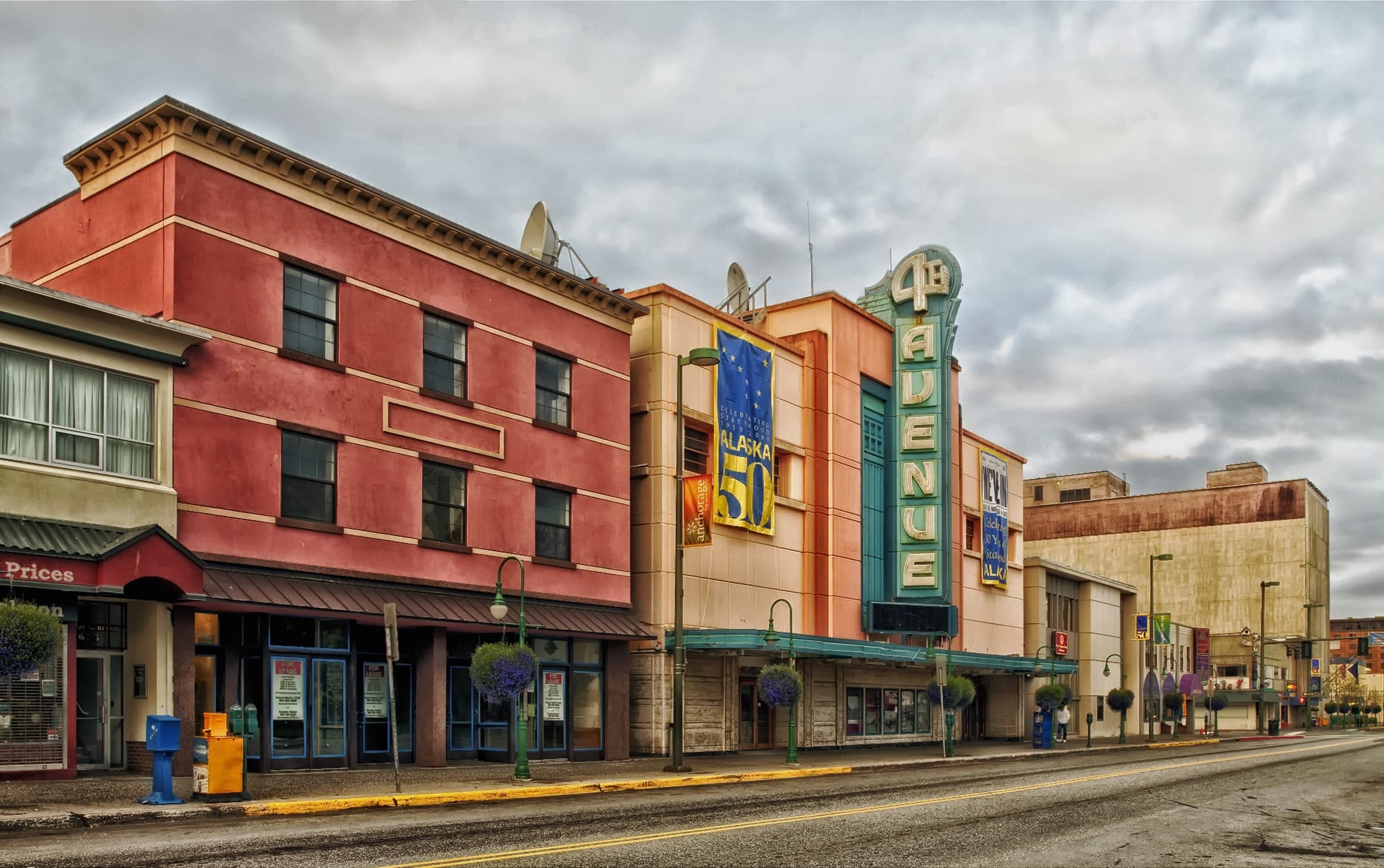
Anchorage is the largest city in Alaska. Located between mountains, it is a beautiful mixture of urban and wilderness. Thanks to its proximity to the Chugach State Park with its 45 species of mammals and the city's rich history, there is so much to be seen in this unique destination.
Anchorage is the largest city in Alaska. Located between mountains, it is a beautiful mixture of urban and wilderness. Thanks to its proximity to the Chugach State Park with its 45 species of mammals and the city's rich history, there is so much to be seen in this unique destination.
Nome is located on the edge of the Bering Sea, on the southwest side of the Seward Peninsula. Unlike other towns which are named for explorers, heroes or politicians, Nome was named as a result of a 50 year-old spelling error. In the 1850's an officer on a British ship off the coast of Alaska noted on a manuscript map that a nearby prominent point was not identified. He wrote "? Name" next to the point. When the map was recopied, another draftsman thought that the “?” was a C and that the “a” in "Name" was an o, and thus a map-maker in the British Admiralty christened "Cape Nome." The area has an amazing history dating back 10,000 years of Inupiaq Eskimo use for subsistence living. Modern history started in 1898 when "Three Lucky Swedes”, Jafet Lindberg, Erik Lindblom and John Brynteson, discovered gold in Anvil Creek…the rush was on! In 1899 the population of Nome swelled from a handful to 28,000. Today the population is just over 3,500. Much of Nome's gold rush architecture remains.
Once a thriving whaling village off the coast of the Yukon Territory, Herschel Island is now classified as a Natural Environmental Park. The island protects the wildlife alongside the heritage of the Inuvialuit people and the whaling industry. As you wander through Herschel's historic dwellings, keep an eye out for the wildlife residents, which include bears, musk oxen and arctic foxes. The area is also home to the largest colony of black guillemots in the Western Arctic.
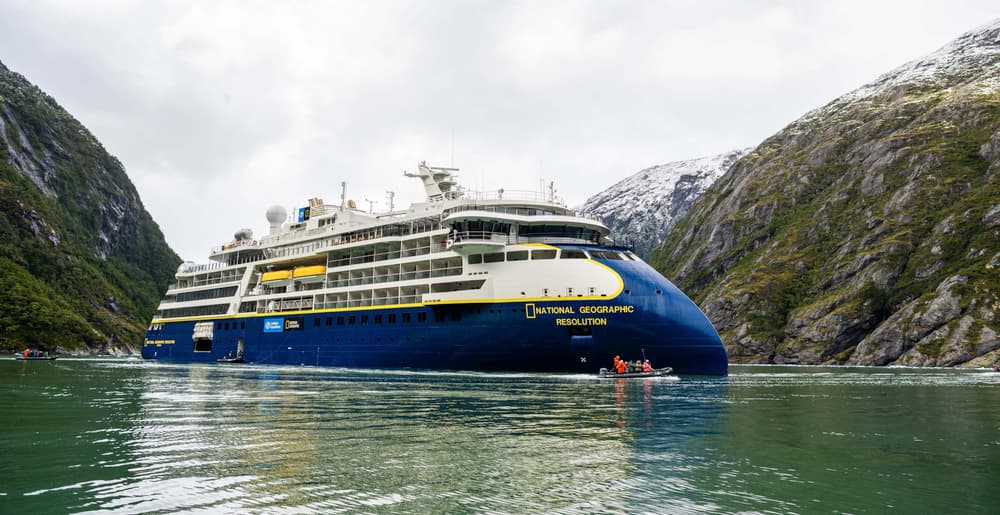
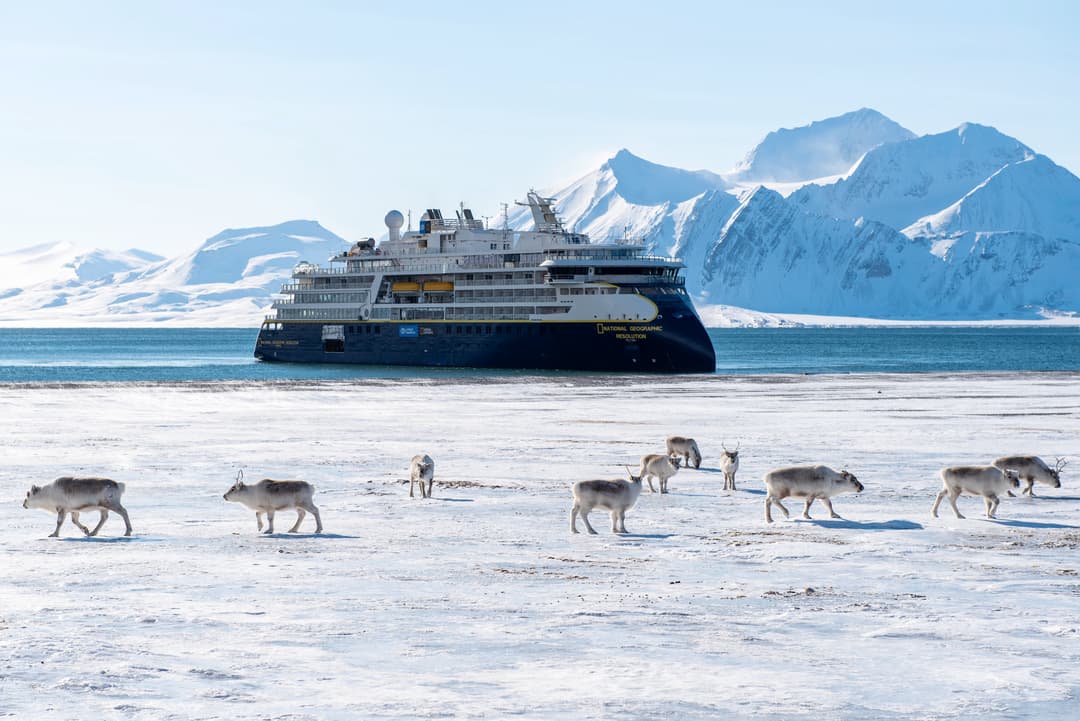
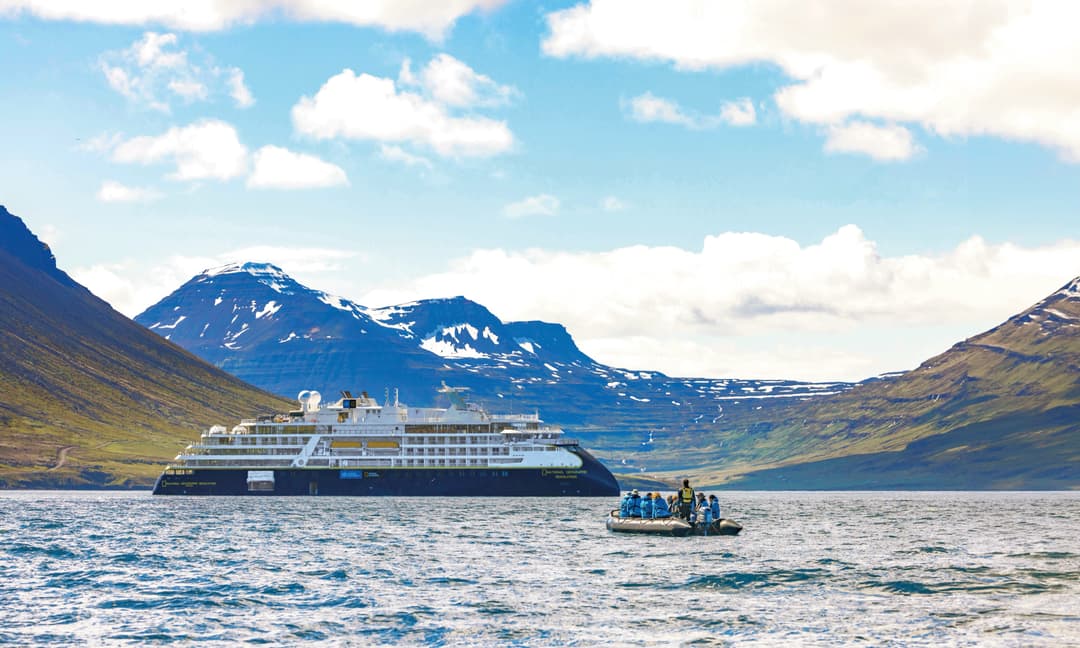
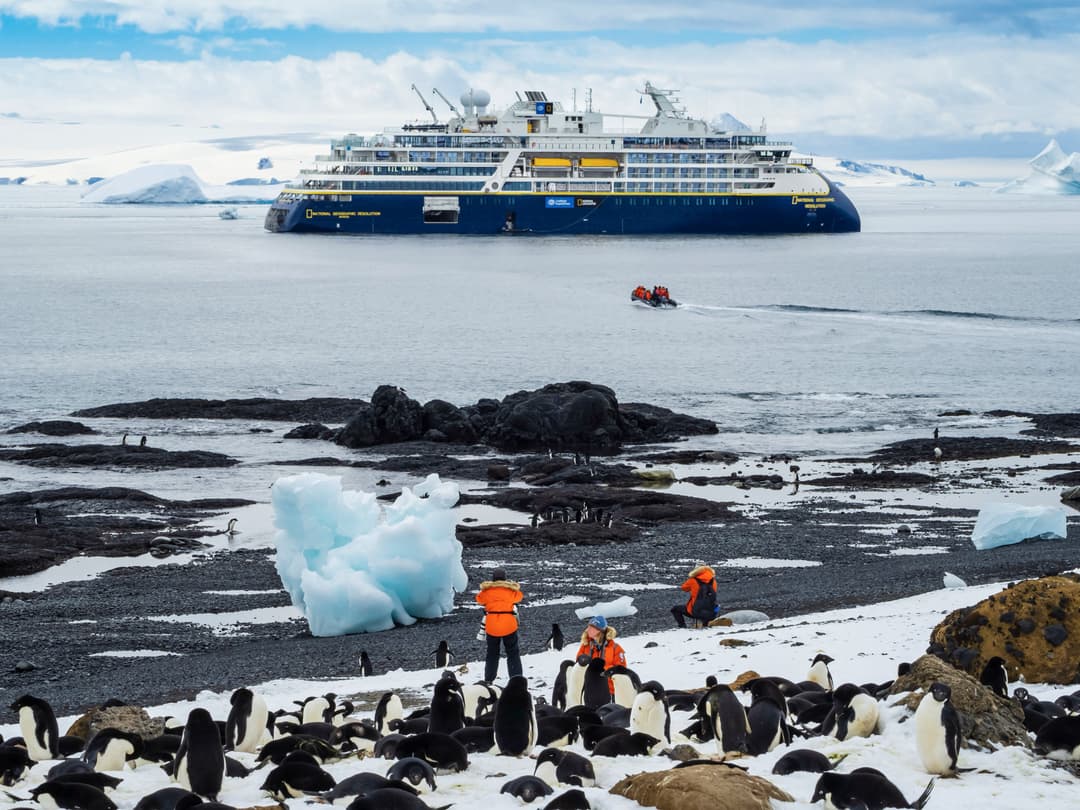
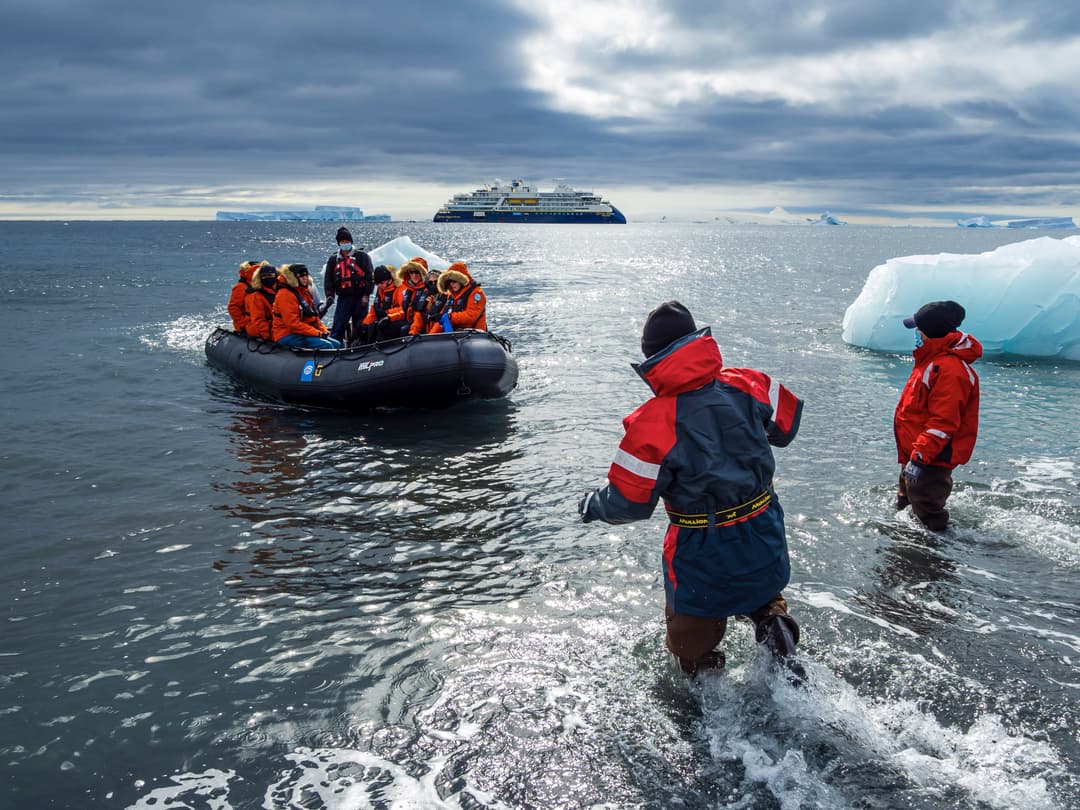
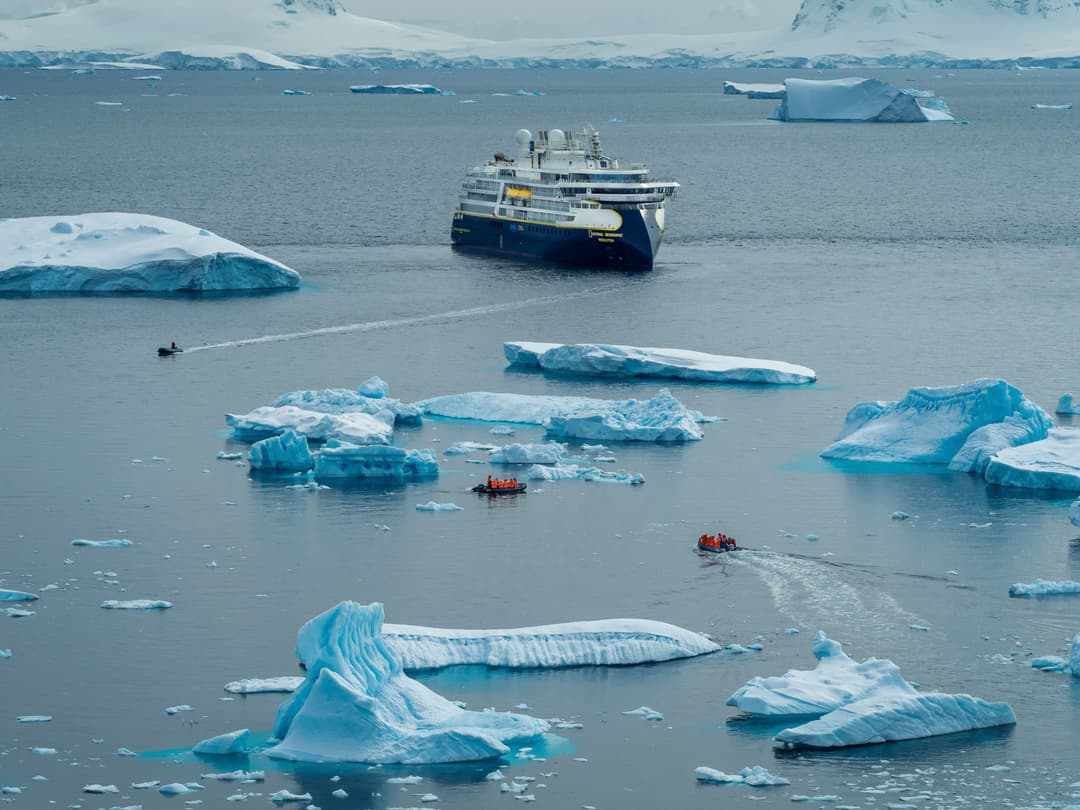
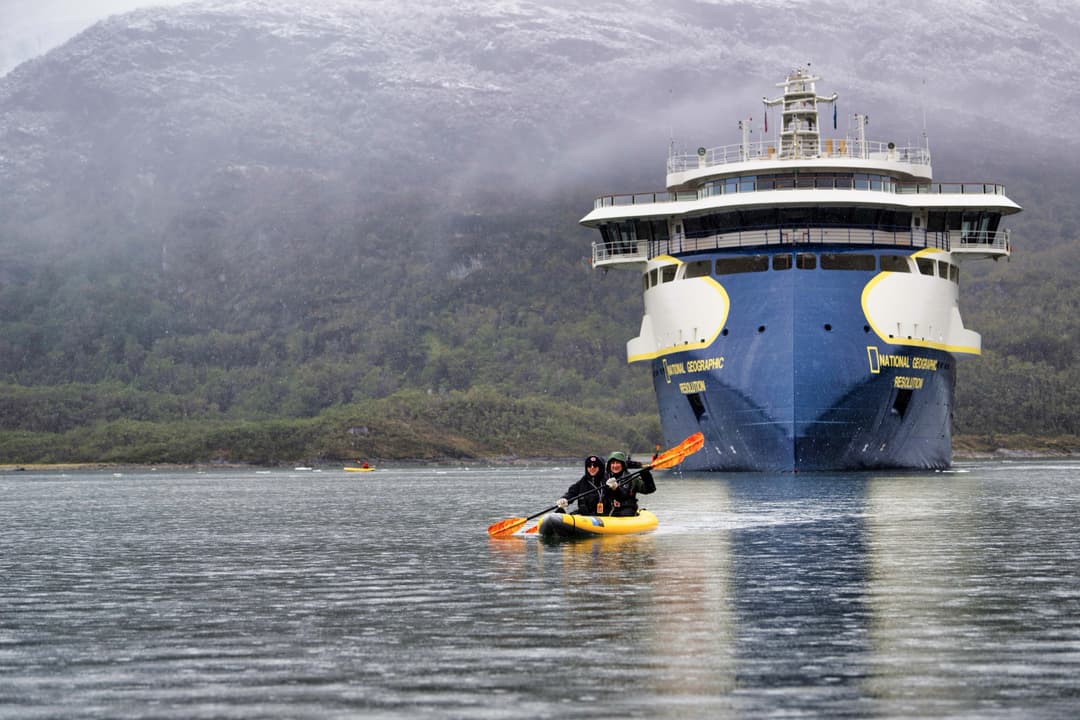
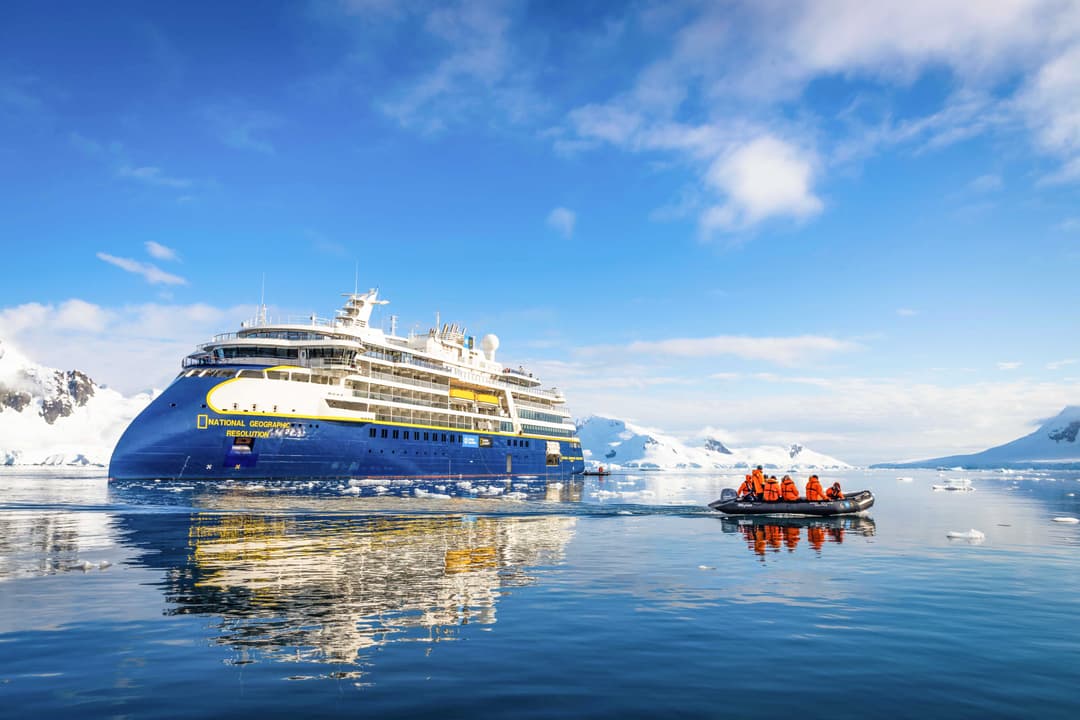
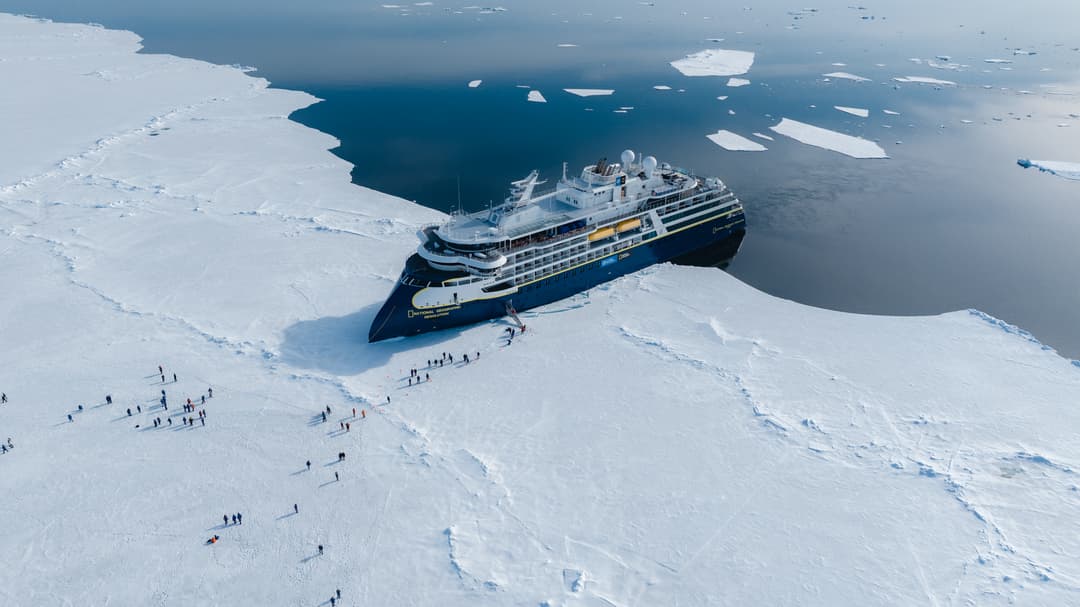
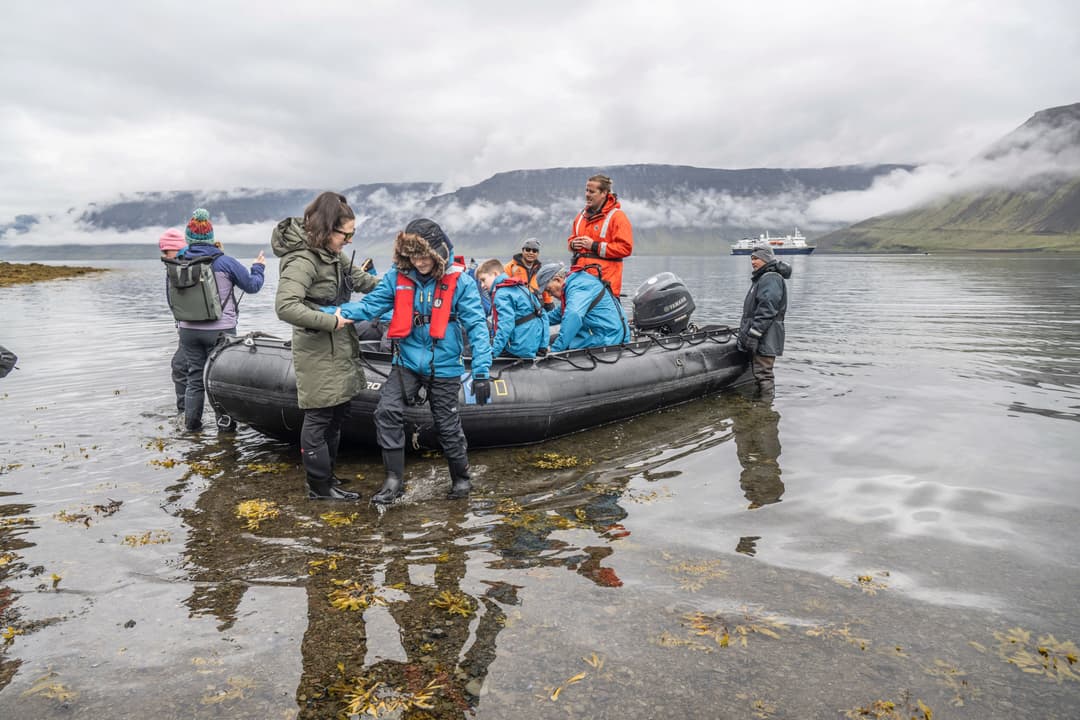
National Geographic Resolution, purpose-built to ply polar waters, navigates the Northwest Passage following nature's path—dependent on ice and weather conditions. Taking cues from nature, follow wildlife, stop for hikes on the tundra or drop anchor in a beautiful fjord or an icy bay to explore and kayak beneath massive ice sculptures and soaring cliffs.
Cross the top of the Northwest Territory of Canada to search for polar bear, ringed seals, arctic foxes, musk oxen and walruses. Along the way, explore ice-studded channels and glacier-carved islands that stretch for hundreds of miles—a stunning display of raw geology. Sail past the northernmost part of mainland North America through the Bellot Strait, one of the narrowest and most infamous straits of the passage. Visit Devon Island and take a walk with your ship's archaeologist to learn about the Thule people—ancestors of the modern Inuit—that once inhabited this region.
History and culture are also on the itinerary. Learn about the Inuit peoples who have hunted and fished here for thousands of years, and hear heroic stories of the early explorers: Roald Amundsen, John Ross, William Edward Parry and James Clark Ross, among others.
Explore some of the beautiful bays and inlets along Baffin Island's Lancaster Sound, a favorite Inuit hunting and fishing location for hundreds of years. Carved by Ice Age glaciers, Lancaster Sound is also the eastern gateway to the Arctic Archipelago, where European explorers like William Baffin first ventured in the 17th century to search for the Northwest Passage. Your days here are spent searching for ringed seals, arctic foxes, walruses and polar bears, as well as beluga and bowhead whales.
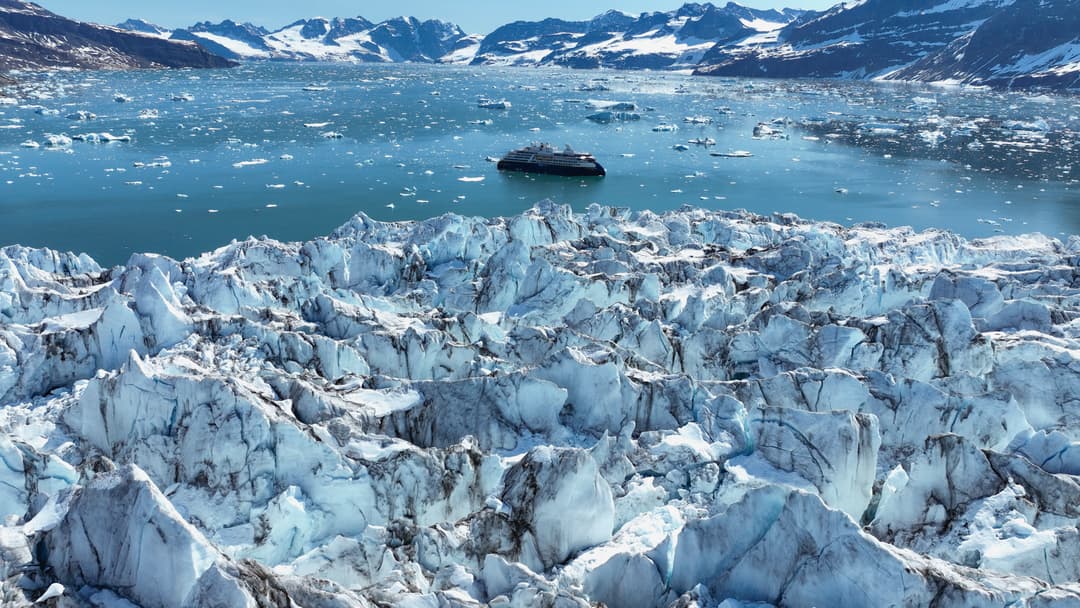
Sail into Qeqertarsuup Tunua, also known as Disko Bay, where you'll be welcomed by floating icebergs calved off the world's most active glacier, Sermeq Kujalleq. Enjoy an extraordinary cruise aboard local boats among towering icebergs of the UNESCO World Heritage-designated Ilulissat Icefjord. Visit the town of Ilulissat and hike into the Sermermiut Valley, once an Inuit settlement and now the home to a peaceful boardwalk overlooking the Icefjord.
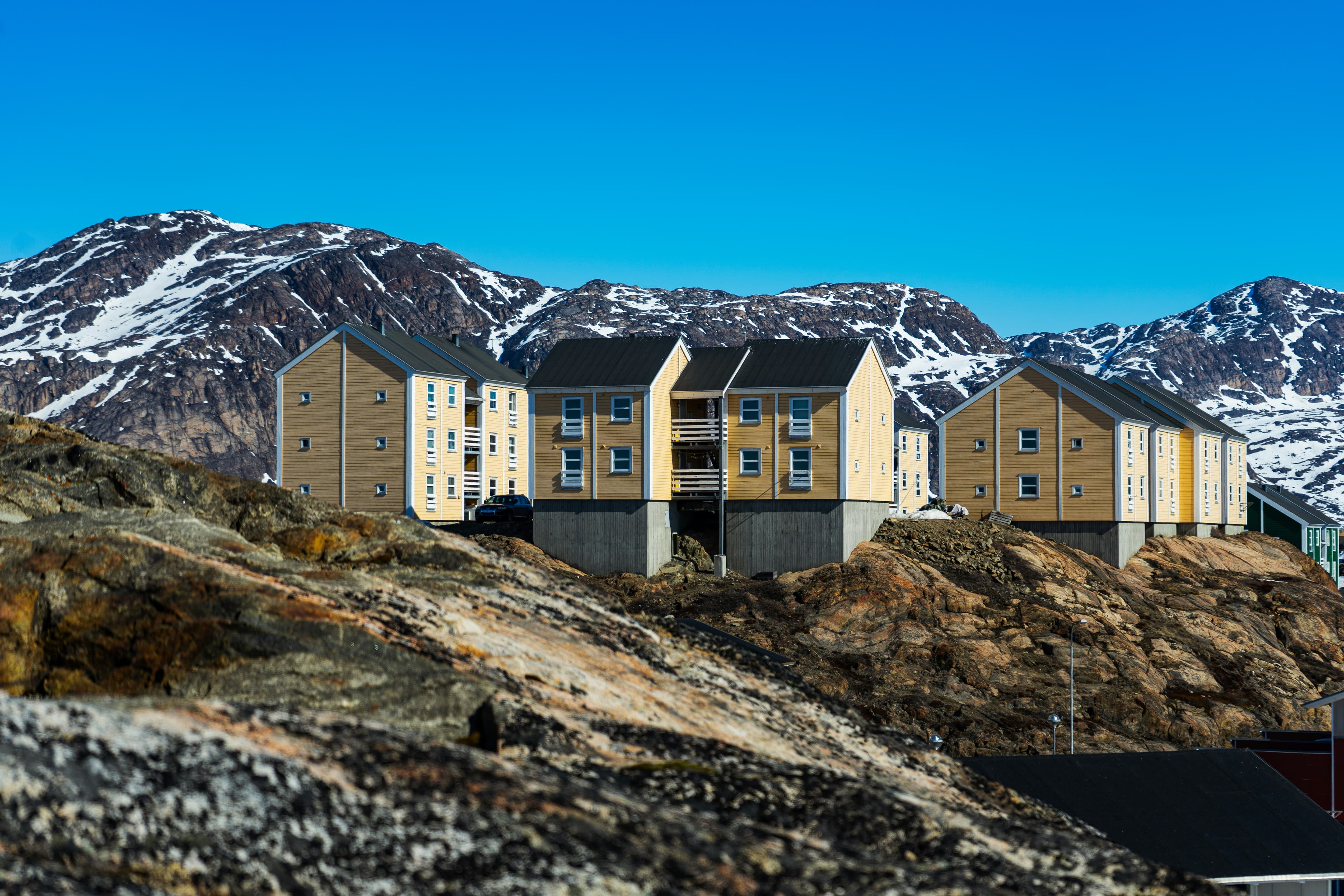
Located just north of the Arctic Circle, Sisimiut is the northernmost town in Greenland where the port remains free of ice in the winter. Yet it is also the southernmost town where there is enough snow and ice to drive a dogsled in winter and spring. In Sisimiut, travelling by sled has been the primary means of winter transportation for centuries. In fact, the area has been inhabited for approximately 4,500 years. Modern Sisimiut is the largest business center in the north of Greenland, and is one of the fastest growing Greenlandic cities. Commercial fishing is the lead economy in the town‘s thriving industrial base.
Nuuk, meaning “the cape”, was Greenland’s first town (1728). Started as a fort and later mission and trading post some 240 kilometers south of the Arctic Circle, it is the current capital. Almost 30% of Greenland’s population lives in the town. Not only does Nuuk have great natural beauty in its vicinity, but there are Inuit ruins, Hans Egede’s home, the parliament, and the Church of our Saviour as well. The Greenlandic National Museum has an outstanding collection of Greenlandic traditional dresses, as well as the famous Qilakitsoq mummies. The Katuaq Cultural Center’s building was inspired by the undulating Northern Lights and can house 10% of Nuuk’s inhabitants.
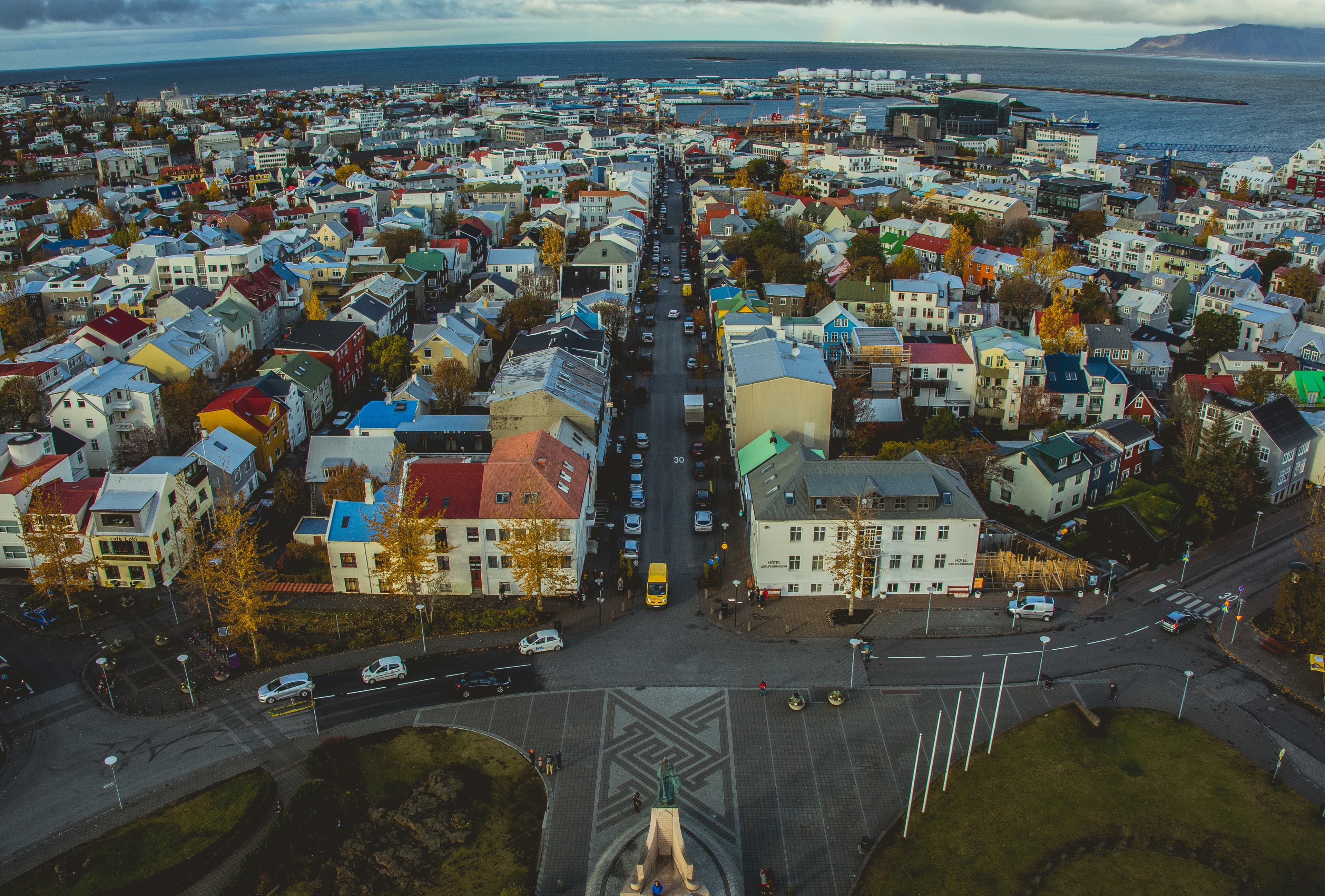
Sprawling Reykjavík, the nation's nerve center and government seat, is home to half the island's population. On a bay overlooked by proud Mt. Esja (pronounced eh-shyuh), with its ever-changing hues, Reykjavík presents a colorful sight, its concrete houses painted in light colors and topped by vibrant red, blue, and green roofs. In contrast to the almost treeless countryside, Reykjavík has many tall, native birches, rowans, and willows, as well as imported aspen, pines, and spruces.Reykjavík's name comes from the Icelandic words for smoke, reykur, and bay, vík. In AD 874, Norseman Ingólfur Arnarson saw Iceland rising out of the misty sea and came ashore at a bay eerily shrouded with plumes of steam from nearby hot springs. Today most of the houses in Reykjavík are heated by near-boiling water from the hot springs. Natural heating avoids air pollution; there's no smoke around. You may notice, however, that the hot water brings a slight sulfur smell to the bathroom.Prices are easily on a par with other major European cities. A practical option is to purchase a Reykjavík City Card at the Tourist Information Center or at the Reykjavík Youth Hostel. This card permits unlimited bus usage and admission to any of the city's seven pools, the Family Park and Zoo, and city museums. The cards are valid for one (ISK 3,300), two (ISK 4,400), or three days (ISK 4,900), and they pay for themselves after three or four uses a day. Even lacking the City Card, paying admission (ISK 500, or ISK 250 for seniors and people with disabilities) to one of the city art museums (Hafnarhús, Kjarvalsstaðir, or Ásmundarsafn) gets you free same-day admission to the other two.
Sprawling Reykjavík, the nation's nerve center and government seat, is home to half the island's population. On a bay overlooked by proud Mt. Esja (pronounced eh-shyuh), with its ever-changing hues, Reykjavík presents a colorful sight, its concrete houses painted in light colors and topped by vibrant red, blue, and green roofs. In contrast to the almost treeless countryside, Reykjavík has many tall, native birches, rowans, and willows, as well as imported aspen, pines, and spruces.Reykjavík's name comes from the Icelandic words for smoke, reykur, and bay, vík. In AD 874, Norseman Ingólfur Arnarson saw Iceland rising out of the misty sea and came ashore at a bay eerily shrouded with plumes of steam from nearby hot springs. Today most of the houses in Reykjavík are heated by near-boiling water from the hot springs. Natural heating avoids air pollution; there's no smoke around. You may notice, however, that the hot water brings a slight sulfur smell to the bathroom.Prices are easily on a par with other major European cities. A practical option is to purchase a Reykjavík City Card at the Tourist Information Center or at the Reykjavík Youth Hostel. This card permits unlimited bus usage and admission to any of the city's seven pools, the Family Park and Zoo, and city museums. The cards are valid for one (ISK 3,300), two (ISK 4,400), or three days (ISK 4,900), and they pay for themselves after three or four uses a day. Even lacking the City Card, paying admission (ISK 500, or ISK 250 for seniors and people with disabilities) to one of the city art museums (Hafnarhús, Kjarvalsstaðir, or Ásmundarsafn) gets you free same-day admission to the other two.
About the Ship
Name
National Geographic Resolution
Operator
National Geographic - Lindblad Expeditions

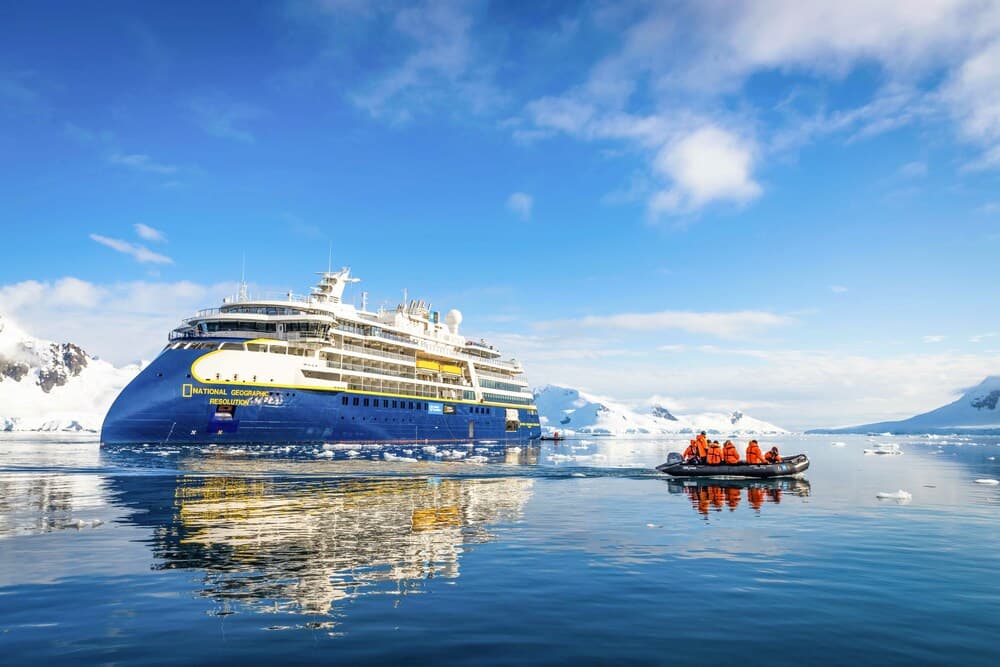
The sister ship to National Geographic Endurance, she explores polar & temperate regions
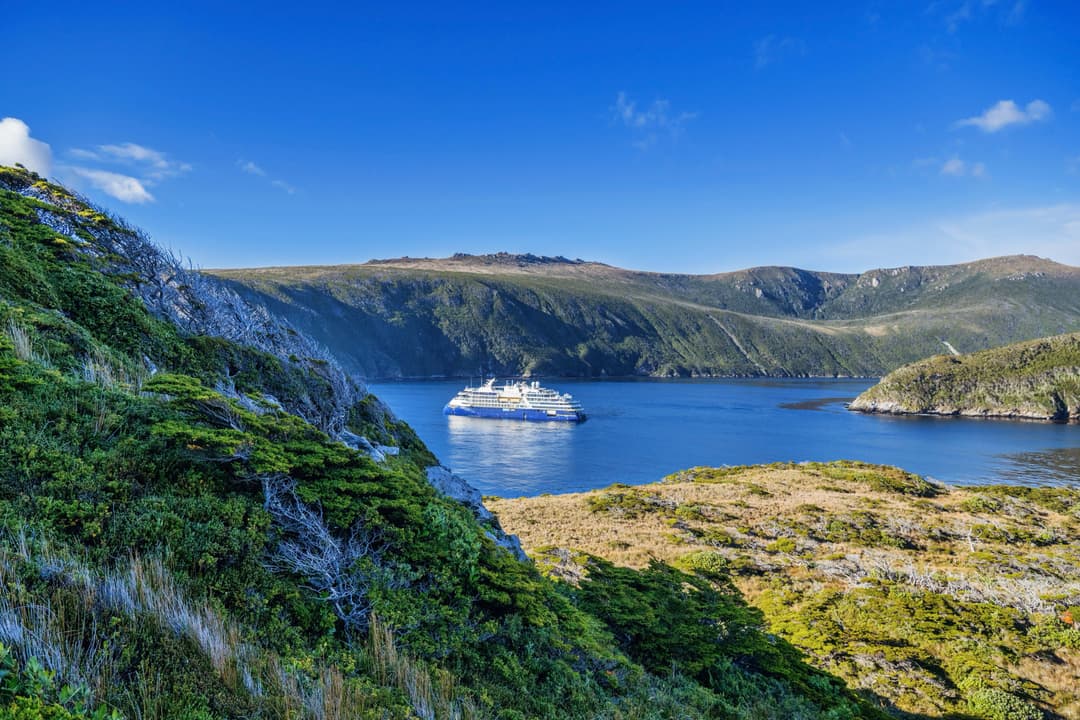
Our second new polar build, National Geographic Resolution, is named to honor the second voyage of the legendary Captain James Cook. A fully-stabilized vessel of the highest ice class (PC5 Category A), she will enableadventurous guests to go where few have or can. Resolution's most striking exterior feature is her distinctive profile, the patented X-Bow®, a game-changing design that guarantees the smoothest, most comfortable ride in all kinds of conditions; and since it eliminates bow impact, a quieter ride, as well.
Loading...
Meals aboard the fleet offer the chance to savor the flavors of the places you visit. Our chefs design distinctive menus that celebrate regional culinary traditions, whether it’s paella in Spain or udon in Japan. Through pioneering farm-to-table programs in destinations like the Galápagos and the Pacific Northwest, and by partnering with local farmers, fishers and vintners who are committed to sustainable practices, we bring authentic tastes and stories to your table. Each meal reflects the character of your destination, making cuisine a memorable part of your journey.
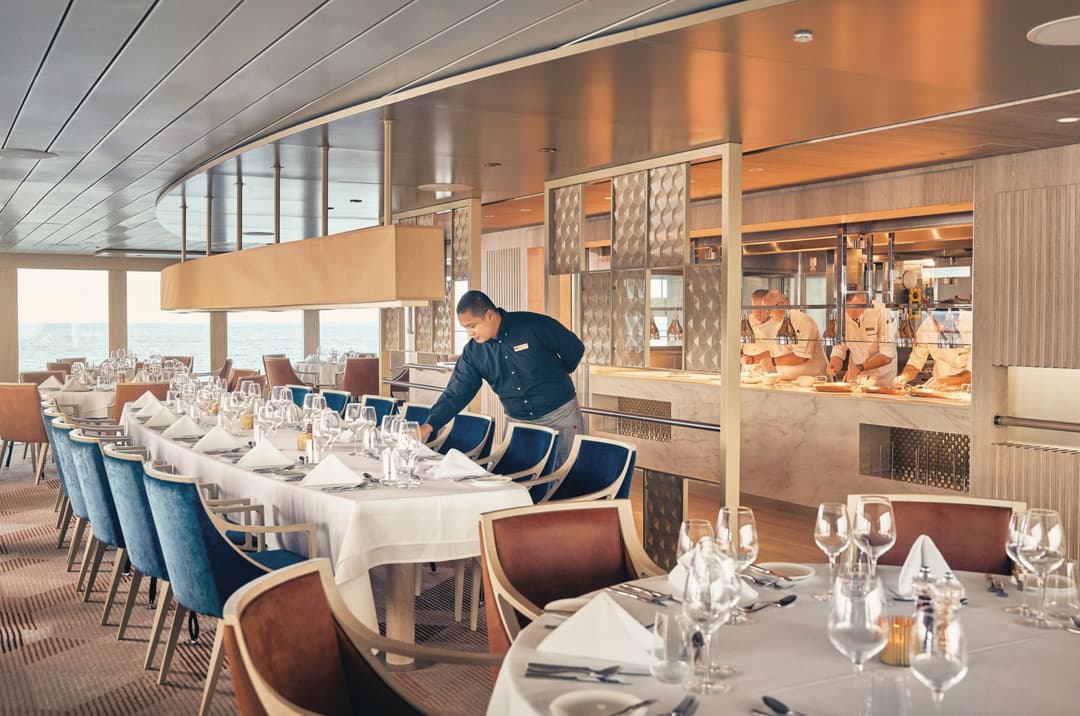
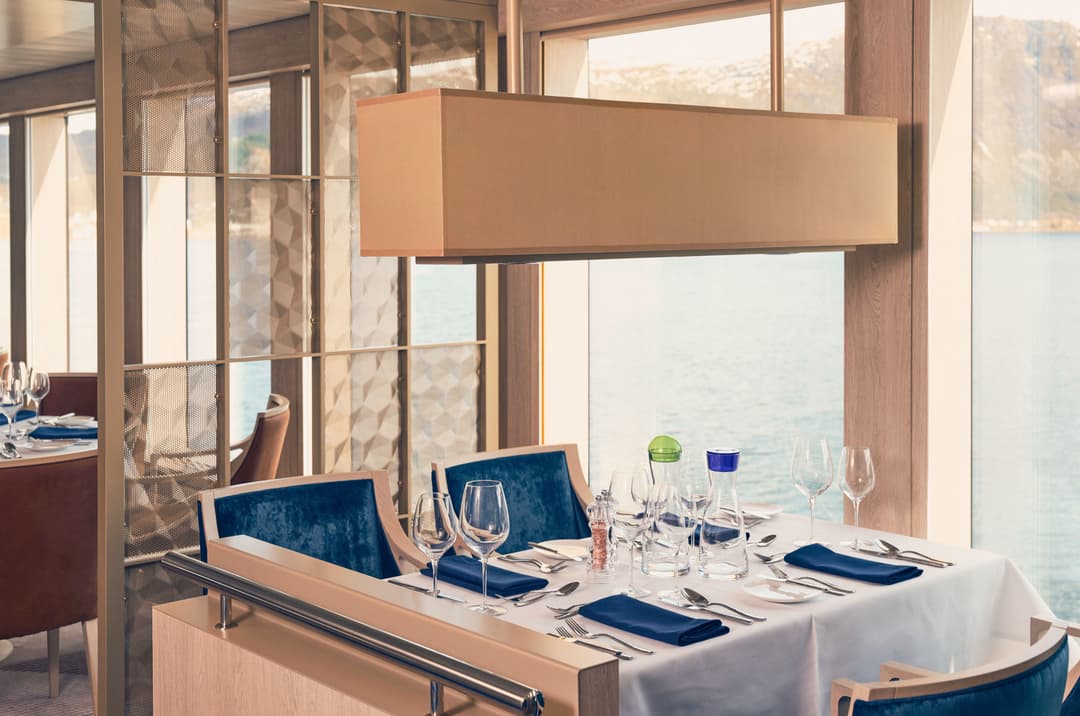
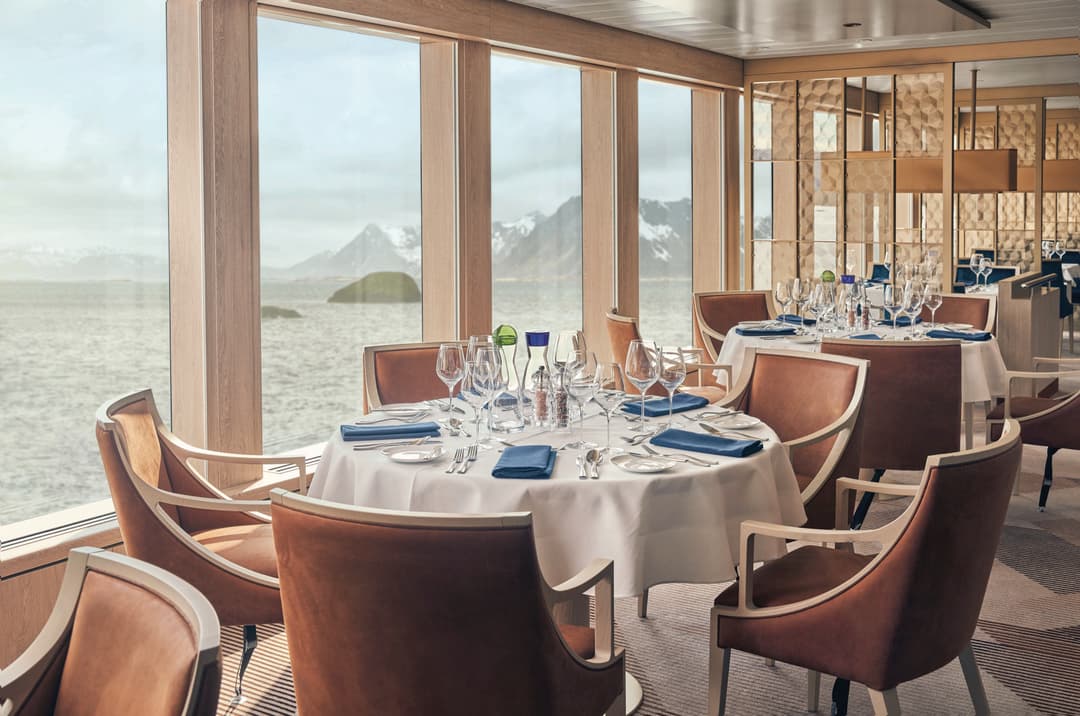
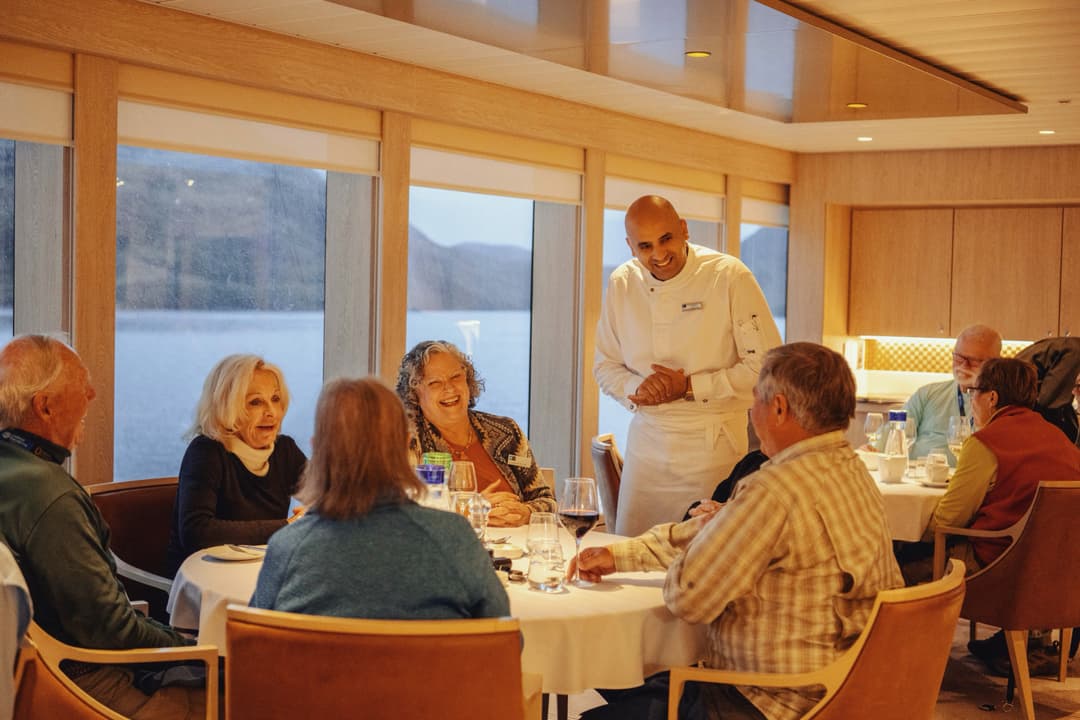
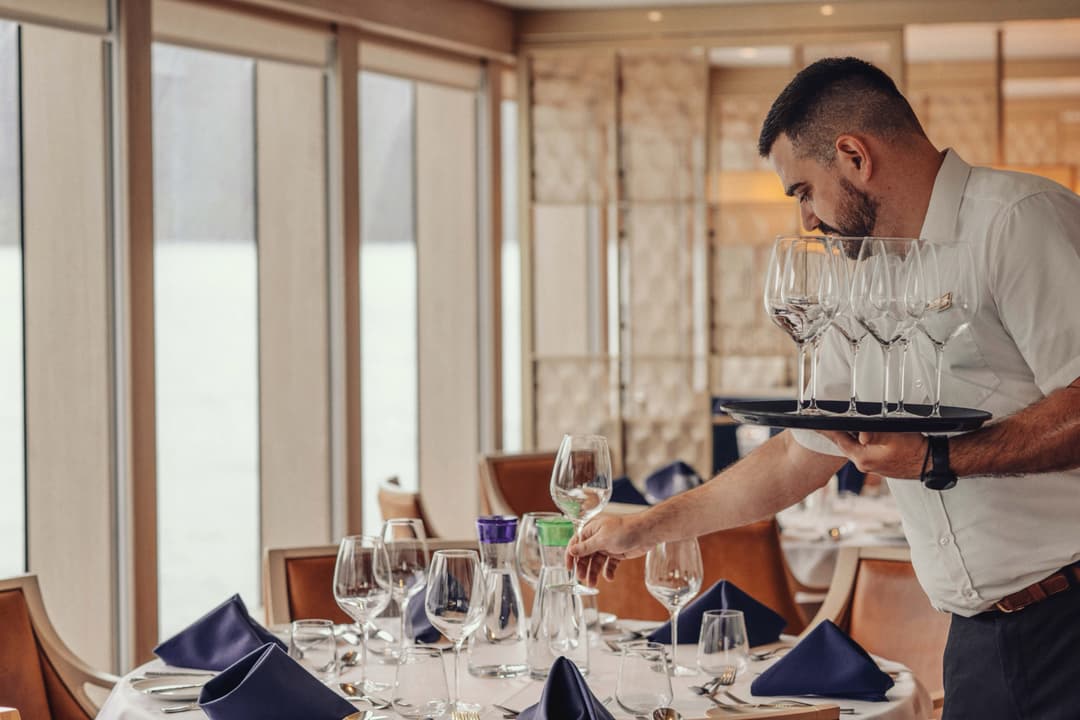
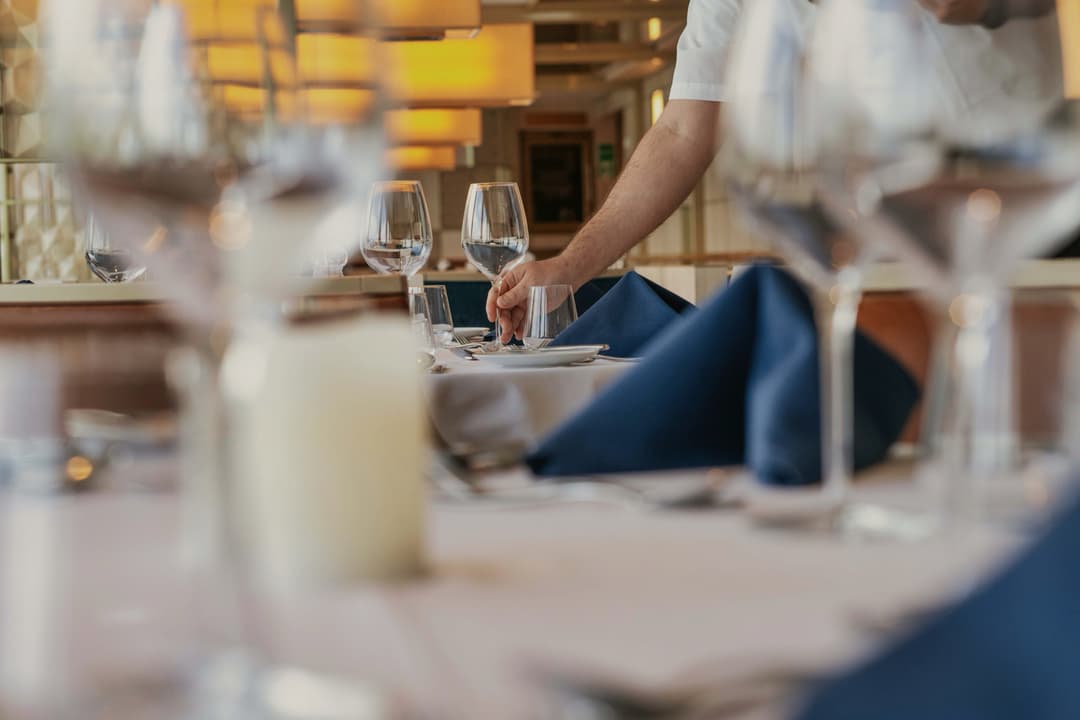
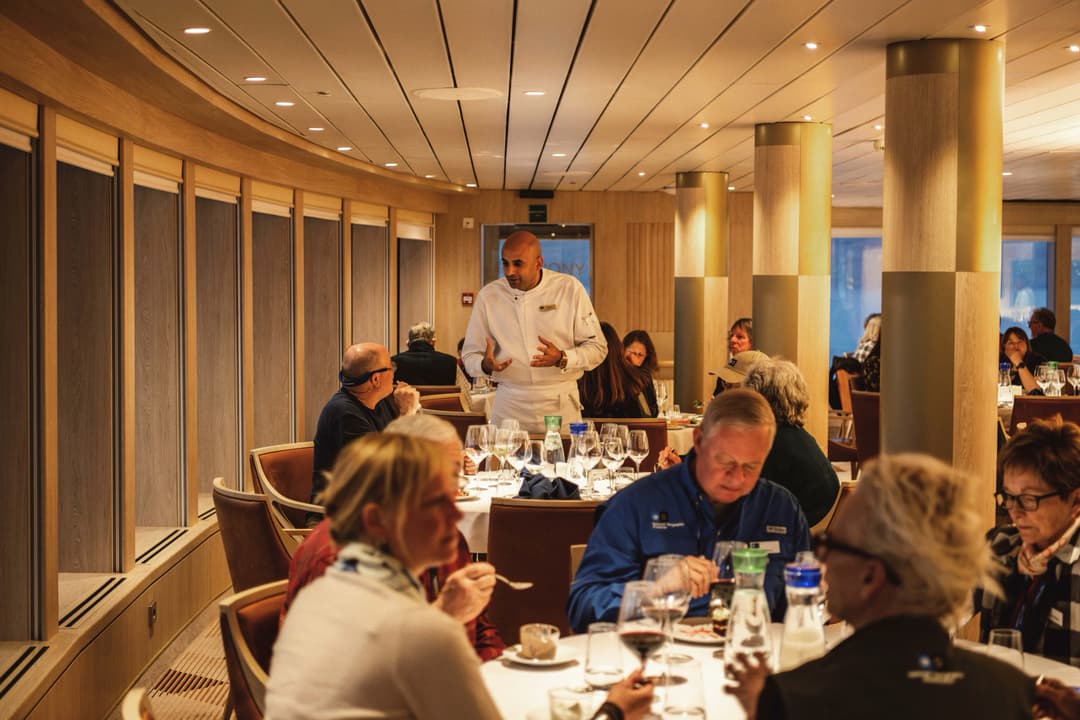

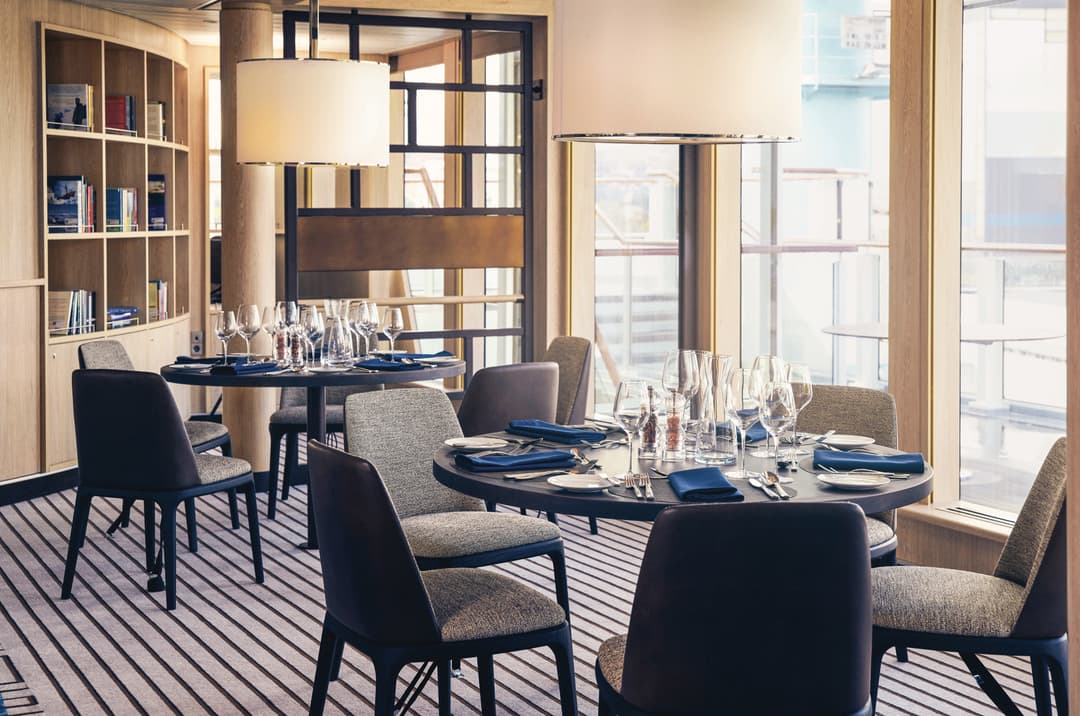
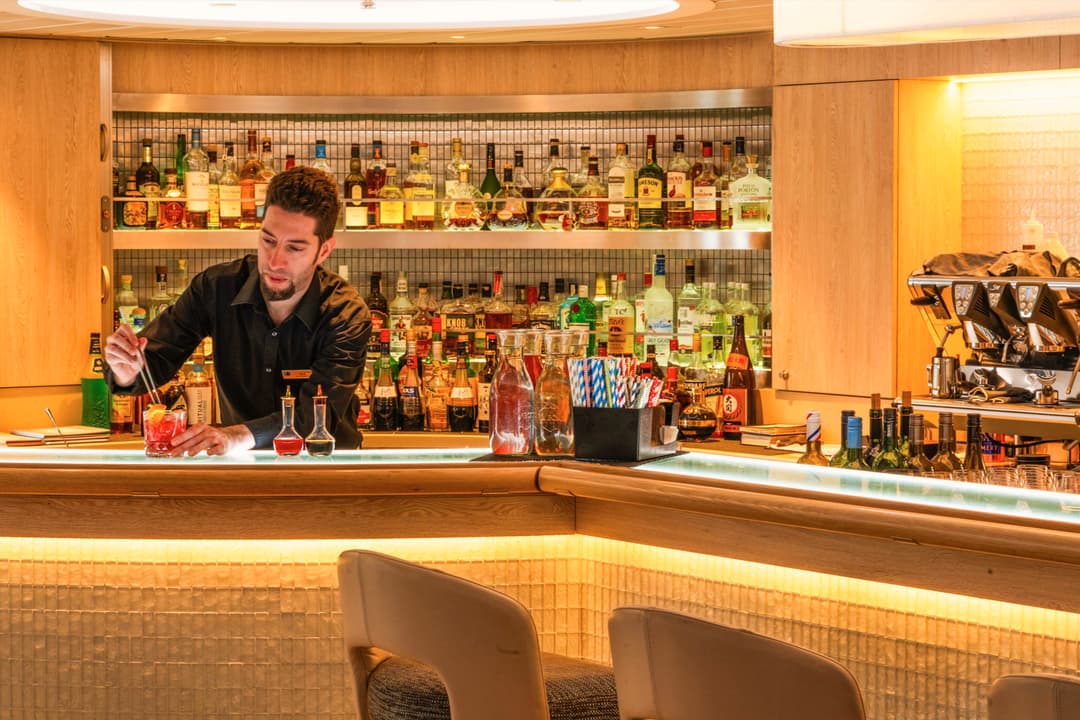
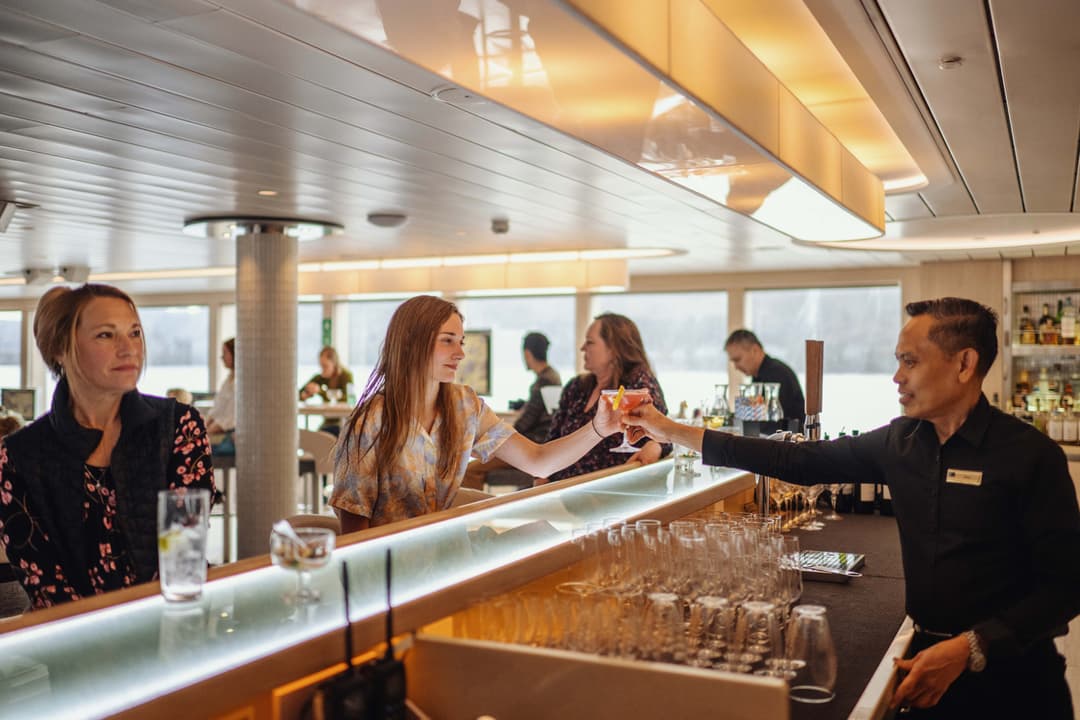
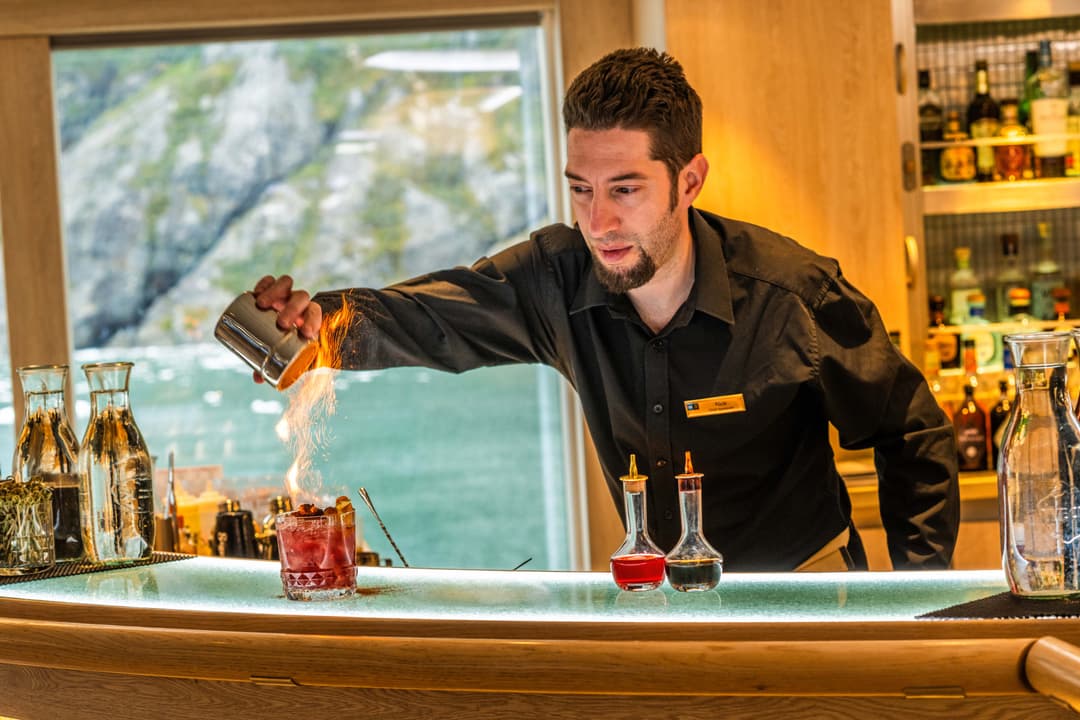
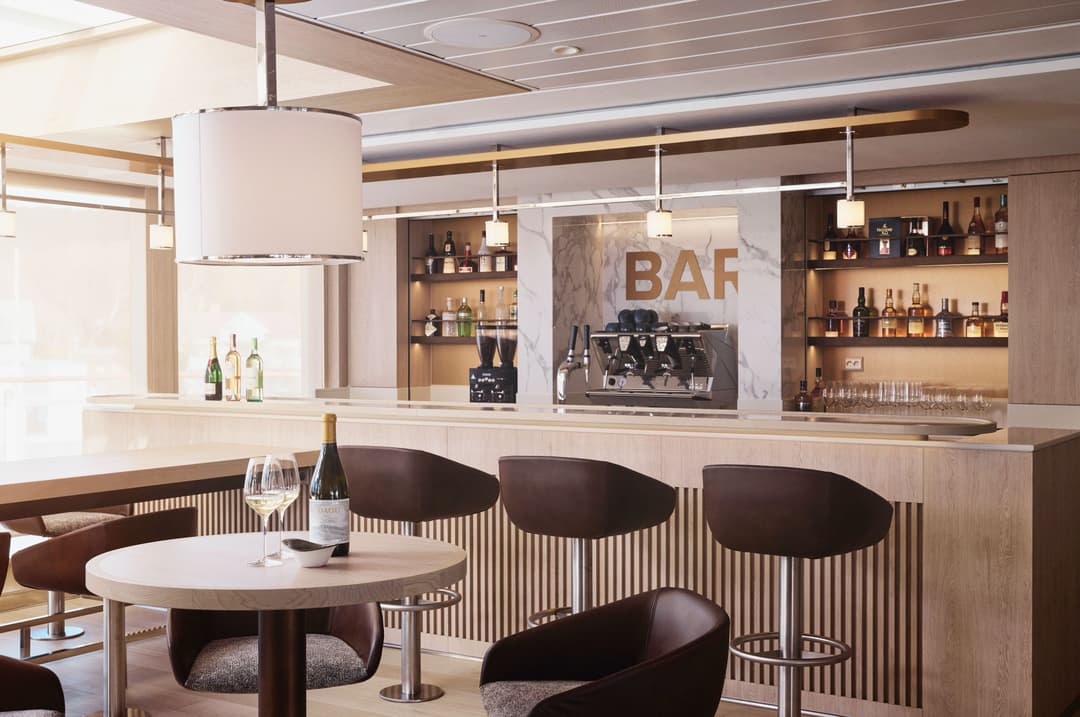
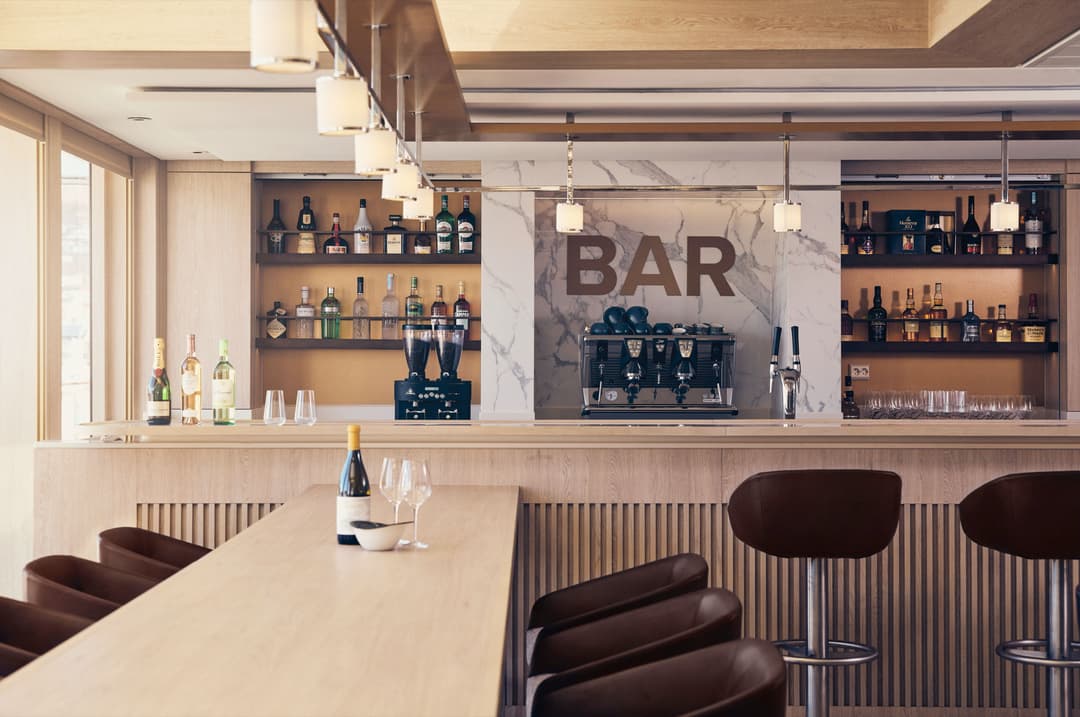
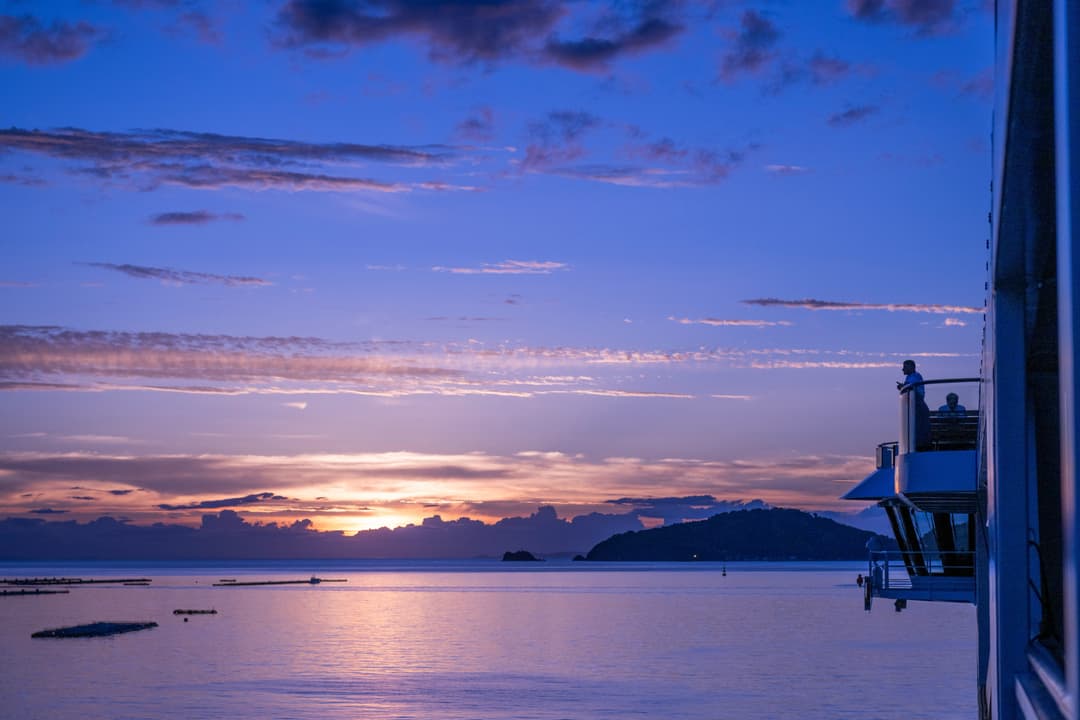
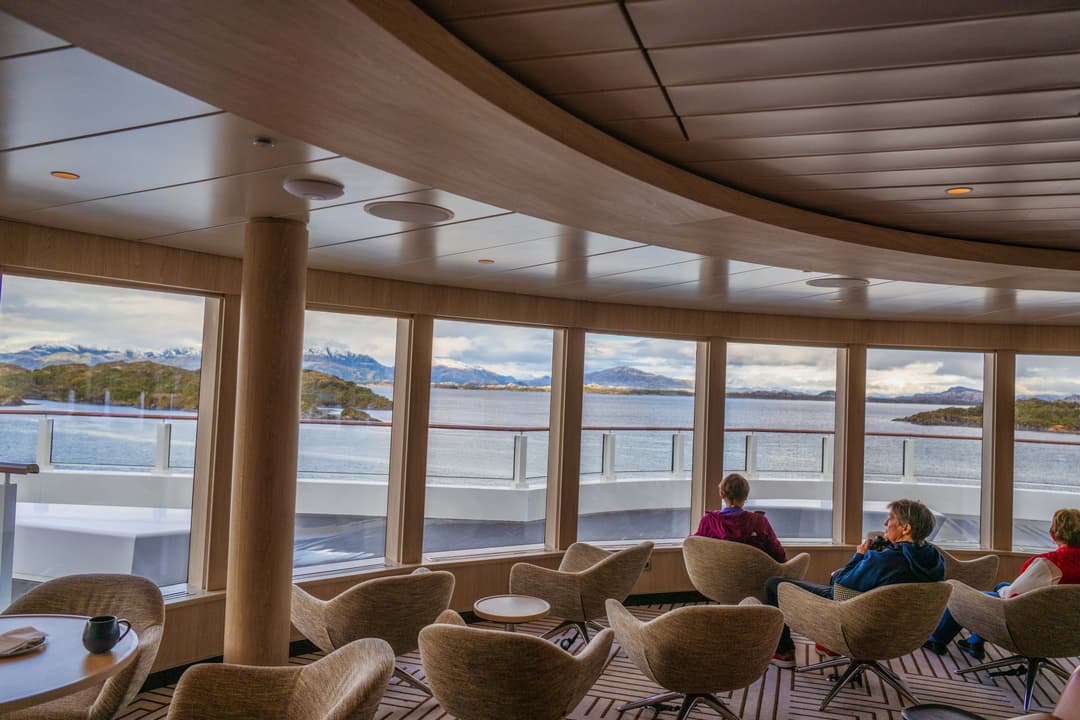
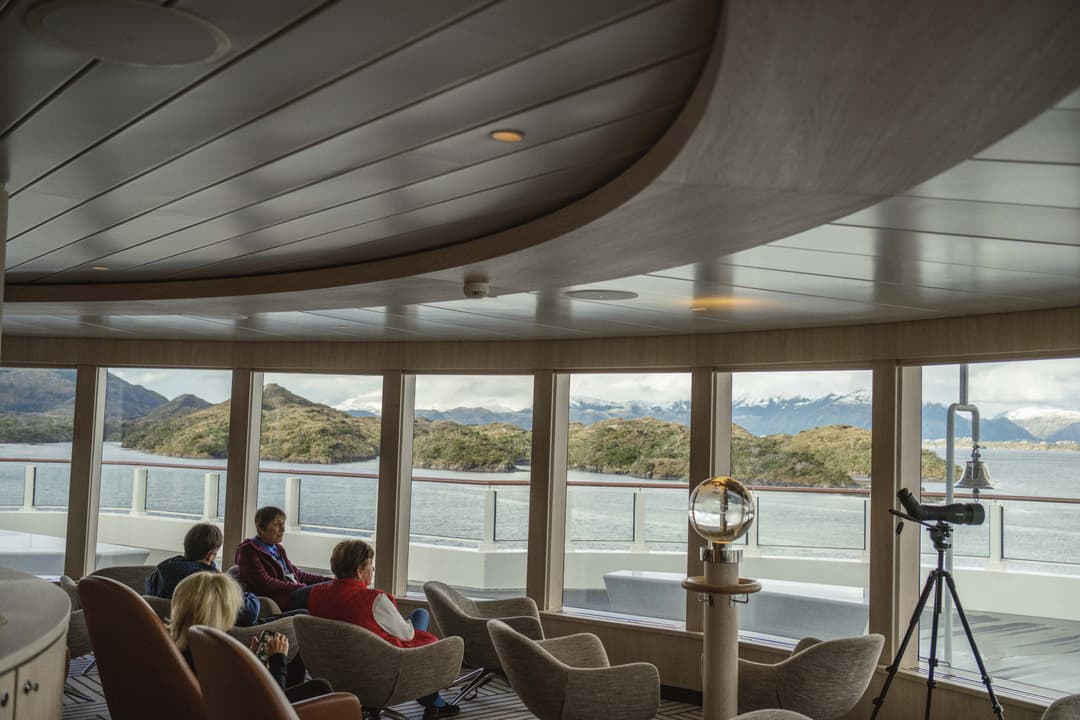
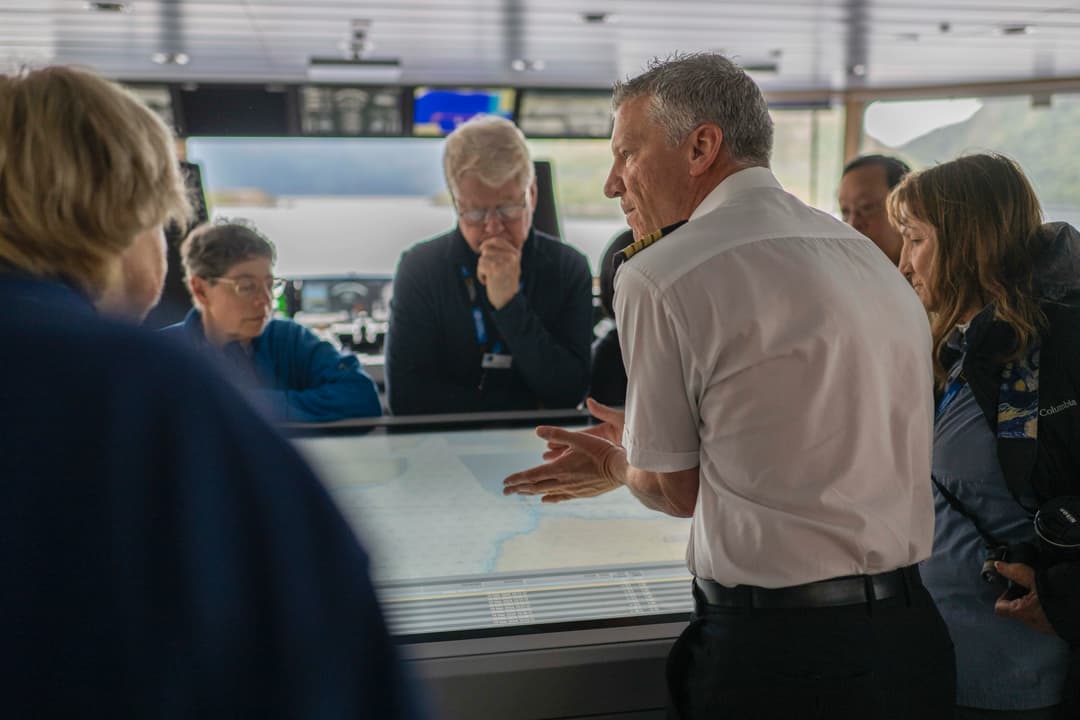
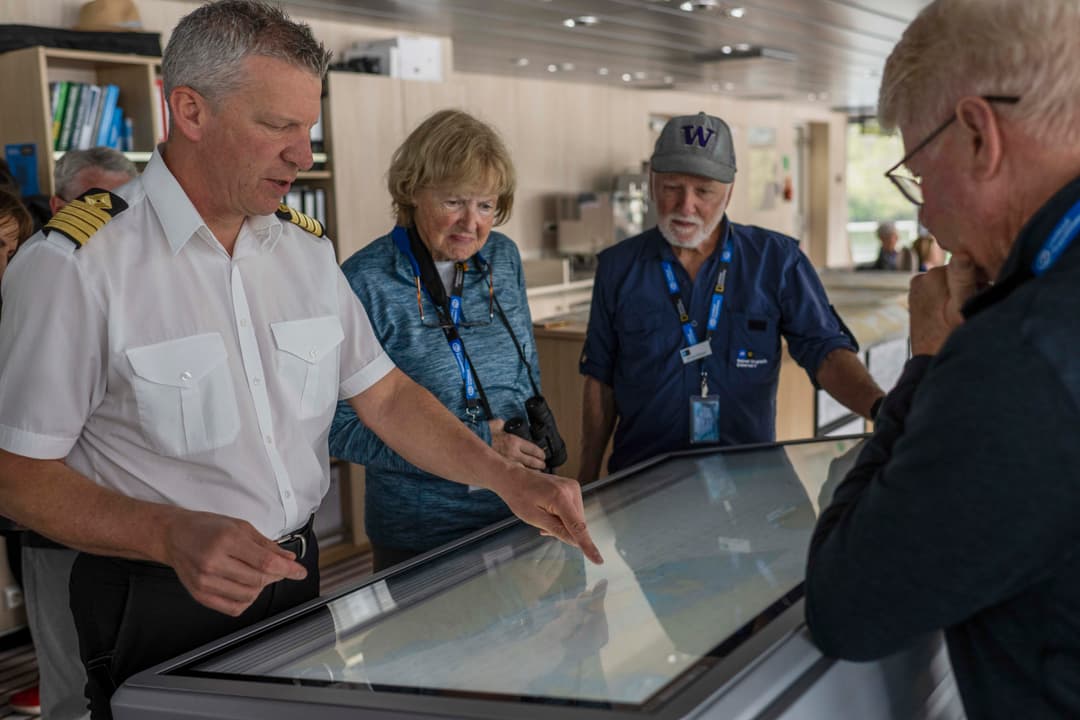
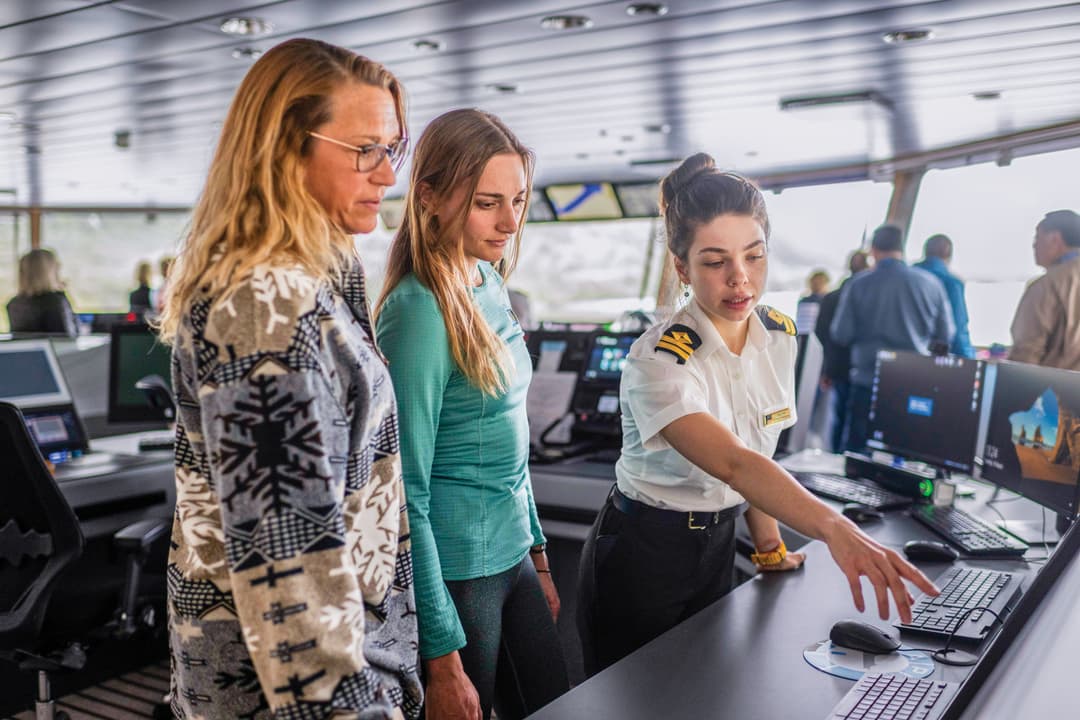
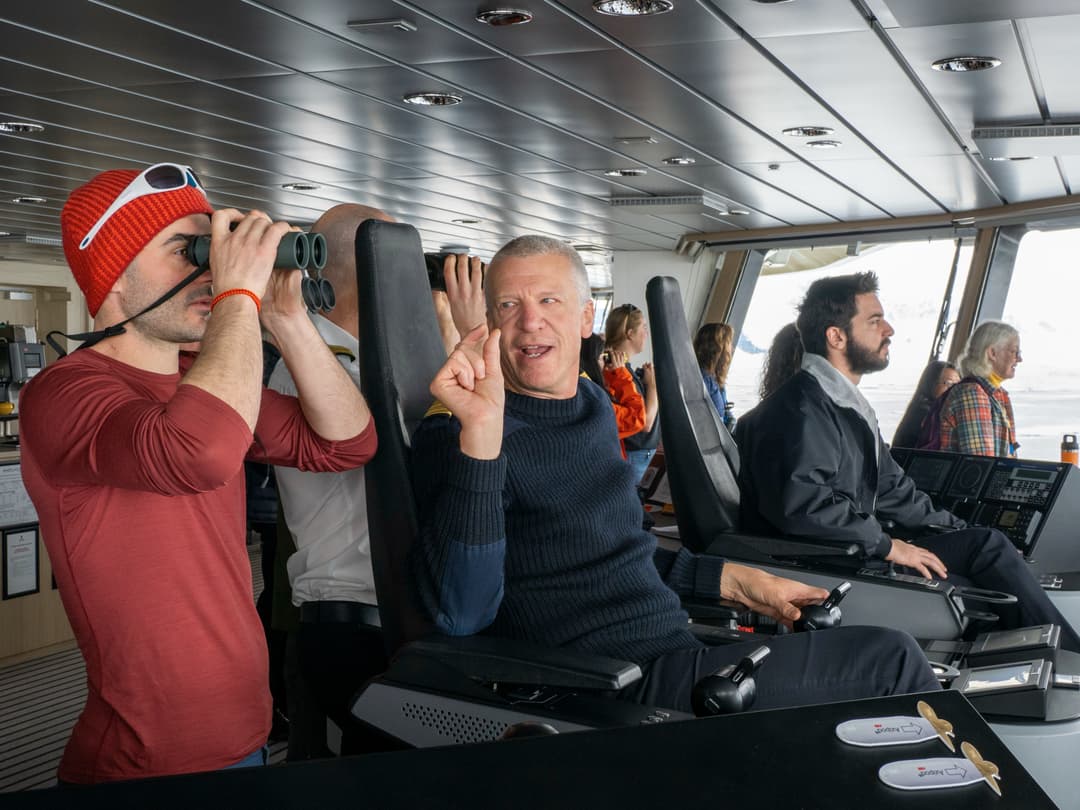
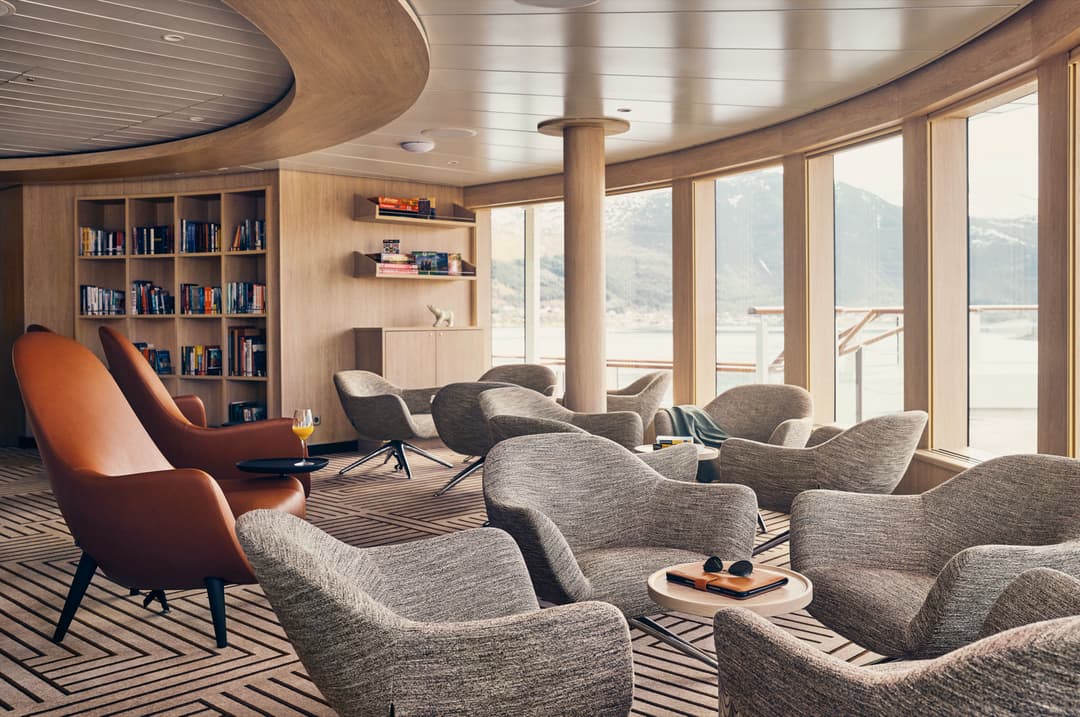
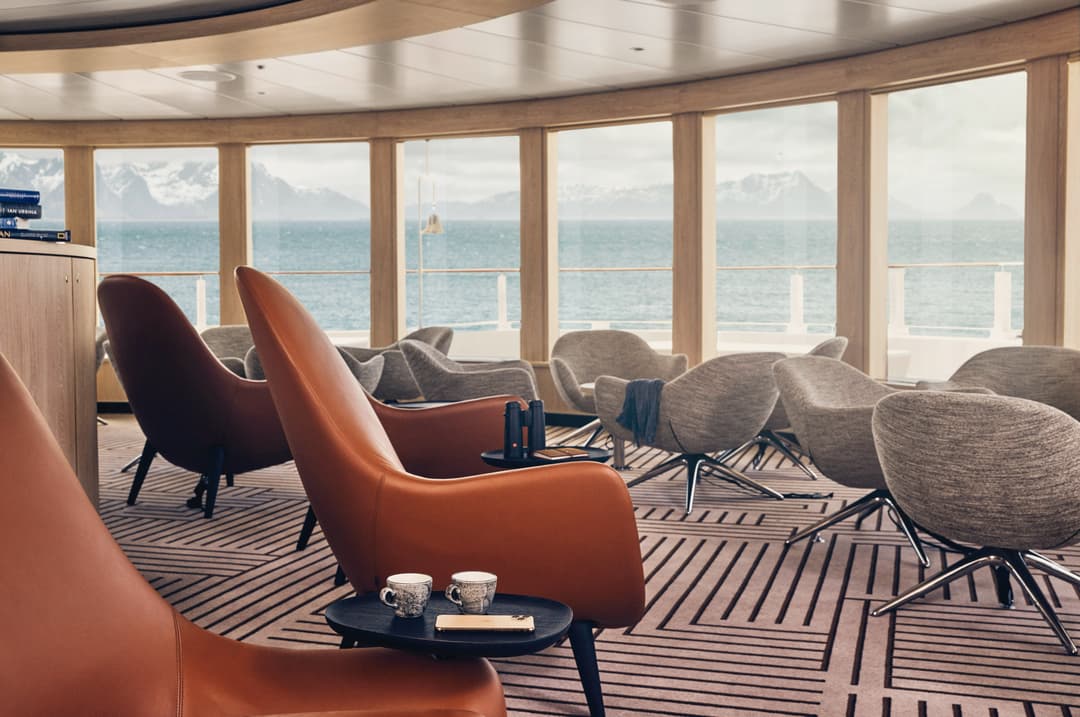
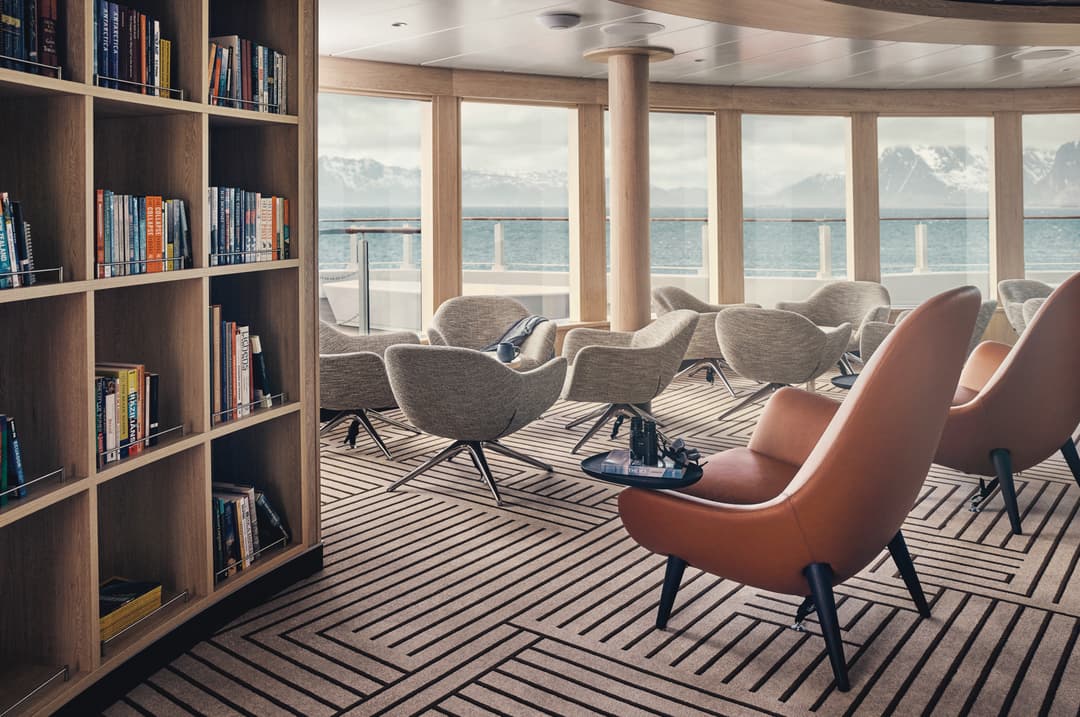
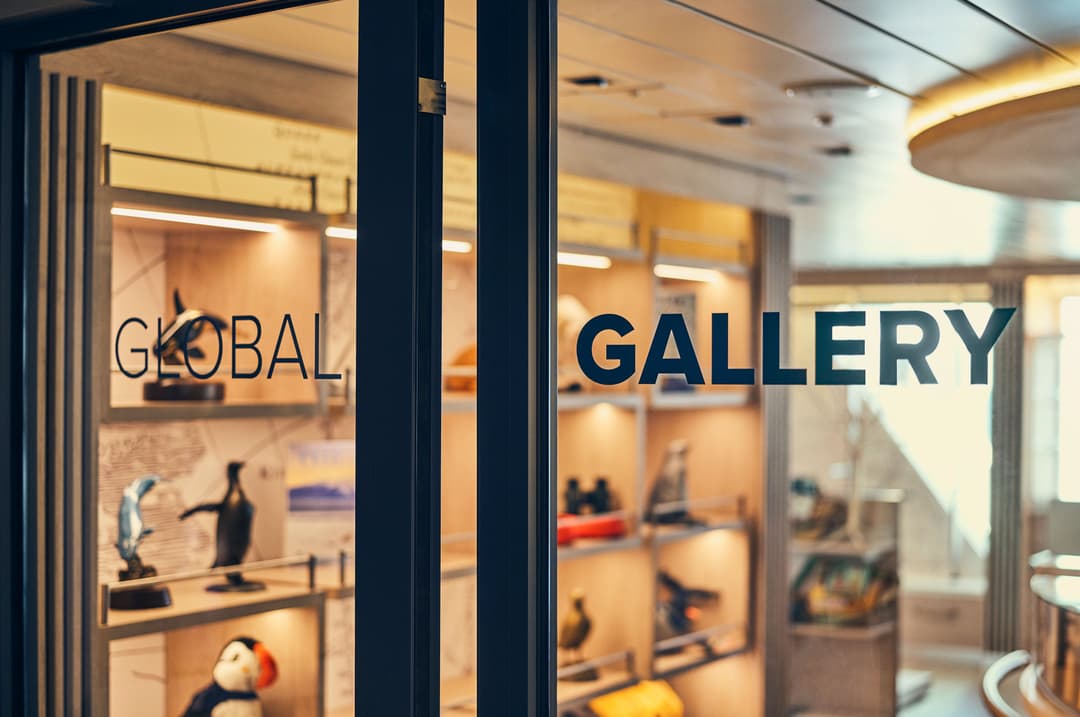
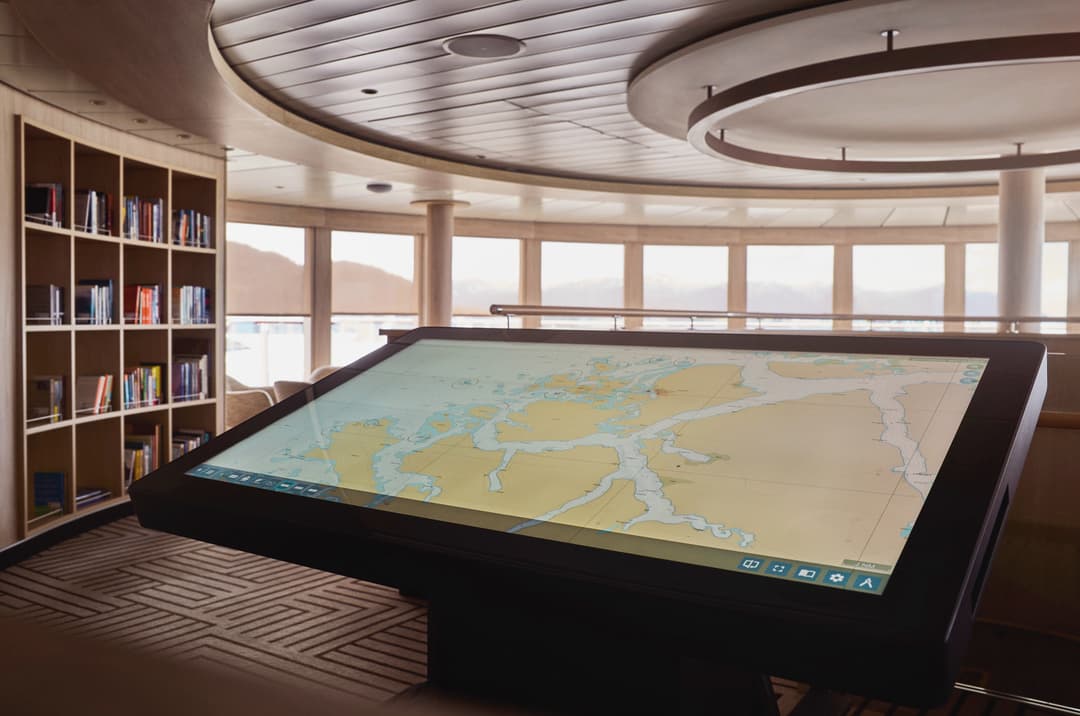
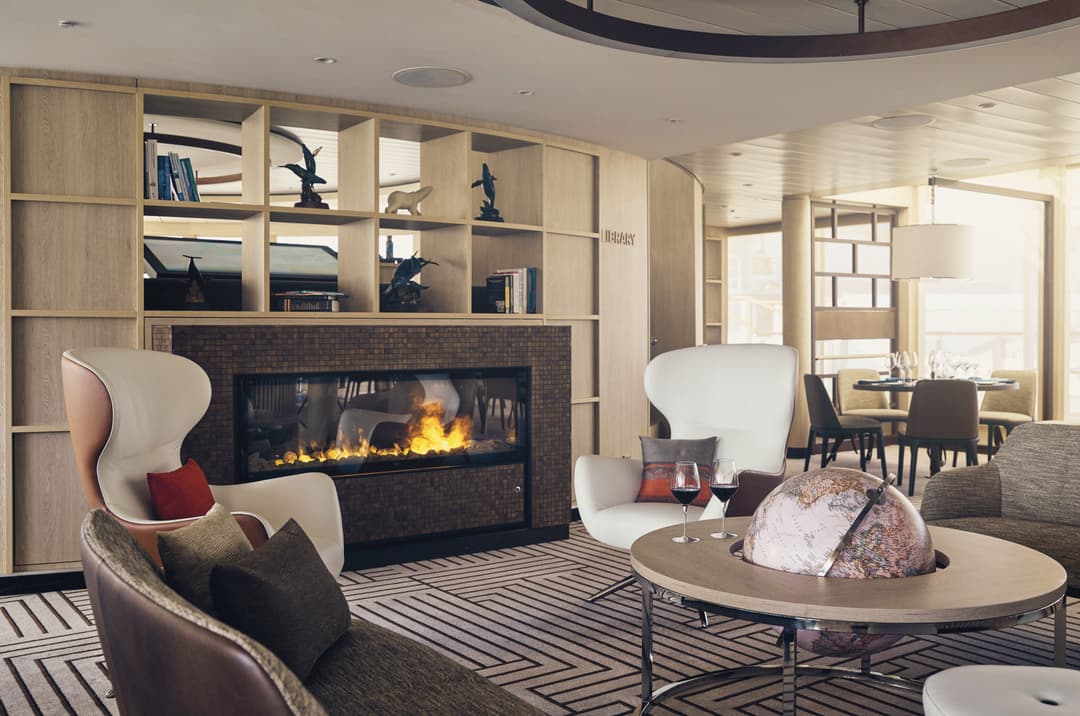
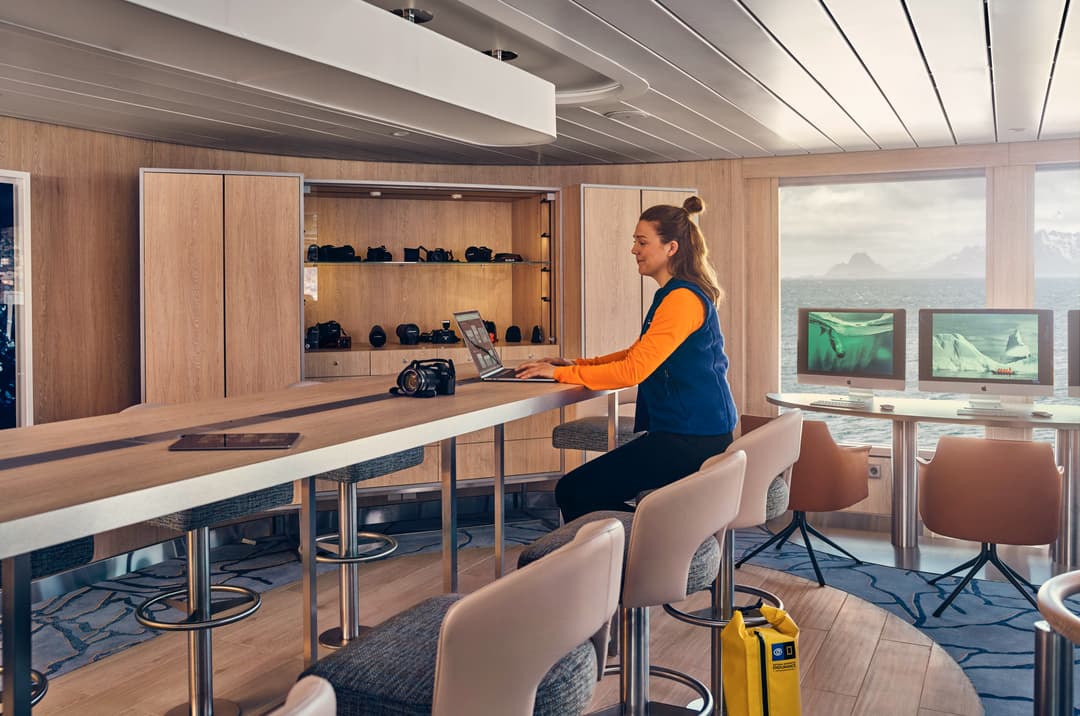
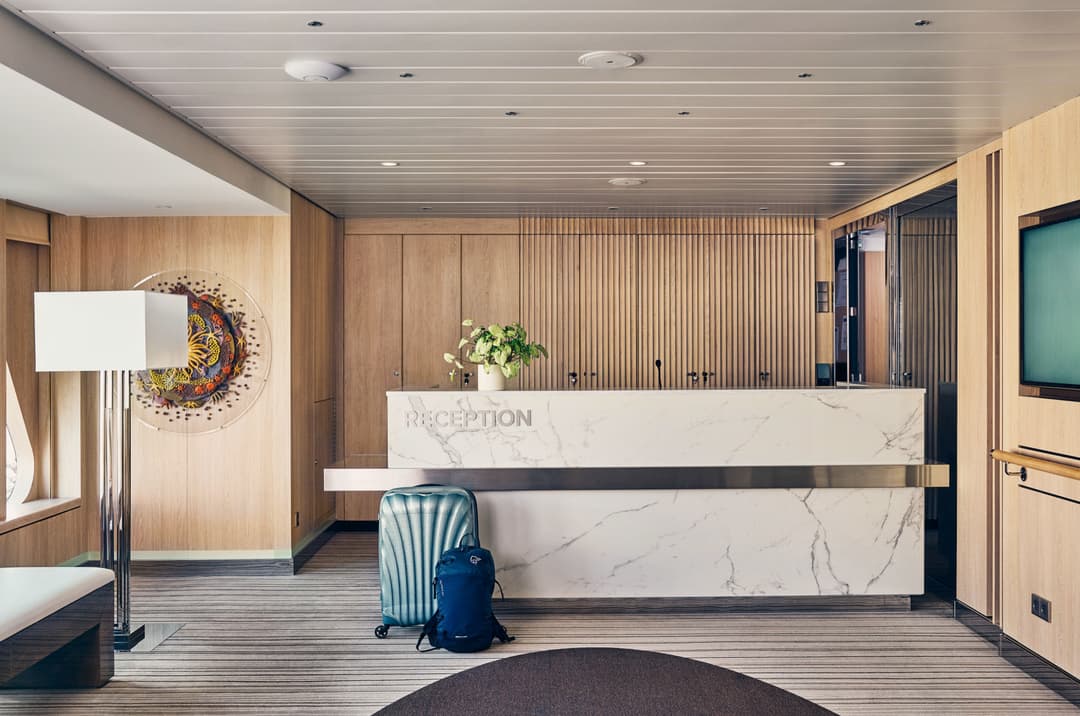
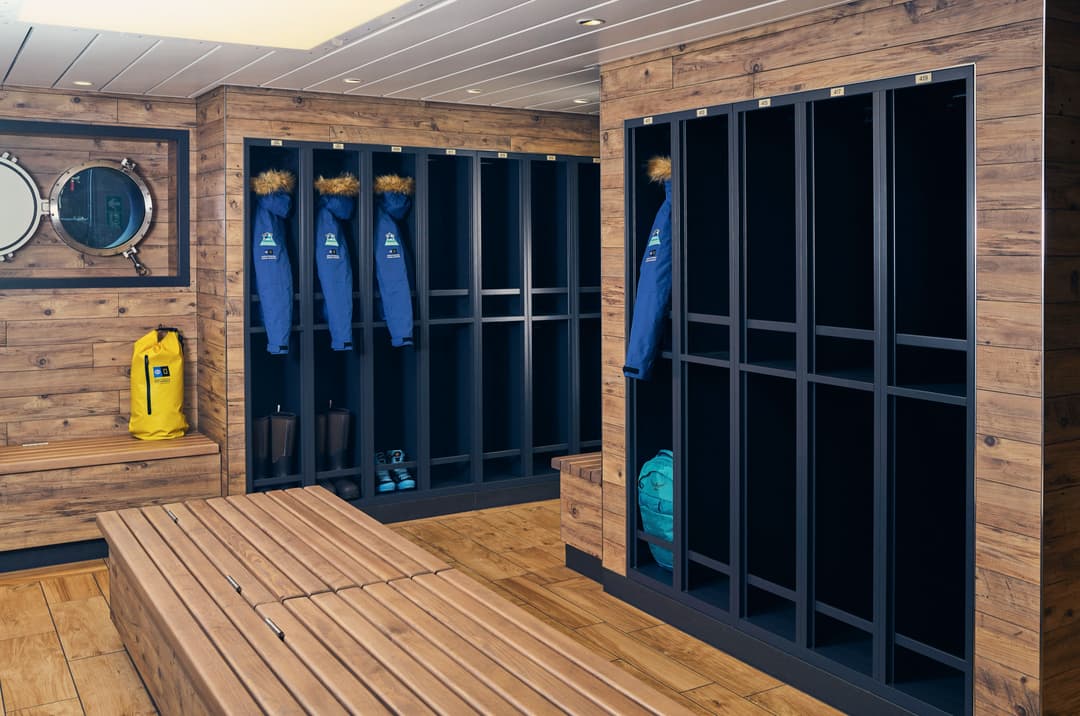
National Geographic Resolution's public spaces ensure that your time on board is as rewarding and enriching as your time on shore. Spaces include an observation lounge; library; main lounge with full service bar, 24-hour beverage station, and state-of-the-art tech for films/presentations; an expedition base with lockers for expedition gear; and open access to the Bridge, Captain, officers, and on-duty wildlife spotters. Restaurant 270° features wrap-around views; two other dining areas offer lighter, made-to-order fare or intimate, small group dinners. All feature sustainable choices and unassigned, flexible, inclusive seating.
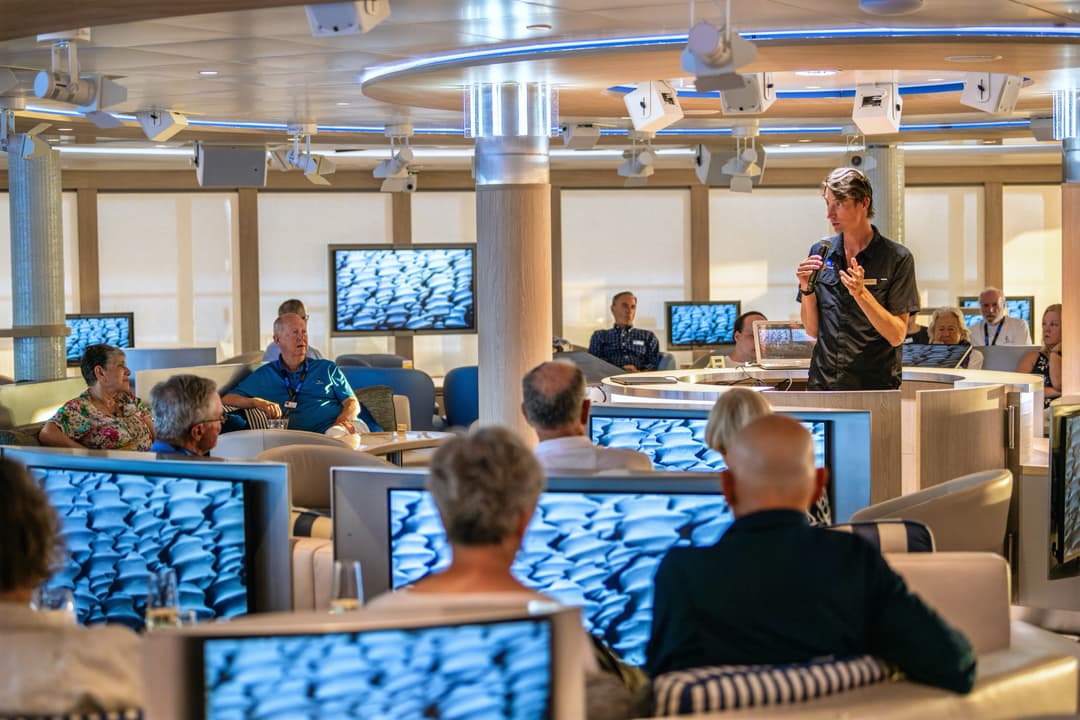
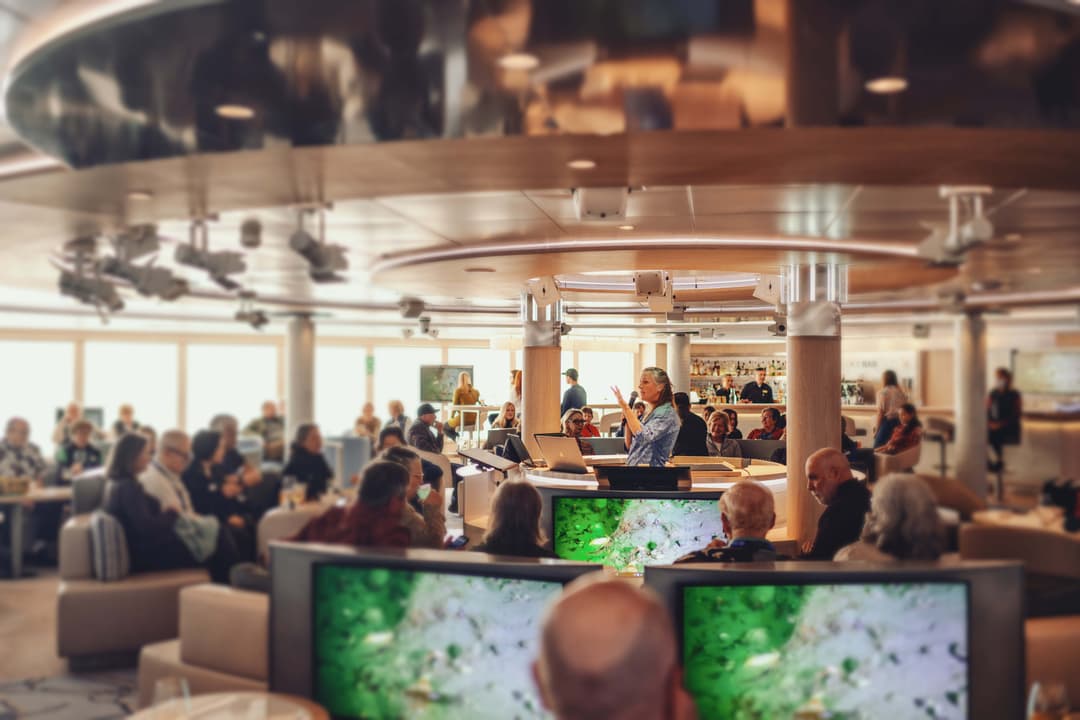
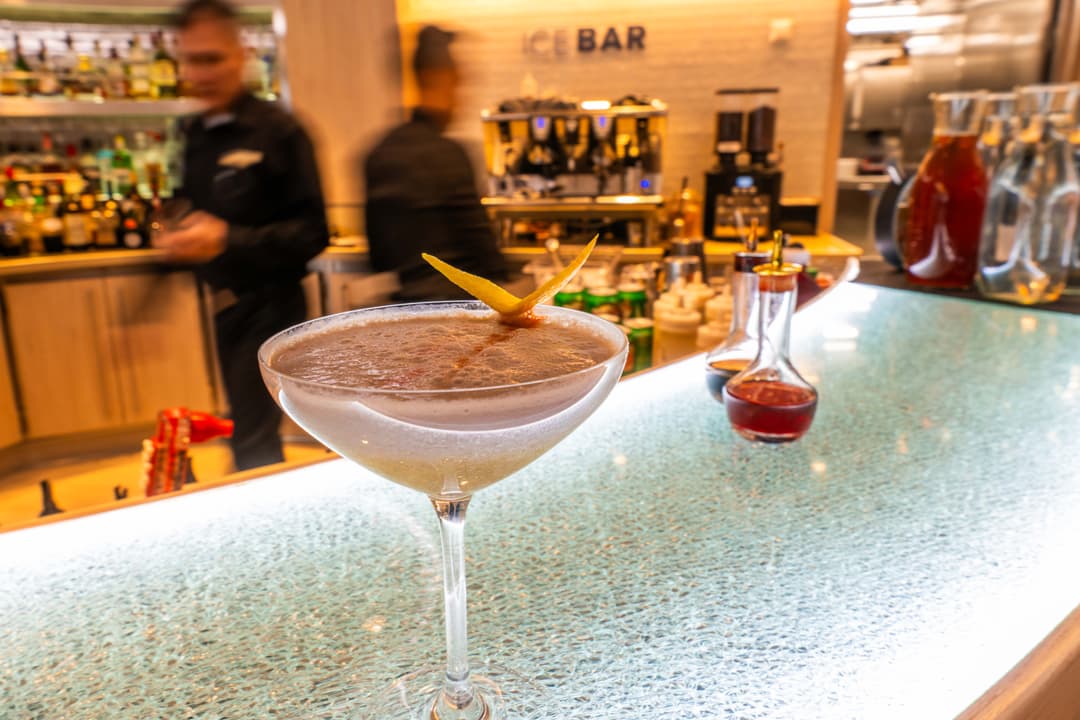
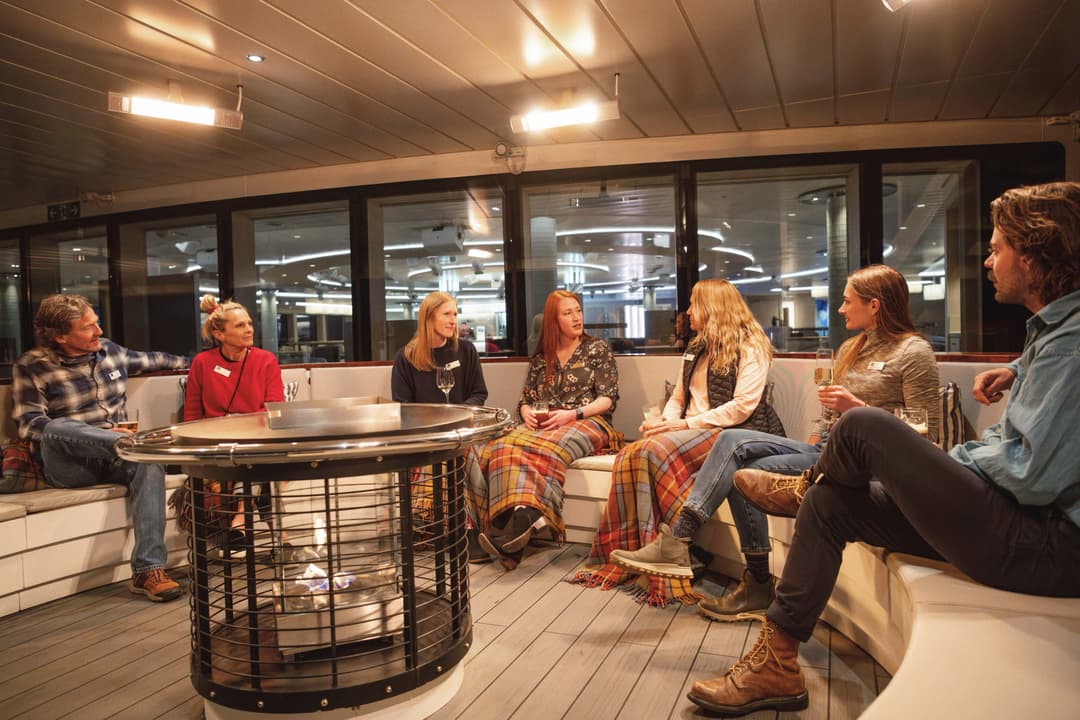
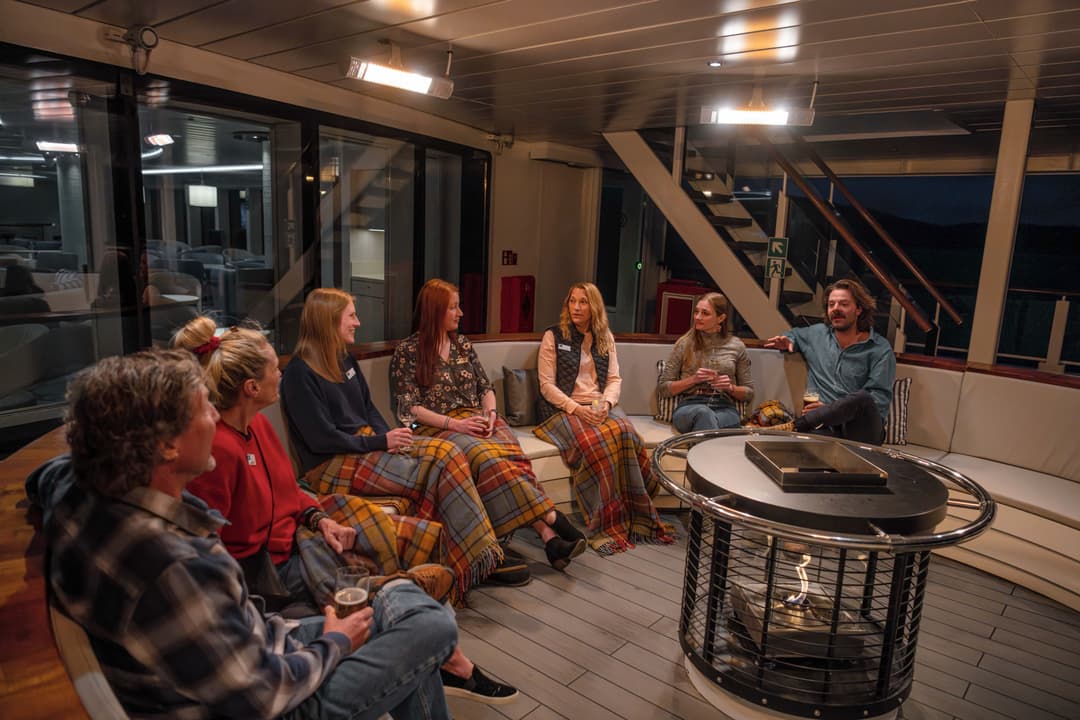
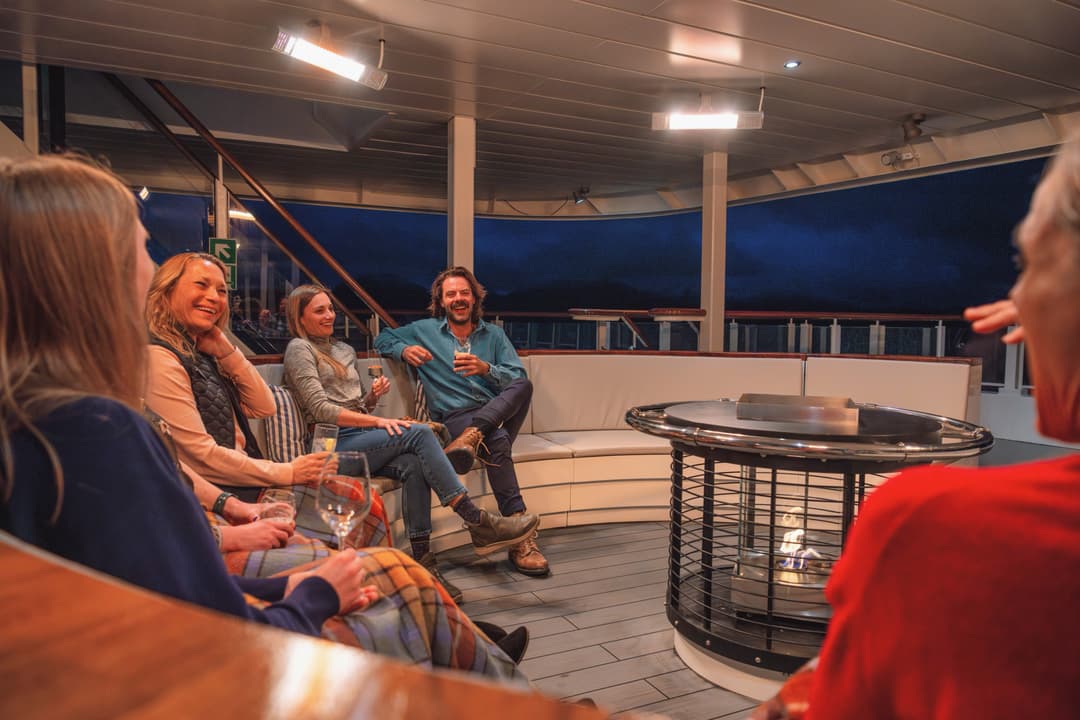
The Ice Lounge is the community hub for Recaps, talks and presentations, featuring 39 flat screens displaying information during lectures and our traditional recap of the day. It also offers an extensive variety of alcoholic and non-alcoholic beverages. The Deck at of the Ice Lounge comprises of two fire pits that are lit up every evening for social gatherings and storytelling. Self-service coffee and tea, cold beverage station, and Photo Kios....


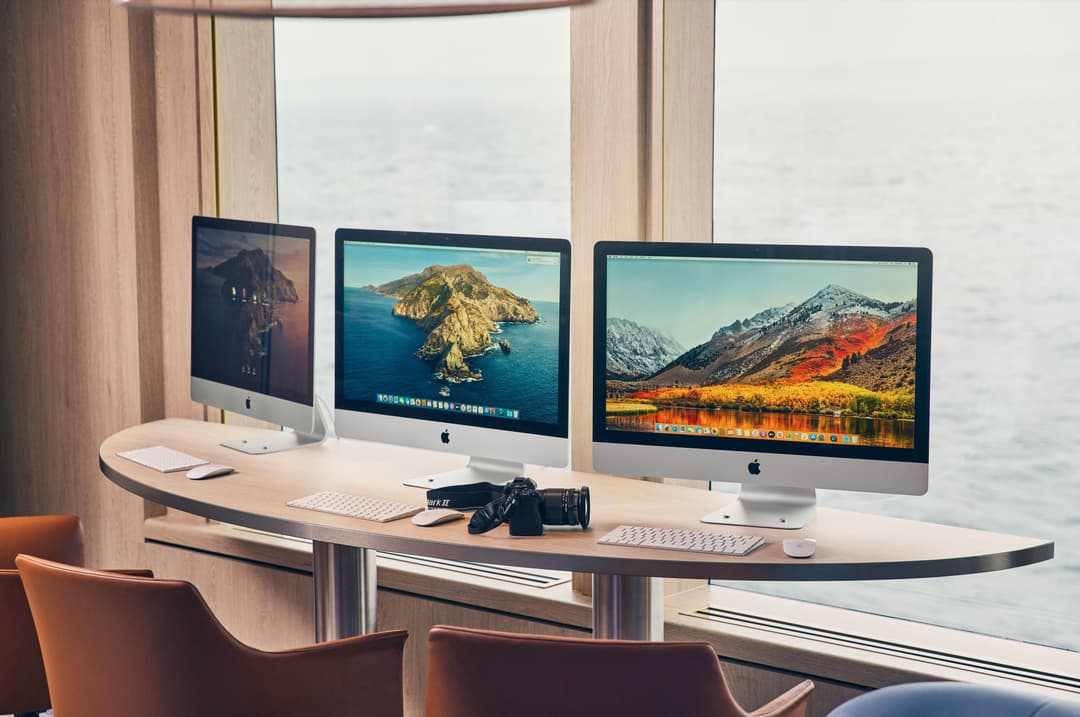
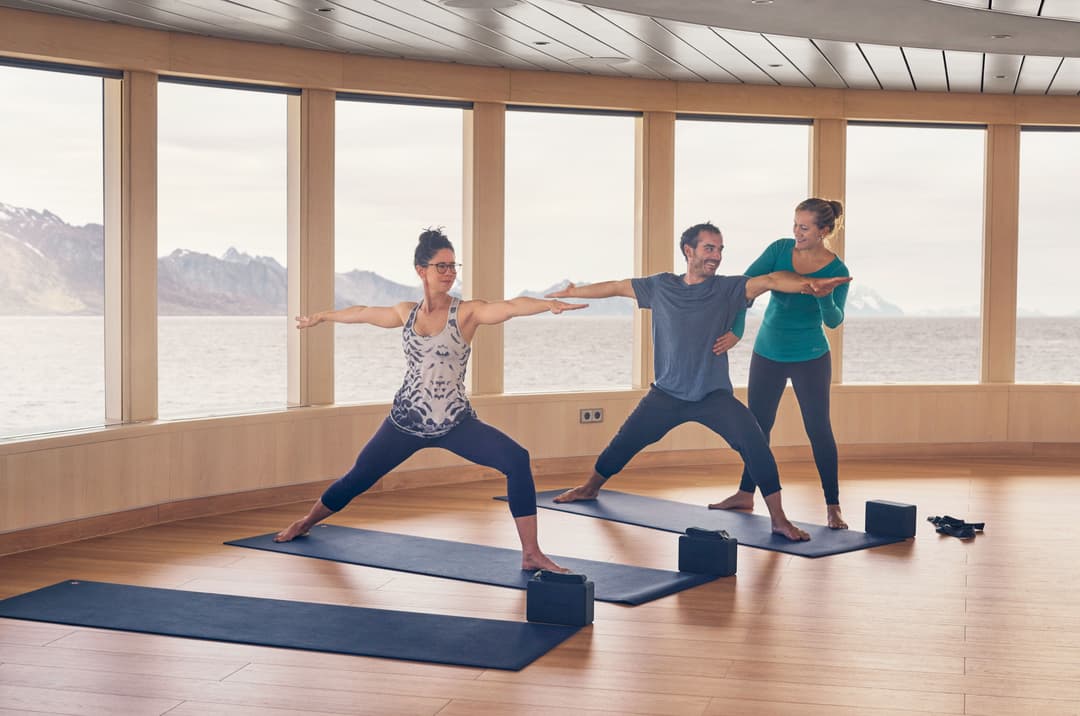
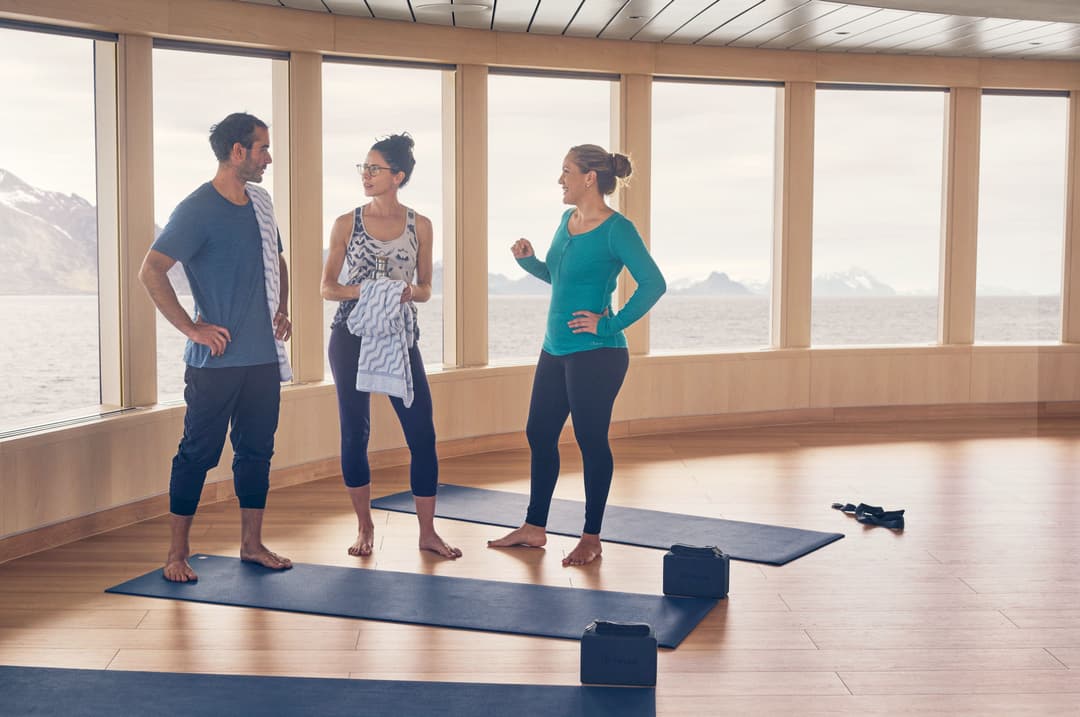
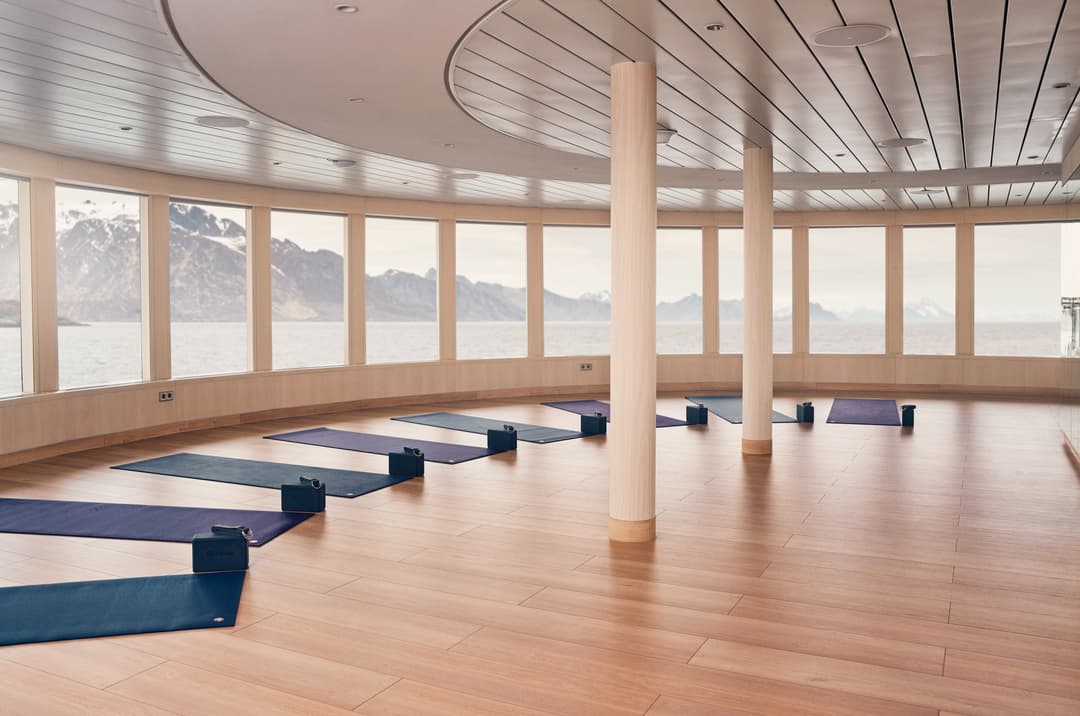
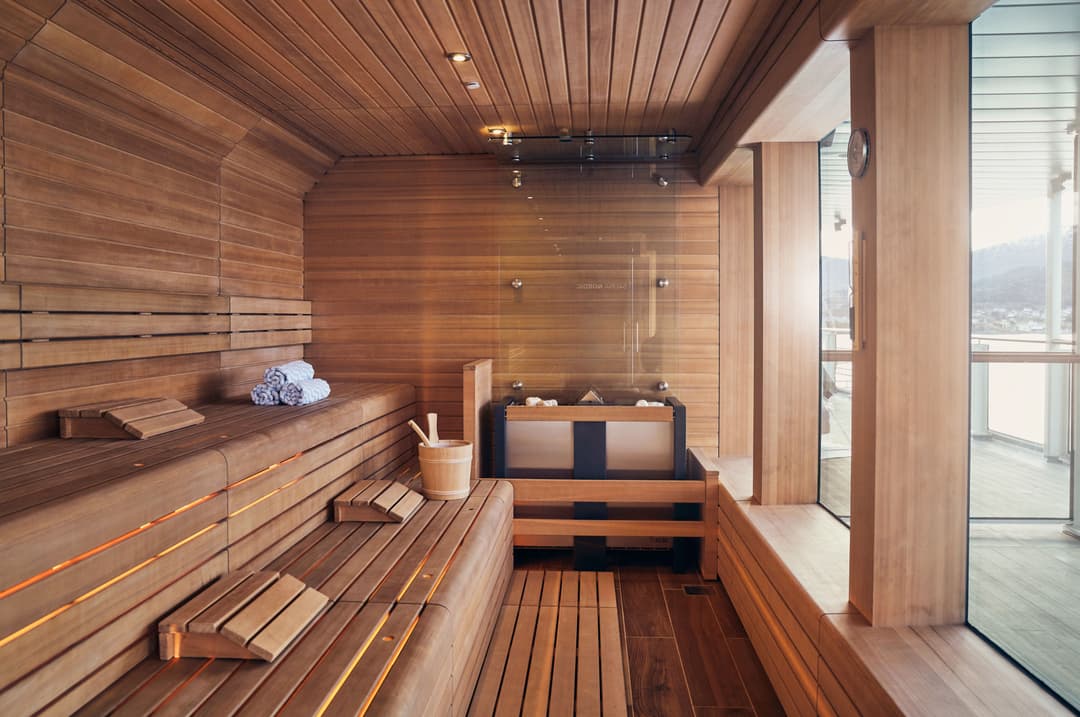
Find tranquility at sea with our wellness program, designed to refresh the body and renew the mind. While offerings vary, most ships have spa treatment rooms and other dedicated wellness spaces, such as fitness centers, yoga studios and saunas. Greet the day with a sunrise stretch session, or wind down after an adventure ashore with a restorative massage. Each experience is tailored to your unique wellness needs, leaving you feeling refreshed and ready for the journey ahead.
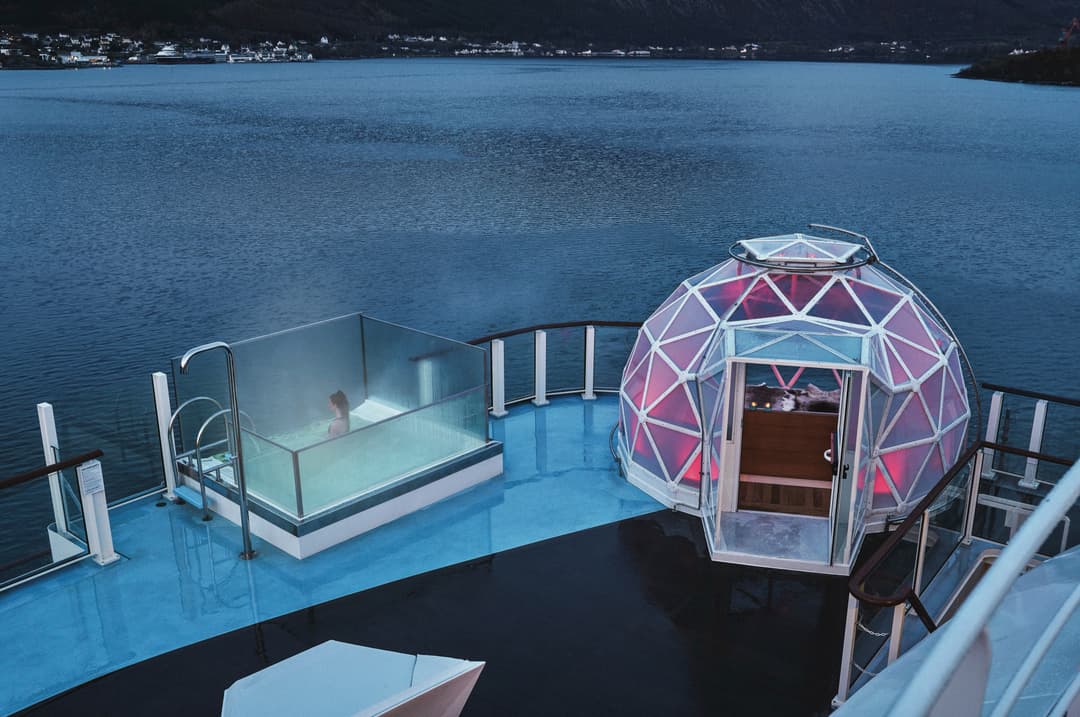
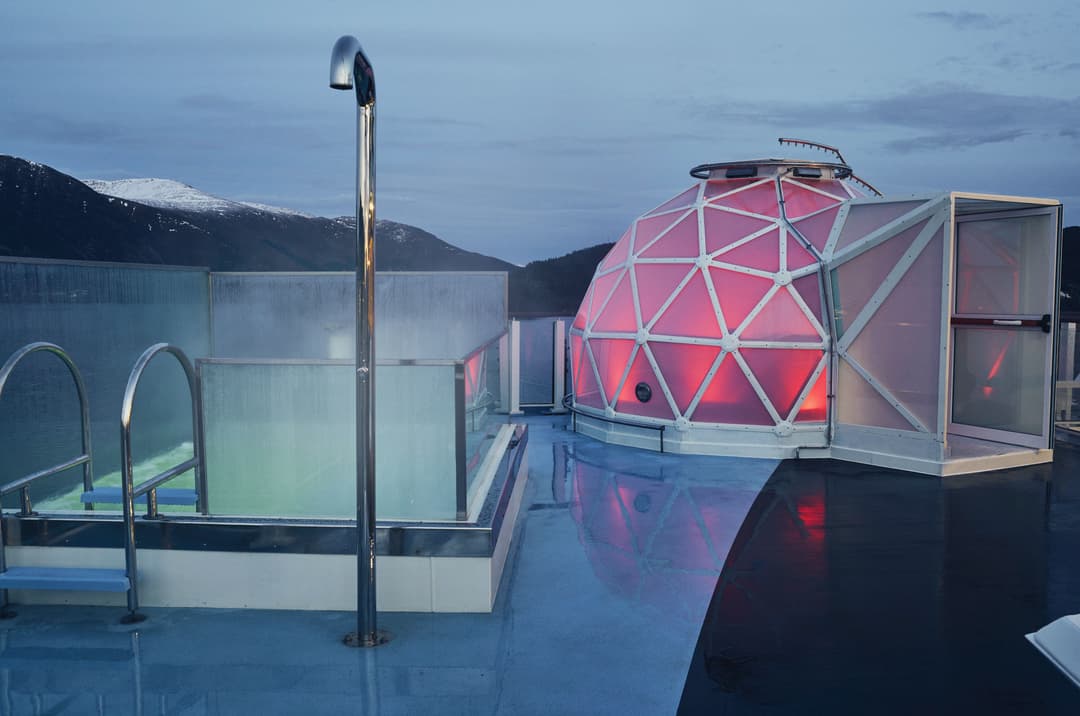
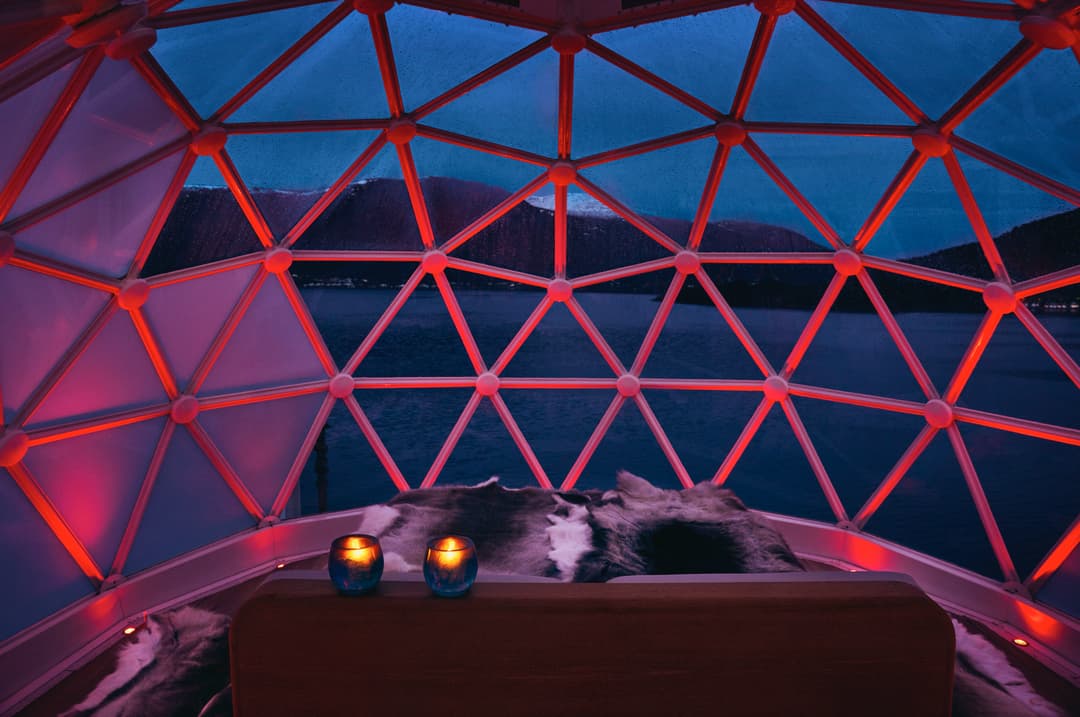
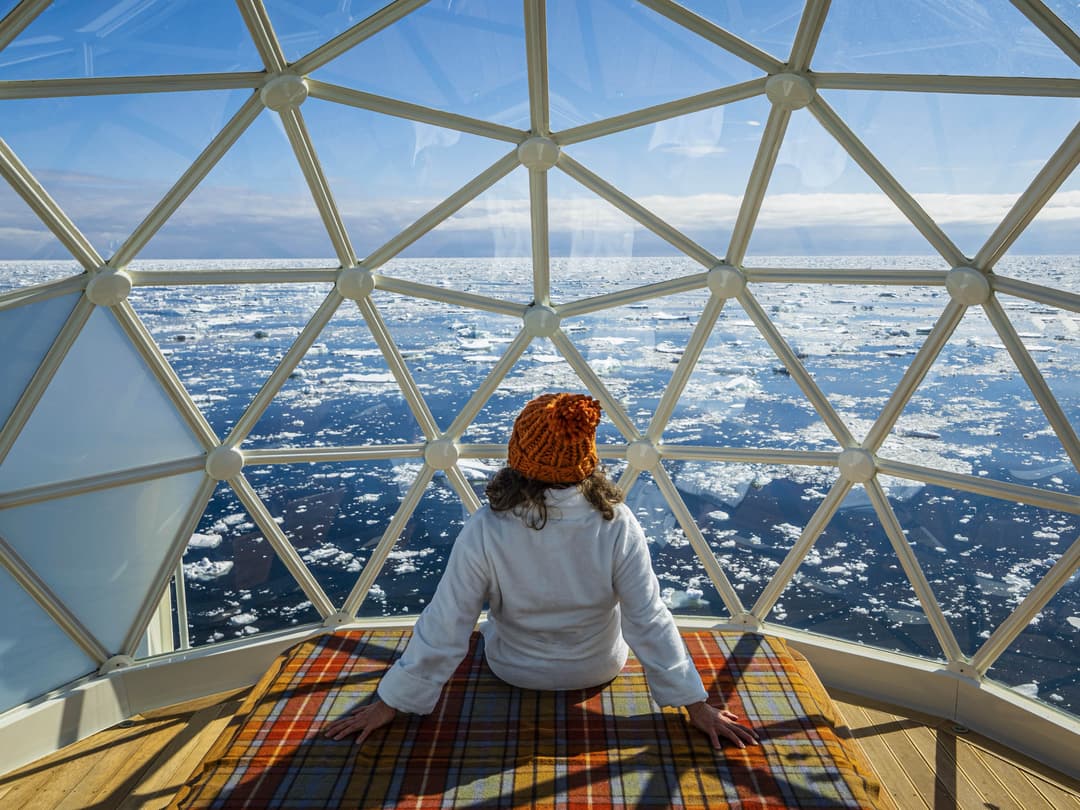
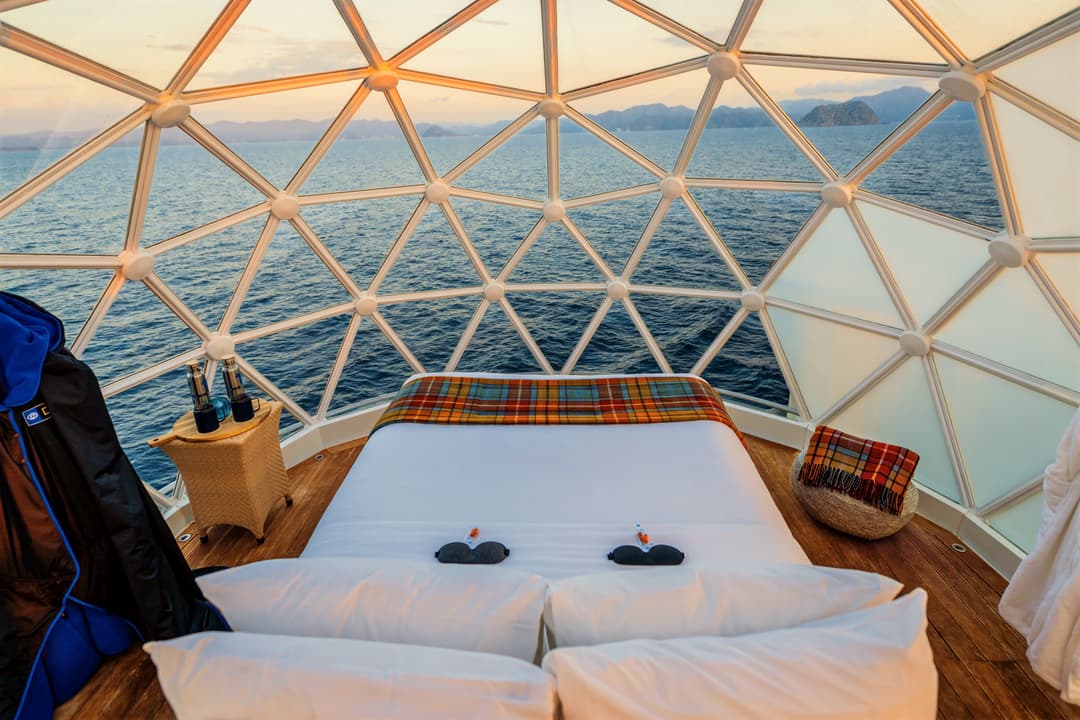
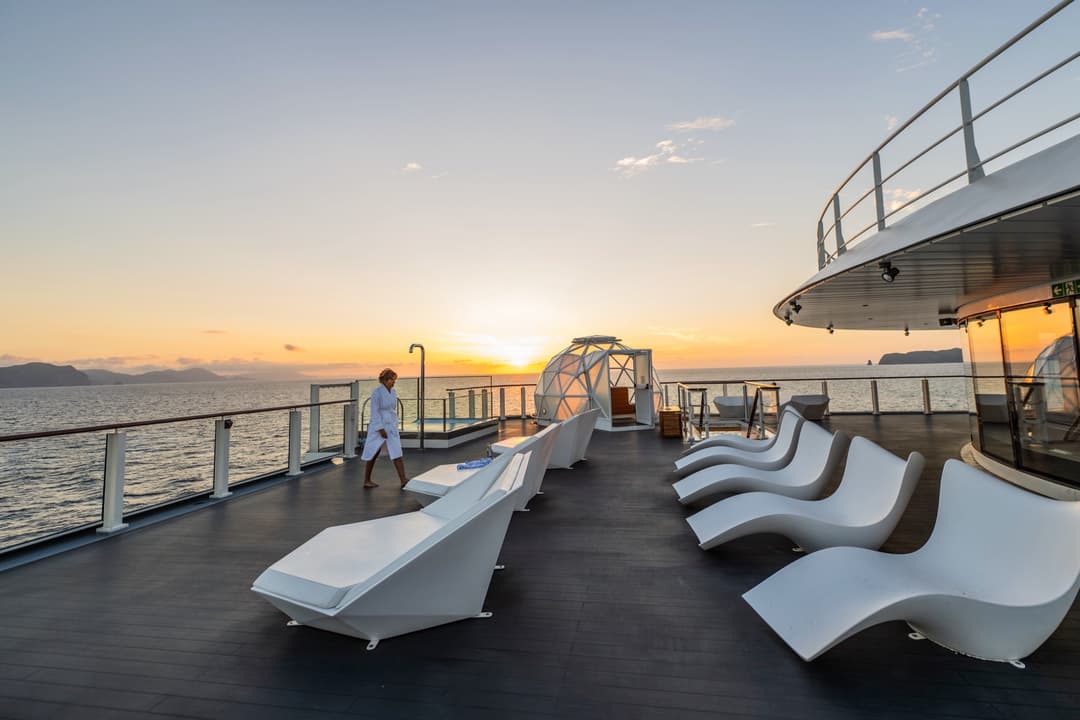
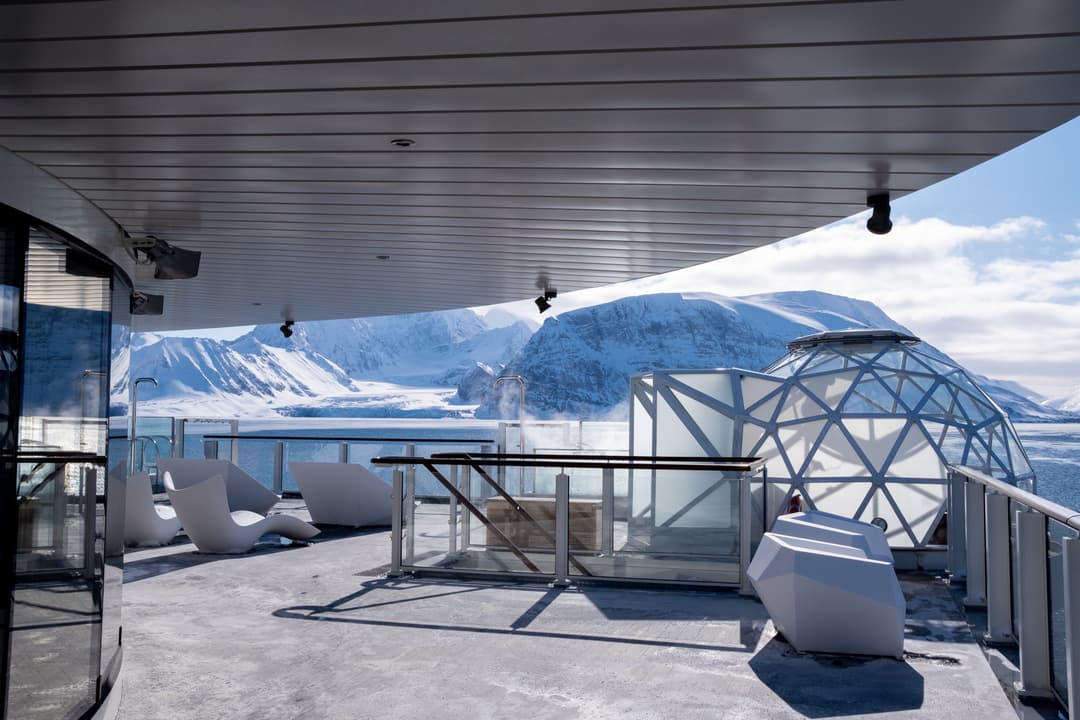
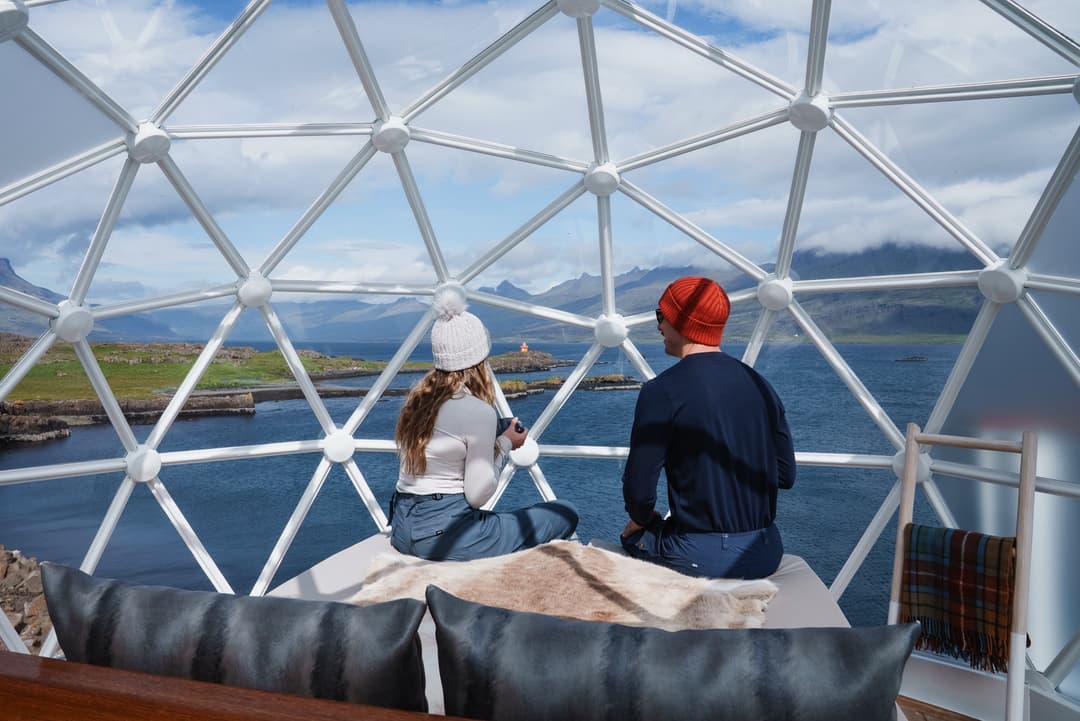
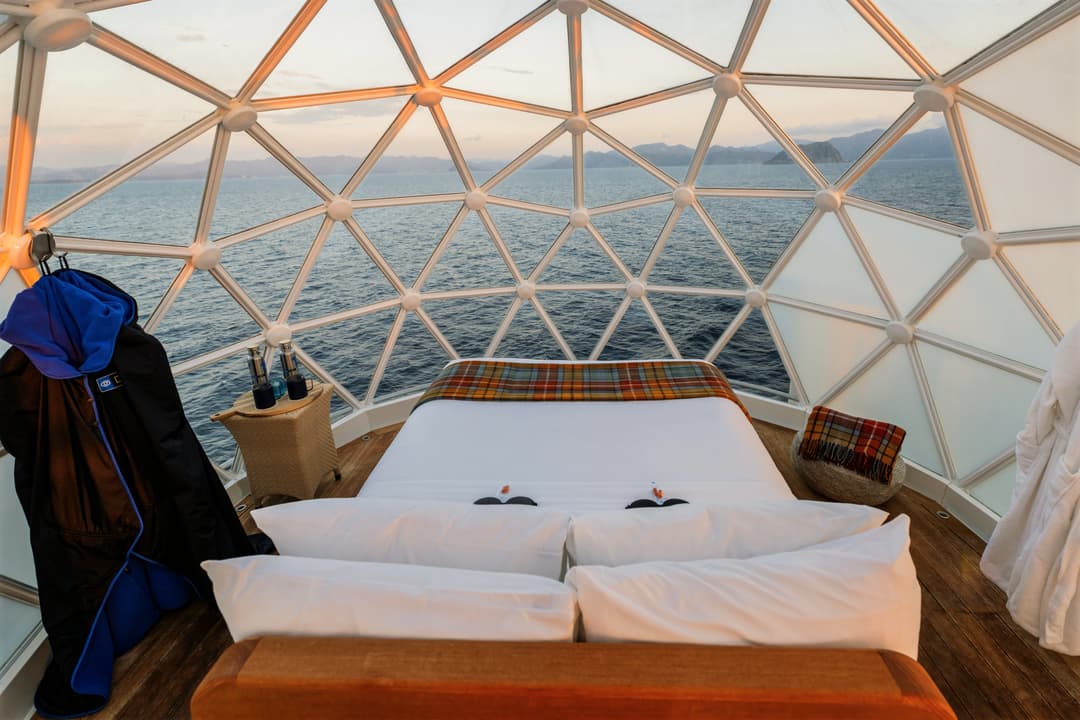
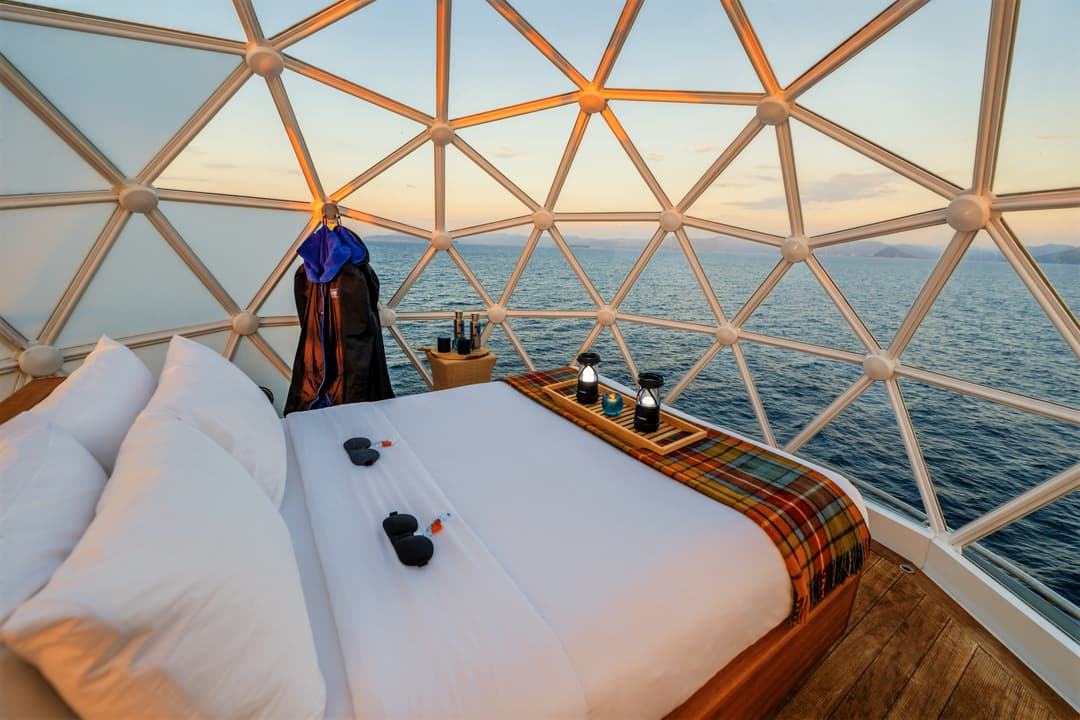
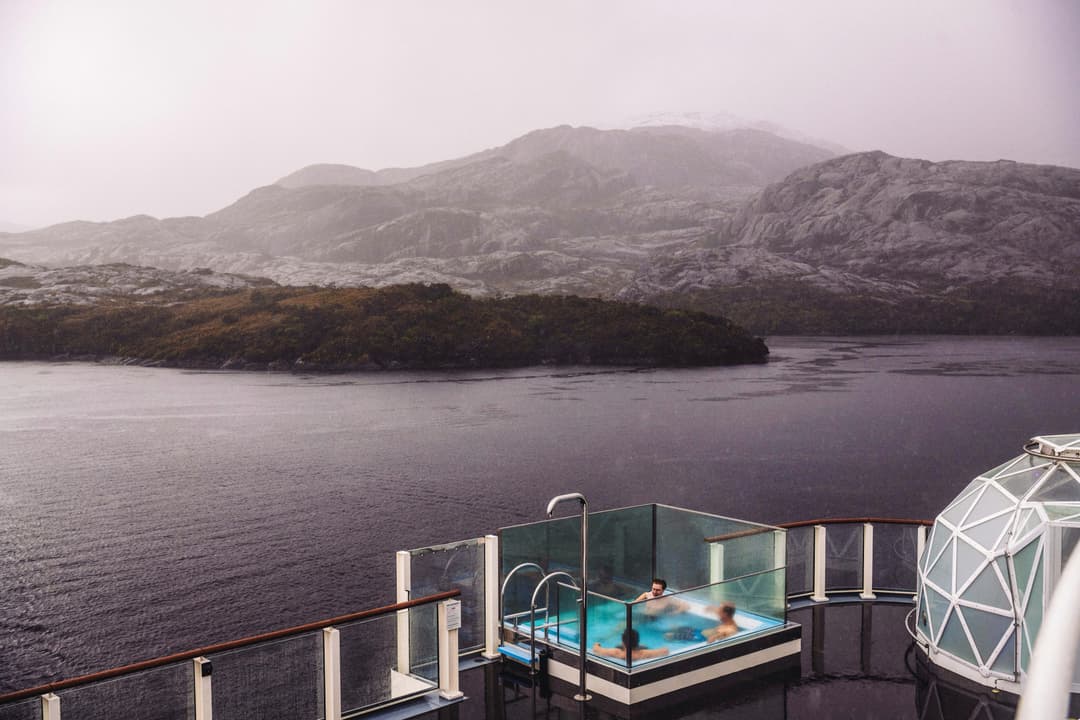
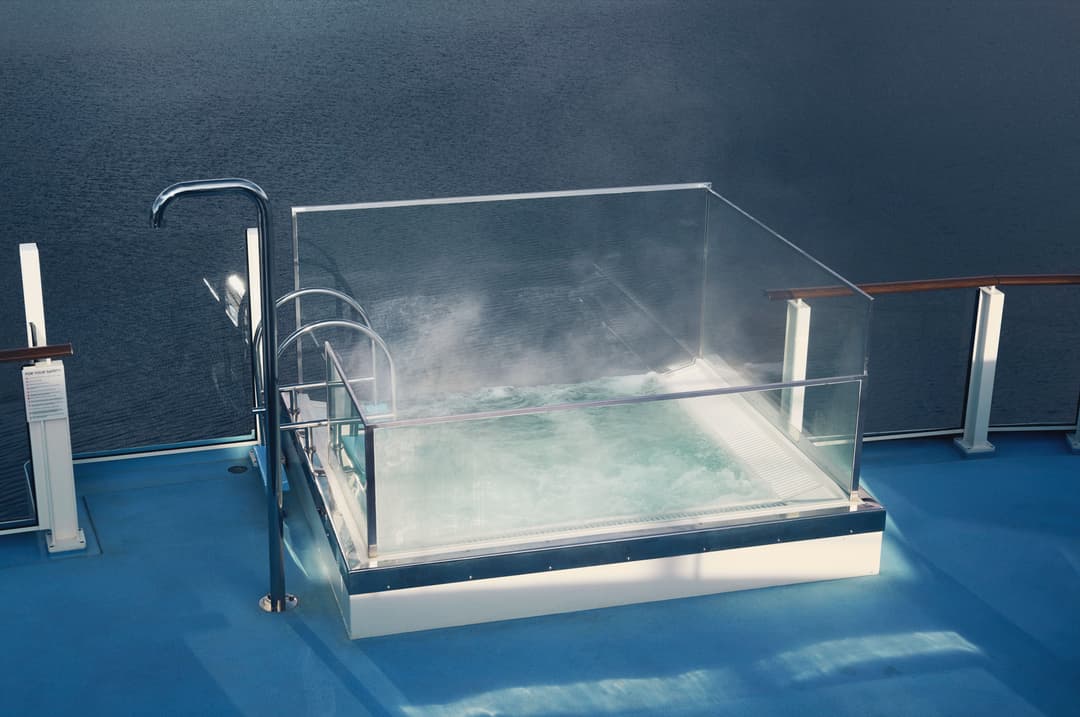
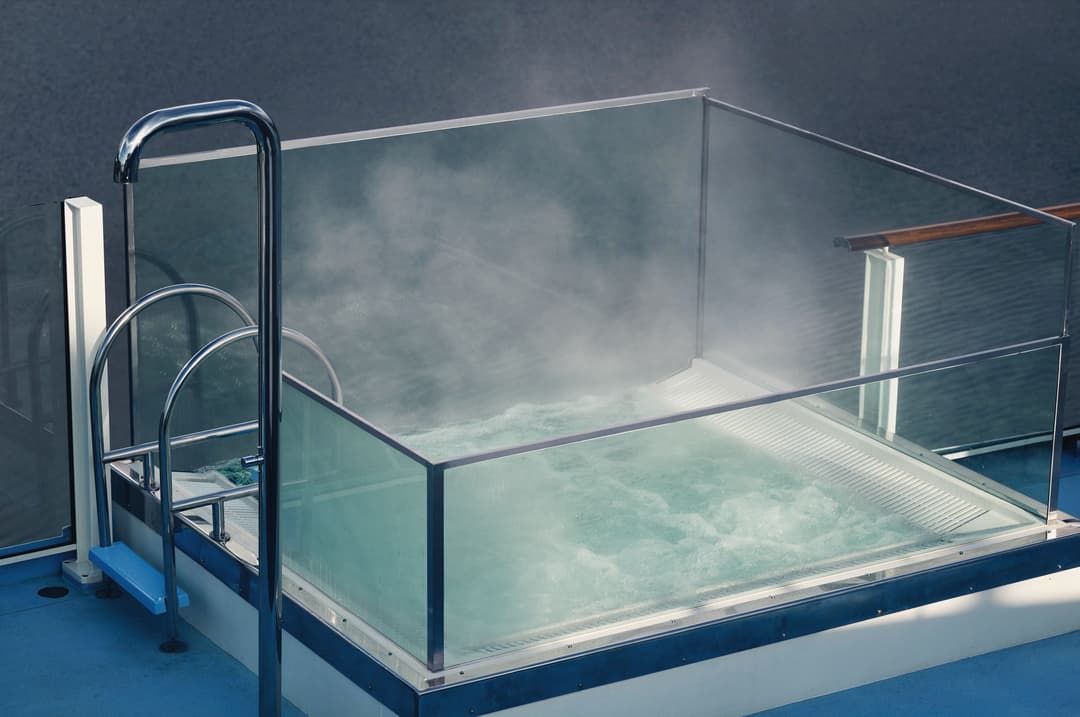
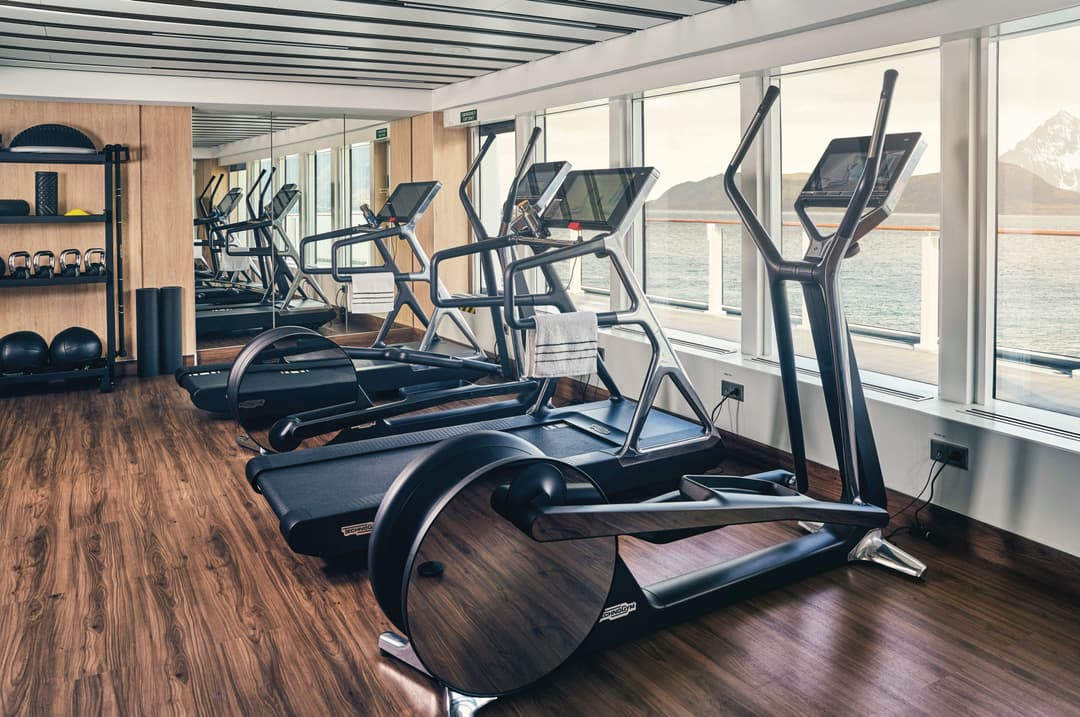
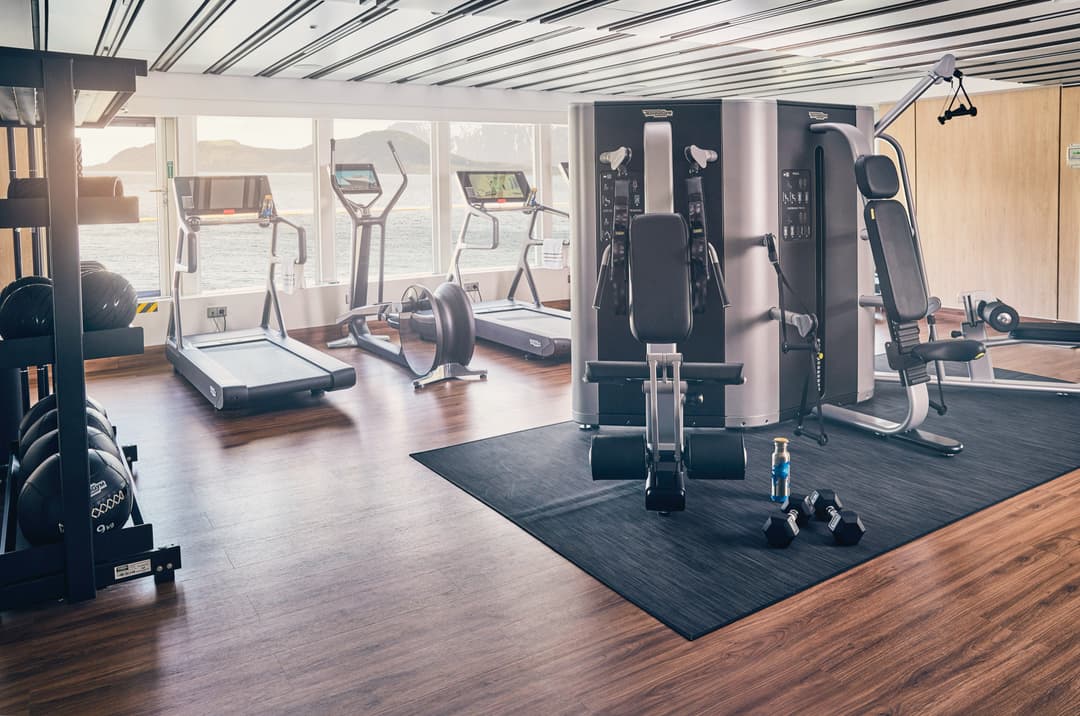
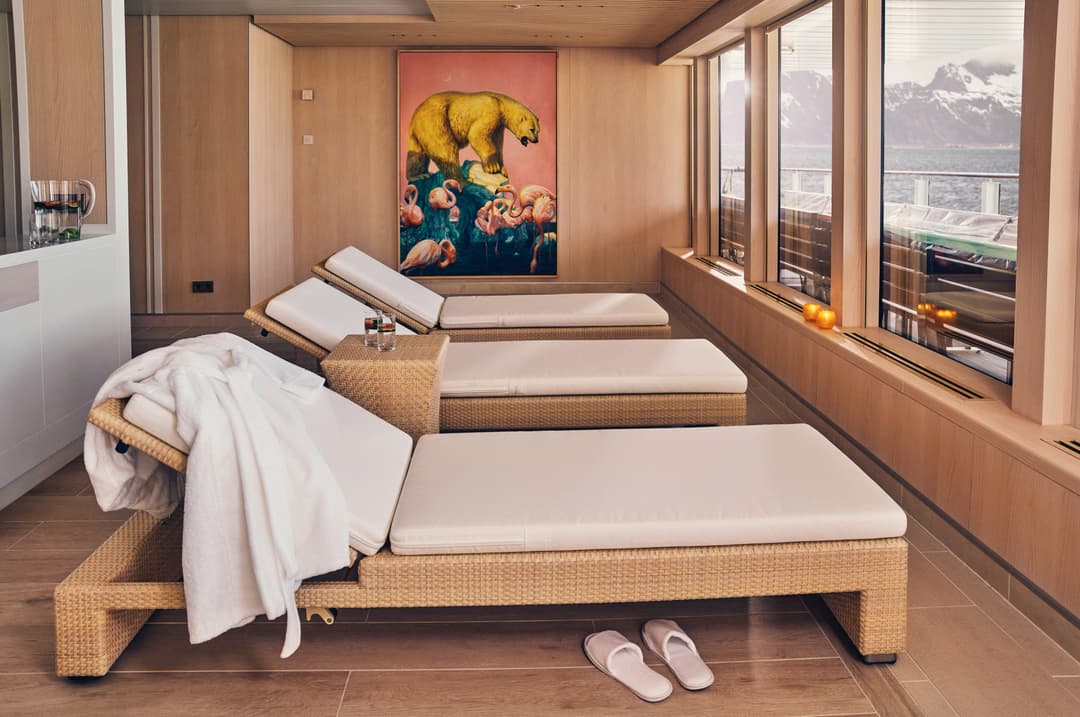
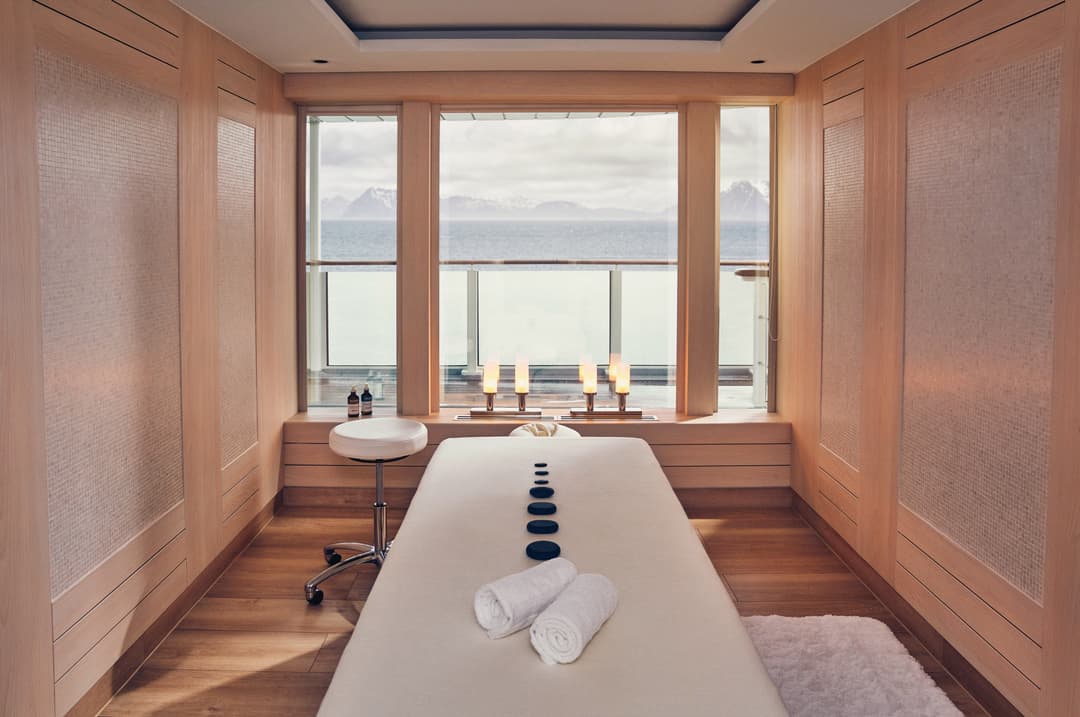
Ships elegantly crafted and equipped for discovery
National Geographic-Lindblad Expeditions' ships are uniquely equipped with state-of-the-art tools so you can experience the excitement and wonder of genuine exploration, no matter where you travel with us. Navigate along rocky shorelines and into secluded coves in a kayak or on a stand-up paddleboard or dive into remote waters to discover a galaxy of brightly colored fish—we suppl....
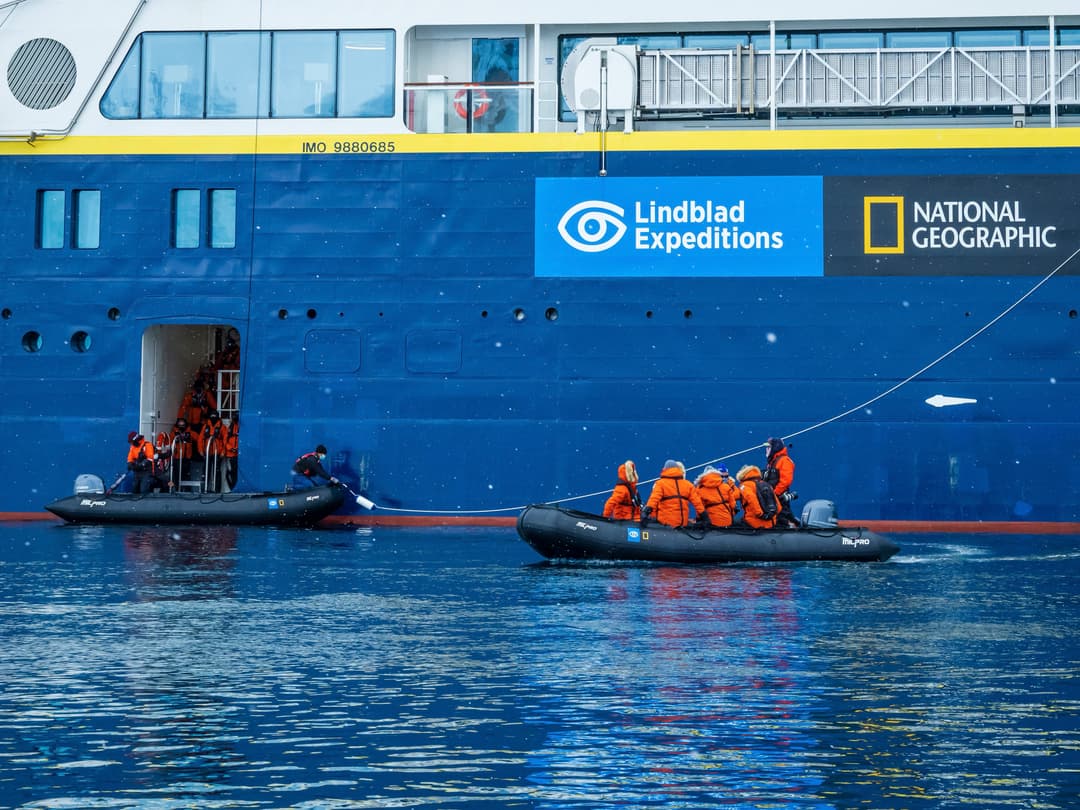
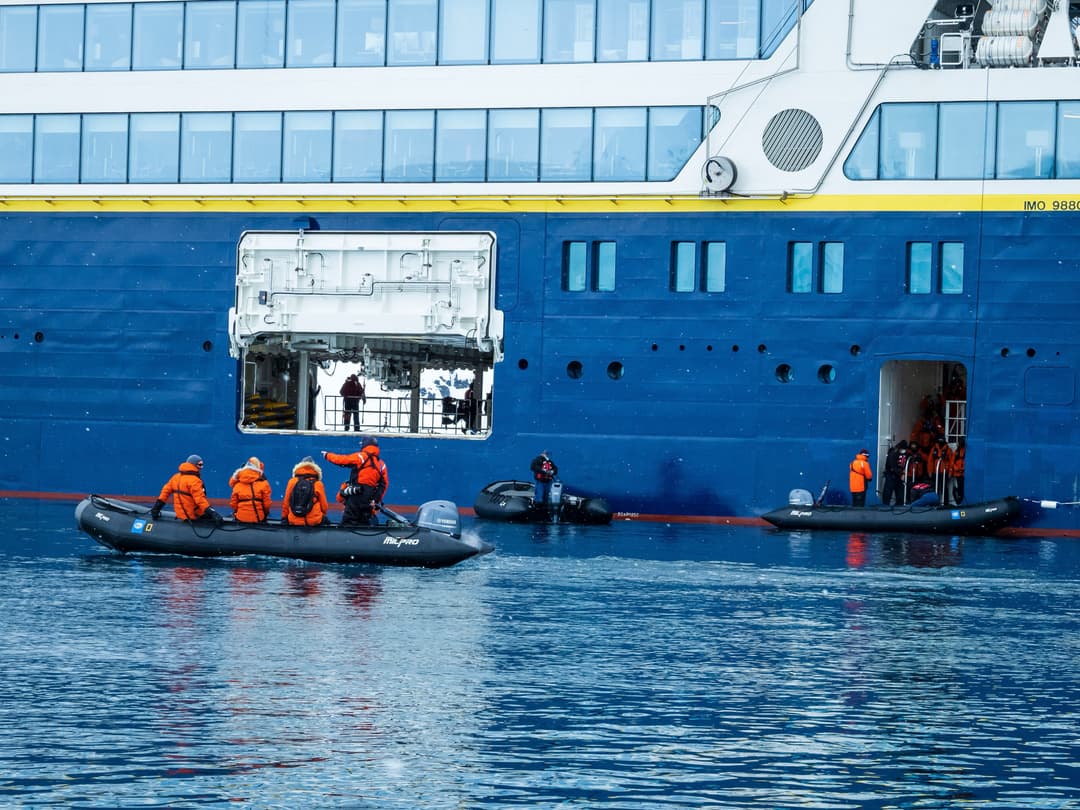
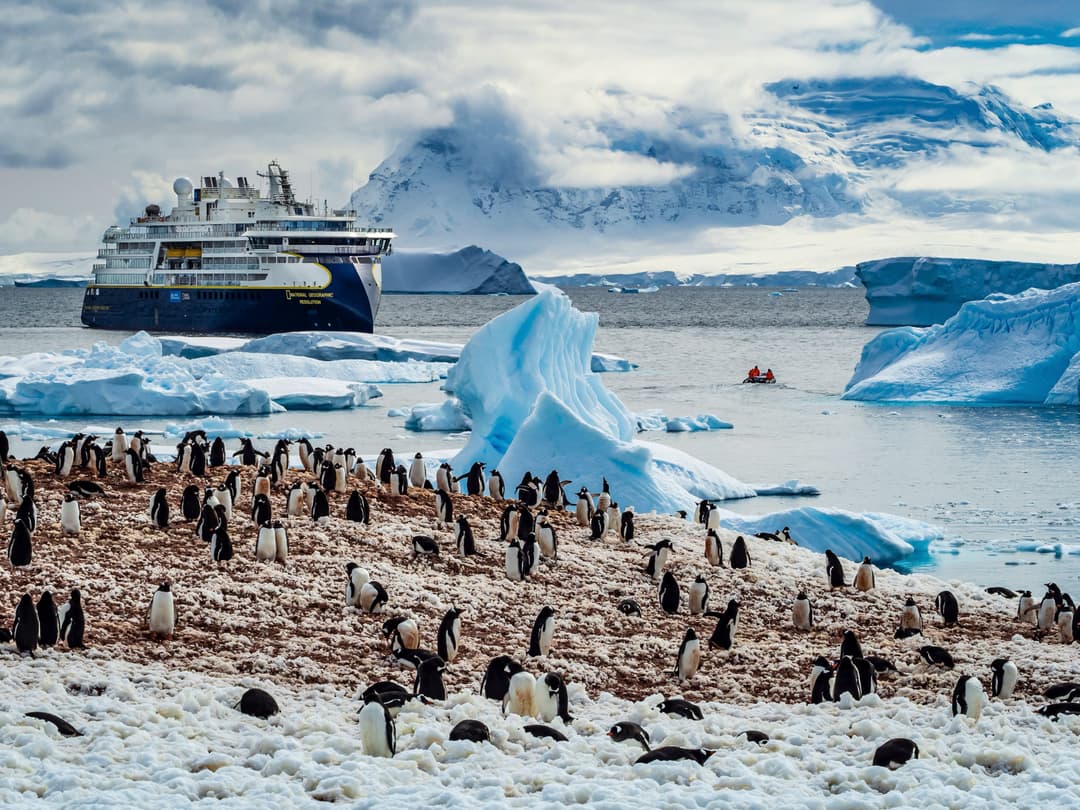
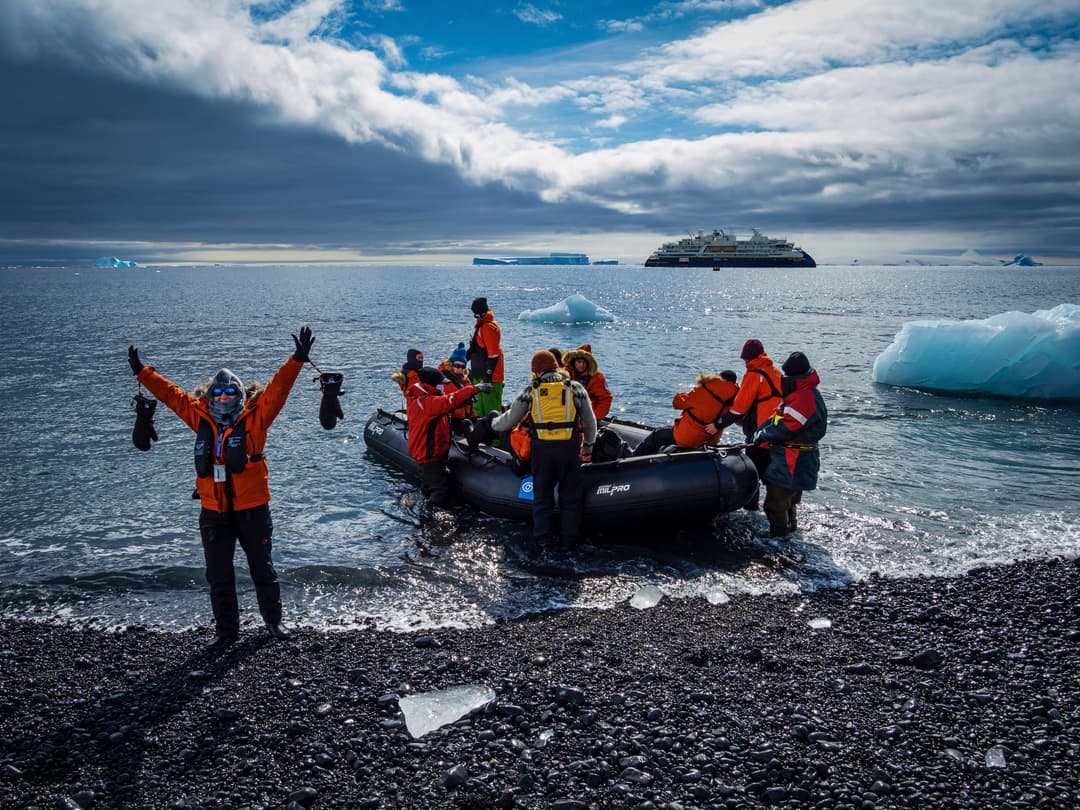
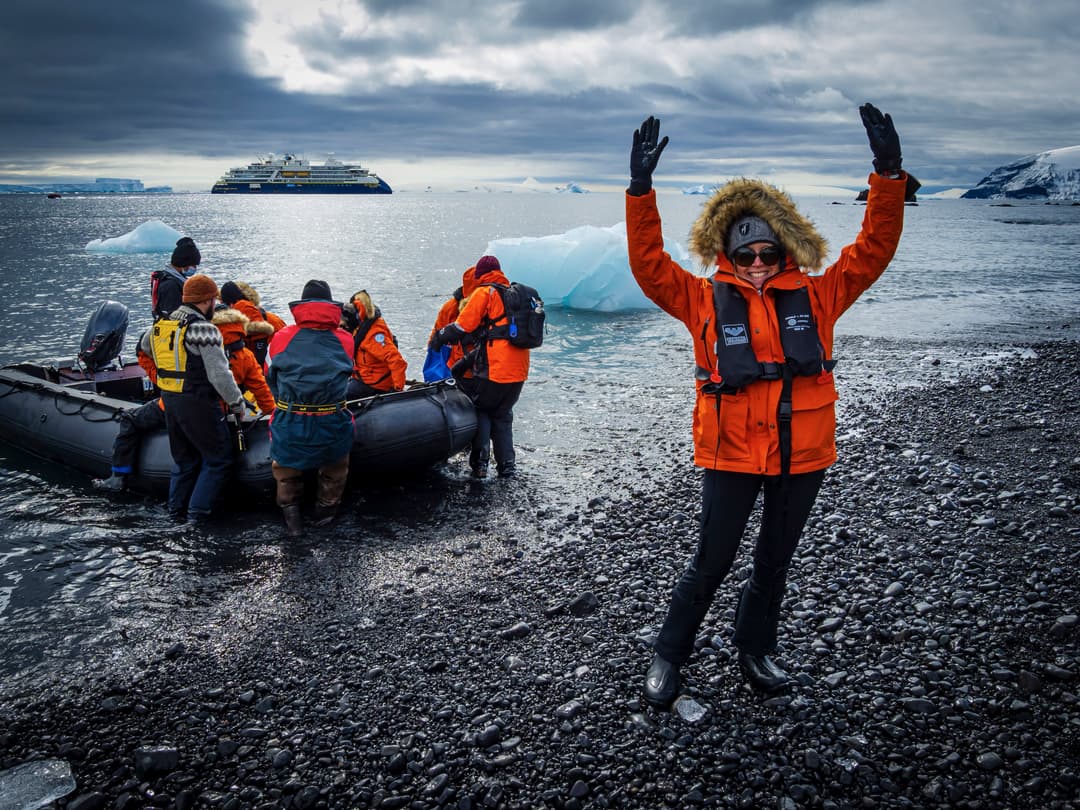
Wherever in the world you choose to explore with National Geographic-Lindblad Expeditions, you will travel alongside a team of experts who are deeply passionate about discovering the places you visit. They are scientists, photographers, and cultural experts at the top of their fields who have spent time immersed in your destination—and they thrive on sharing their knowledge and seeking out new insights alongside our inquisitive guests. For the....
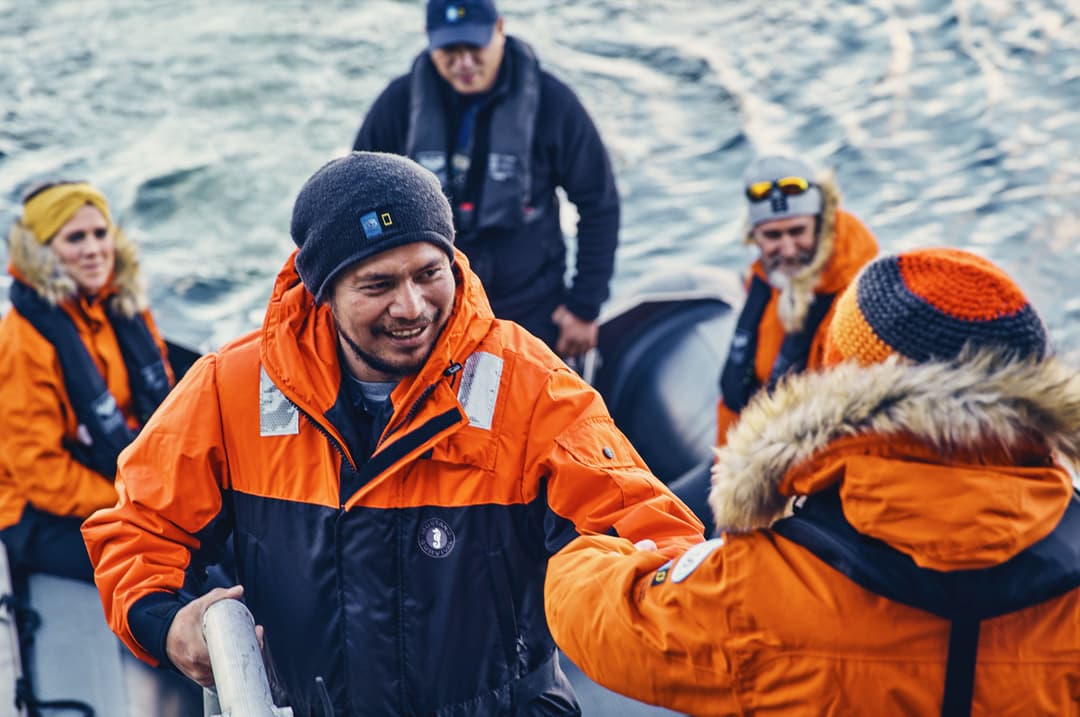
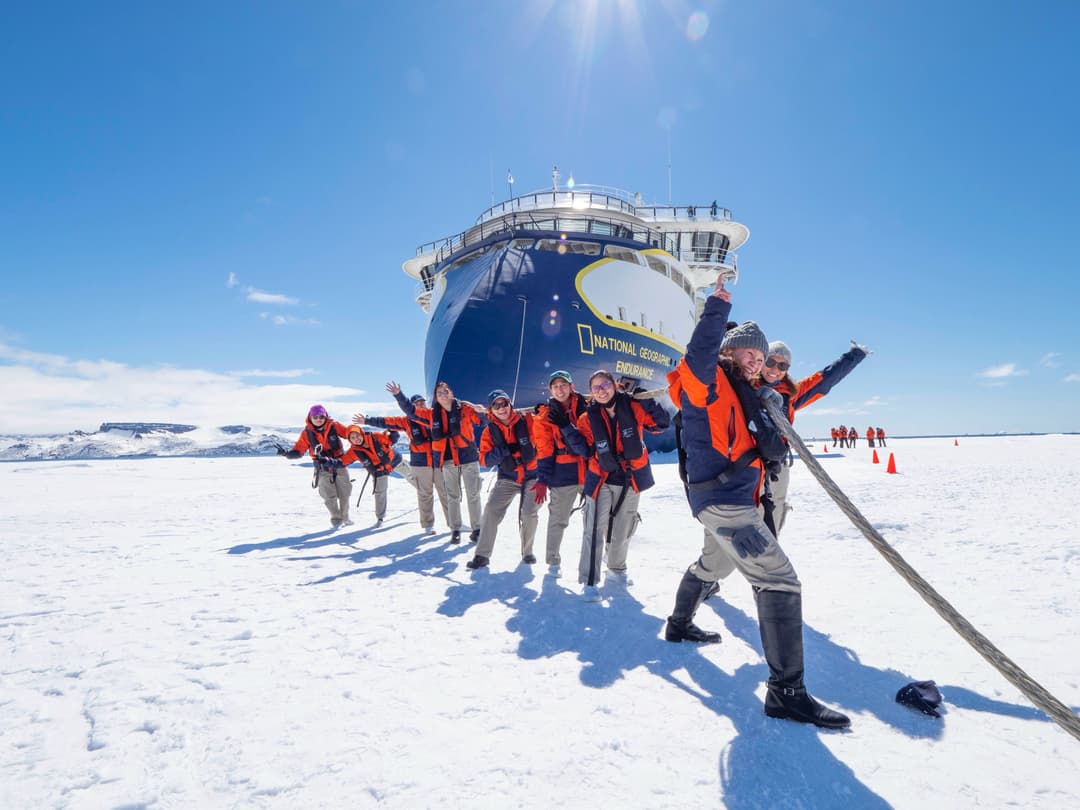
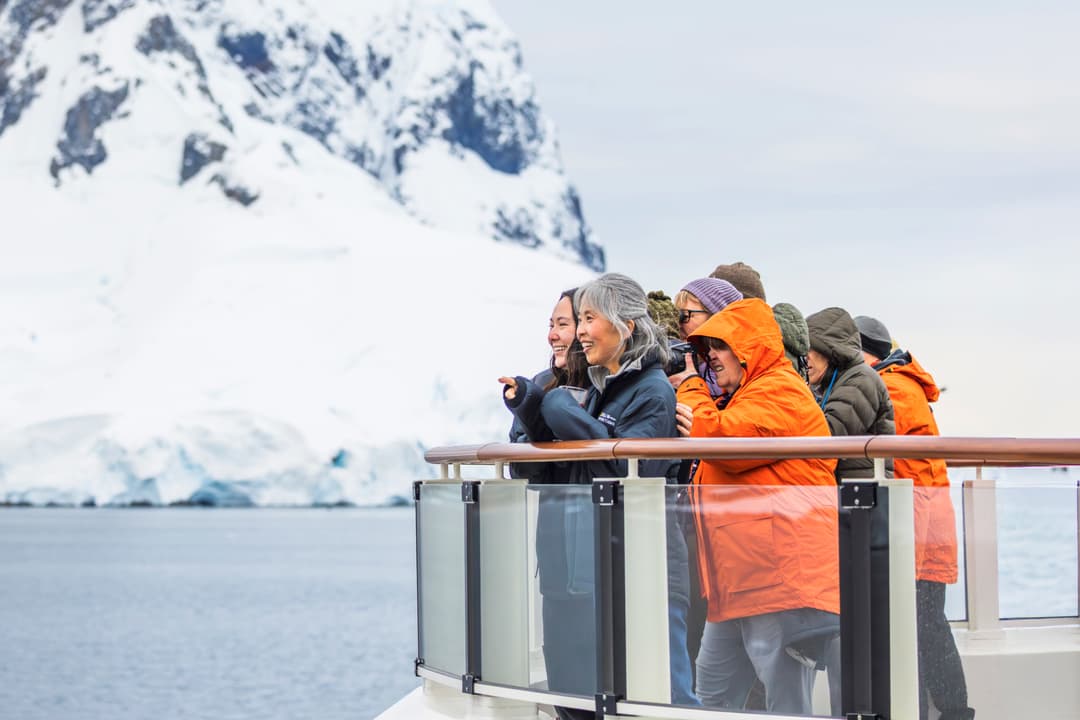
When you travel with Lindblad Expeditions, you'll enjoy exclusive experiences featuring renowned individuals from the worlds of science, exploration, literature, music, photography, culture and more, thoughtfully curated to enrich your expedition.
From performances of original music inspired by the destinations we visit to treks with iconic explorers, our guest speakers offer in-depth insights and compelling conversations, helping you to....


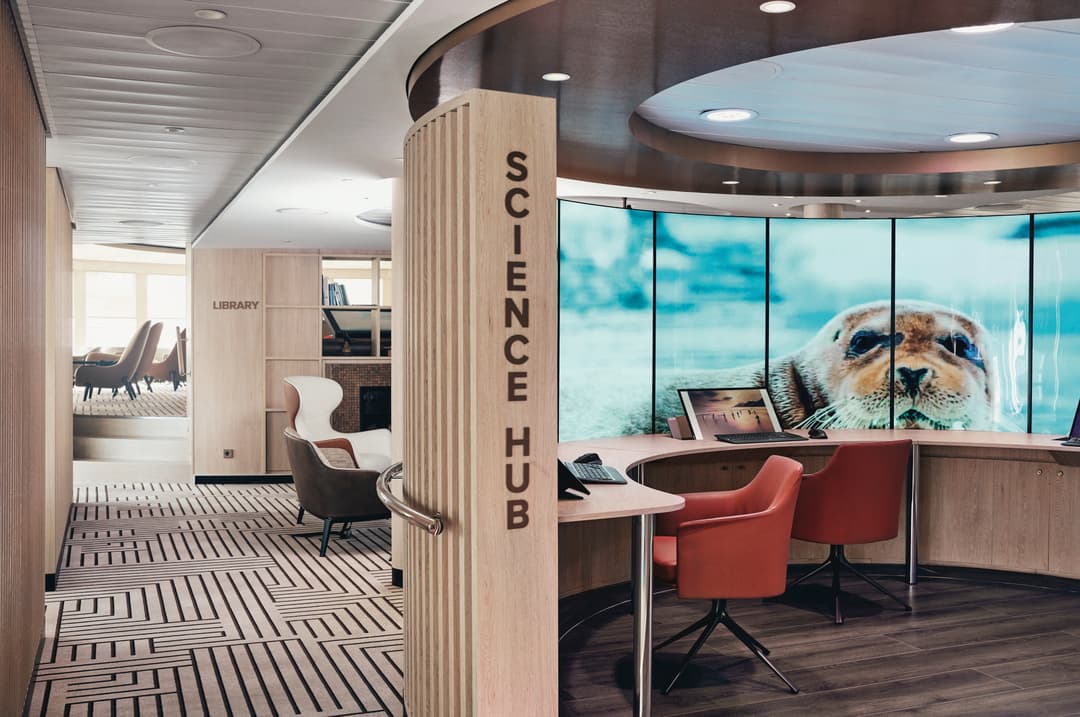
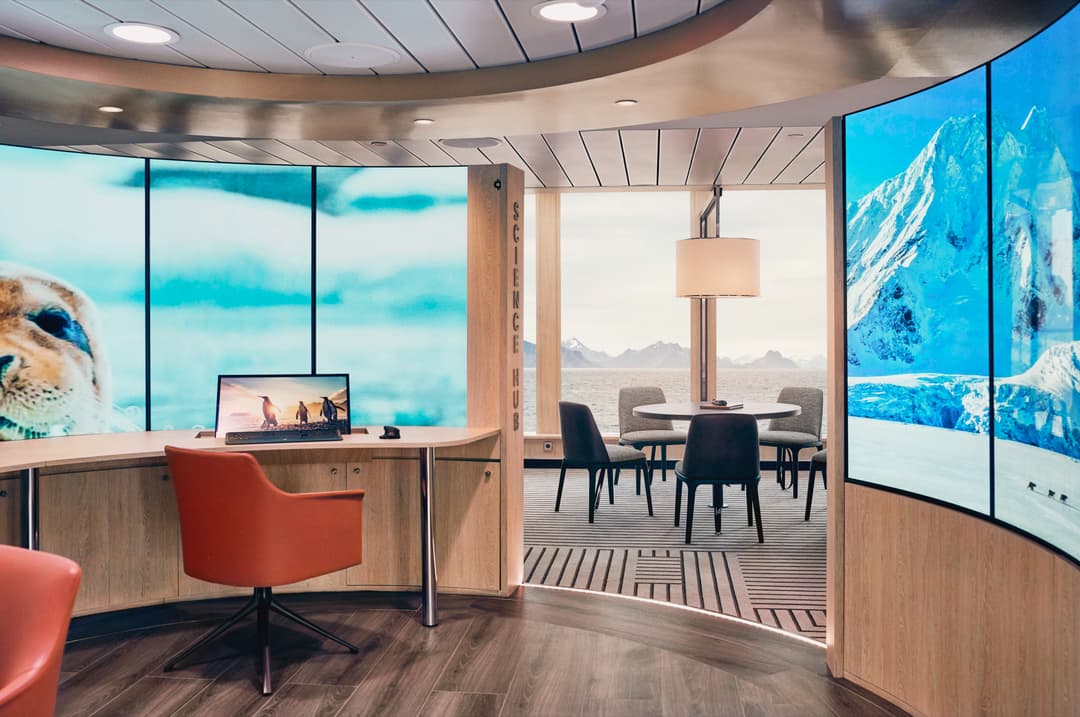
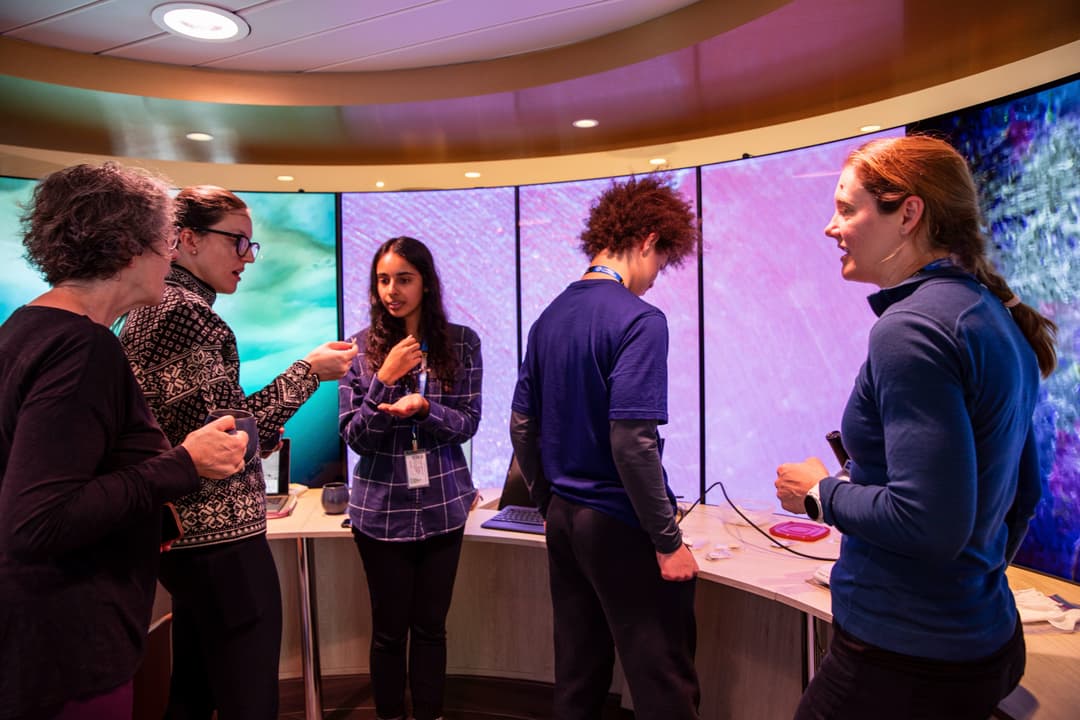
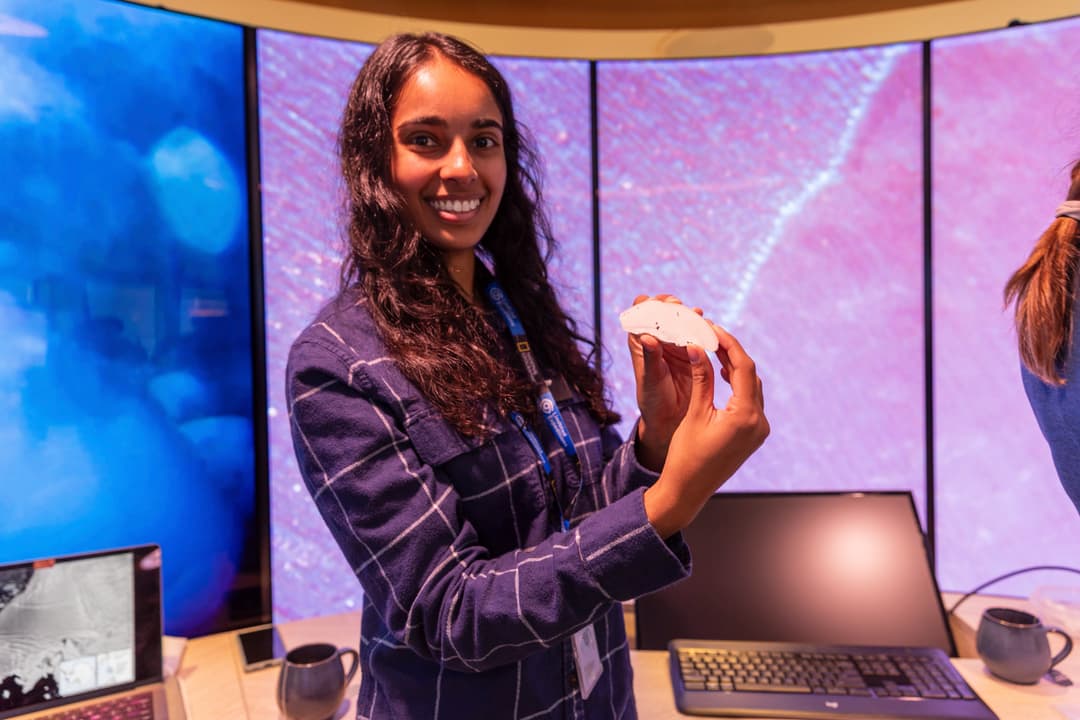
Guests can get involved in the advancement of science by participating in a variety of research projects hosted on their expedition..
Happywhale
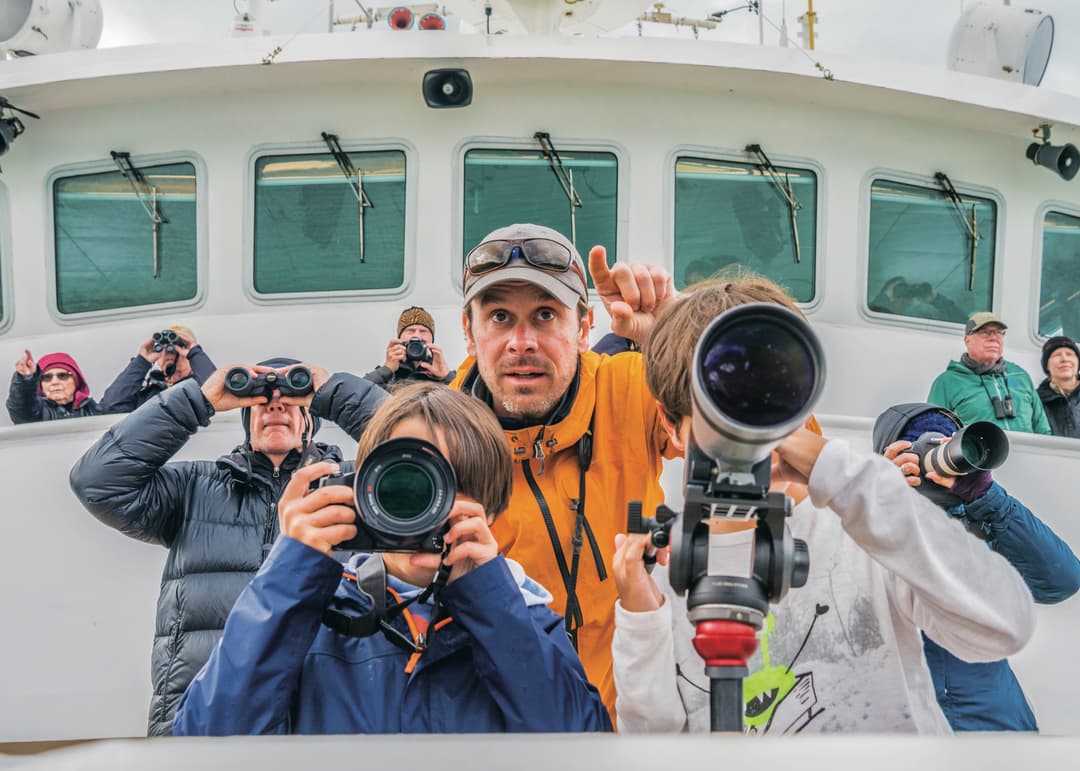
Whales have unique markings on their flukes that allow scientists to identify individuals and track them across the globe. When guests capture pictures of the whales spotted on expedition, they can submit them to the Happywhale app to aid in the tracking process. National Geographic....
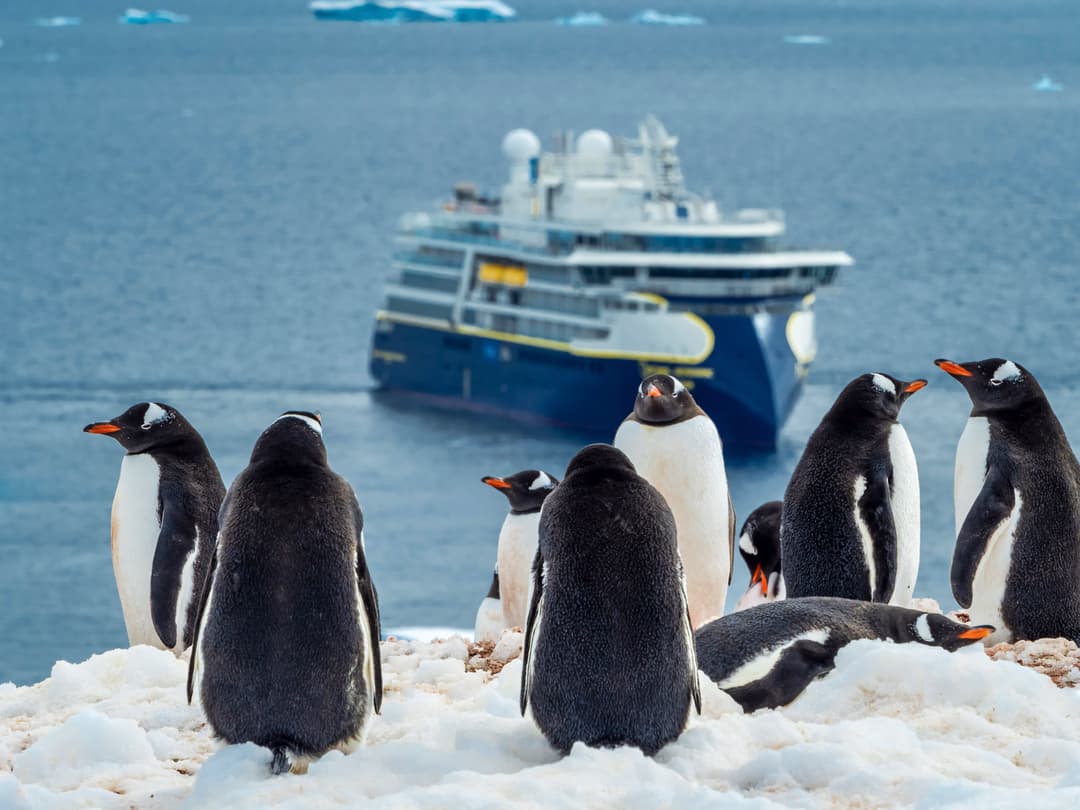
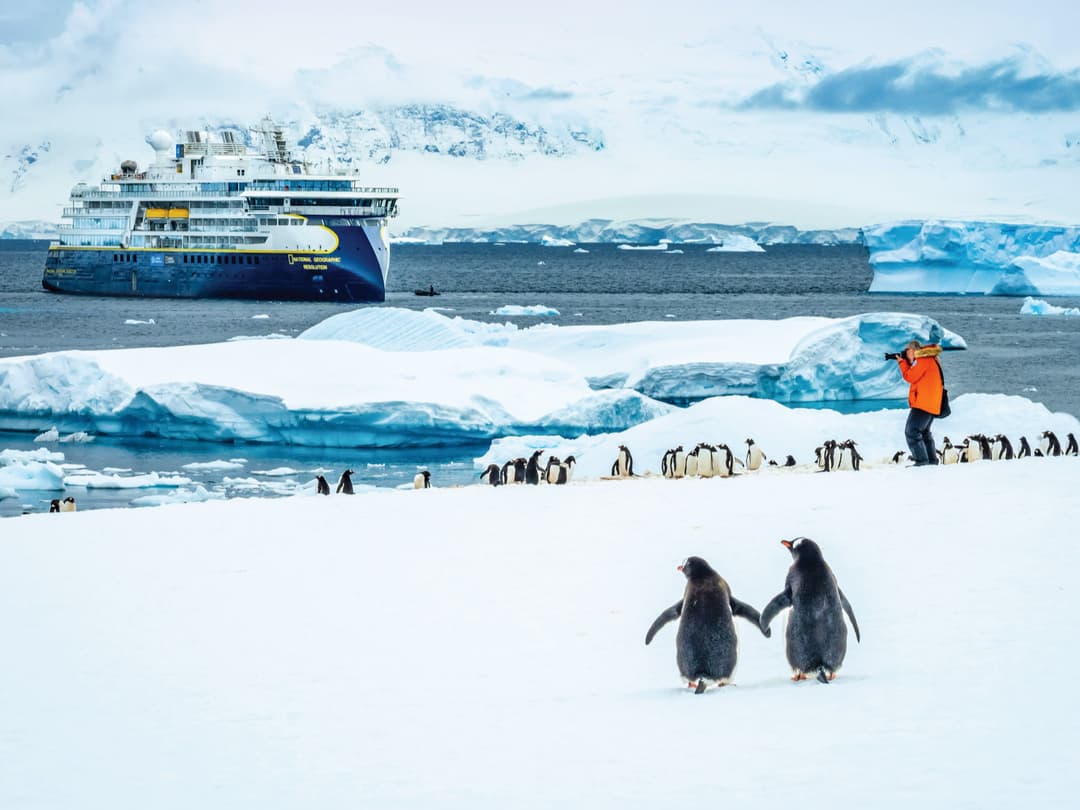
The ships in the National Geographic-Lindblad Expeditions fleet are not only equipped for adventure—they also host important research and conservation work as part of the Visiting Scientist Program. This innovative initiative allows scientists to use the fleet as a platform to build and foster their research endeavors in places like Antarctica, the Arctic and the Galápagos.
The Visiting Scientist Program has been active for years, and i....

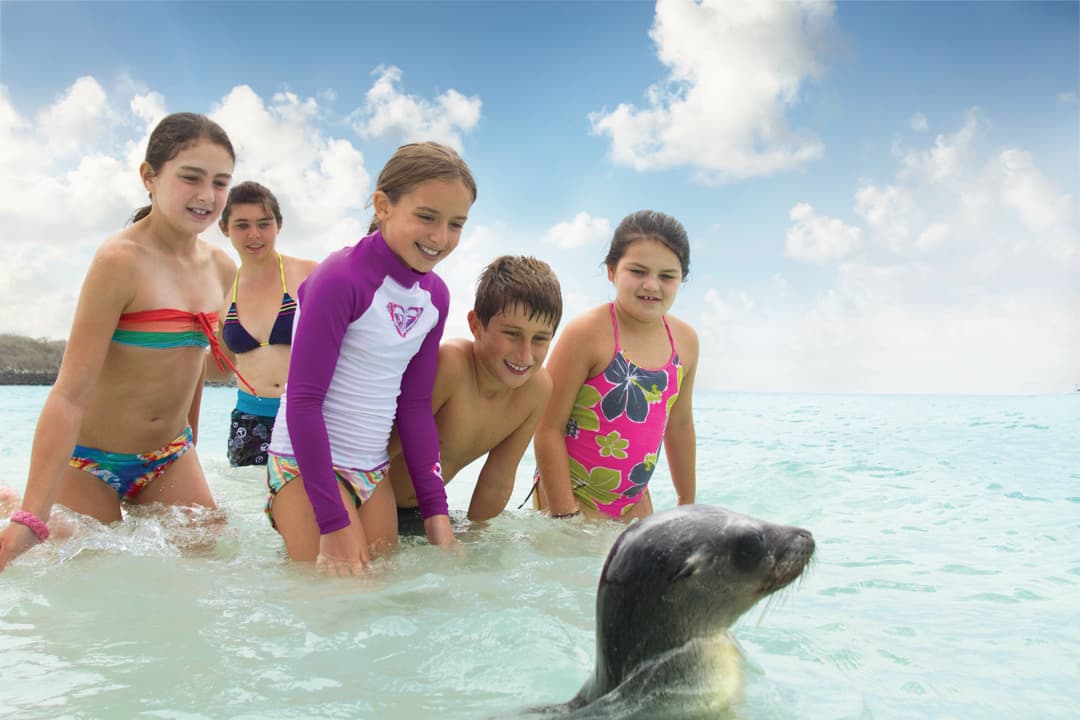
Nurture Their Passion For The Planet
One of the most rewarding sights in Baja California is witnessing the spark of curiosity in a young traveler, whether they’re locking eyes with a sea lion while snorkelling or watching a powerful humpback breach the water’s surface. Moments like these are especially meaningful when complemented with the learning opportunities in our exclusive National Geographic Explorers-in-Training programme.....


ACT Clean CoatTM is a light-activated, self-disinfecting cleaning process that continuously breaks down viruses, bacteria, mold, and airborne allergens across all ship surfaces. Not only does this create a cleaner, healthier shipboard environment for guests and crew alike, but this non-toxic, chemical-free system also saves more than one million gallons of water each year in our cleaning procedures, and reduces our carbon footprint as well as ....
- Excursions, hotels and airport transfers, as indicated in the itinerary
- Selection of exploration tools curated to your destination, such as Zodiacs and glass-bottom boats, stand-up paddleboards, kayaks, snorkeling equipment (including wetsuits, masks, and fins) and other state-of-the-art gear
- Guidance and company of our leading expedition staff
- All meals as indicated in the itinerary, both aboard and onshore....
- Airfare (except flights when indicated as included), pre- and post-expedition extensions, additional hotel nights and private transfers (except when indicated as included)
- Travel protection plans
- Passport, visa and immigration fees
- Laundry, spa treatments, scuba diving* and phone services (except when indicated as included)
- Additional costs associated with medical services outside onboard physician c....