

High Arctic Expedition: Where Art Meets Land
CRUISE ID # ADVCANADAA727-ON
Resolute Bay, Nunavut TO Nuuk (Godthaab)

$16,495
WITH SPECIAL SAVINGS APPLIED
FARES SHOWN ARE PER GUEST
Suites & Fares
CHOOSE START DATE
: August 31, 2027
Itinerary
Beechey Island is a small island off the southwest coast of Devon Island, separated by a narrow waterway called the Barrow Strait. Captain William Edward Parry was the first European to visit the island in 1819. His lieutenant, Frederick William Beechey, named the island after his father, the artist William Beechey (1753–1839). Beechey Island played a significant role in the history of Arctic Exploration. During the winter of 1845-46, Sir John Franklin and his men camped on the island as part of their ill-fated quest to find the Northwest Passage. Mummified remains of three of Franklin’s crew were discovered, giving a better understanding of what happened before the disappearance of the expedition. In 1850 Edward Belcher used the island as a base while surveying the area. Later, in 1903, Norwegian explorer Roald Amundsen stopped at the island at the beginning of his successful voyage in search for the Northwest Passage. Subsequently, Beechey Island has been declared a "Territorial Historic Site" since 1975 by the Northwest Territories government
Devon Island, located in Baffin Bay, is only slightly smaller than Croatia. The eastern side is frosted by the Devon Ice Cap, while on the western half of the island lays the 14 mile wide Haughton impact crater. It was created around 39 million years ago when a meteorite crashed into the land. The landscape surrounding this site resembles the surface of Mars. In fact, for the past decade scientists have conducted research here to determine how humans might live one day on Mars. British Arctic explorers Robert Bylot and William Baffin were the first Europeans to sight the island in 1616. In 1819-1820, William Parry charted the island, naming it North Devon after Devon in England. Despite repeated attempts at trading settlements, the strong wind conditions and cold climate eventually drove everyone away leaving Devon Island as a likely candidate for being the world’s largest uninhabited island.
Grise Fiord is an Inuit hamlet on the southern tip of Ellesmere Island, in the Qikiqtaaluk Region, Nunavut, Canada. It is one of three populated places on the island; despite its low population, it is the largest community on Ellesmere Island.
In AD 850, the Vikings established their parliament in Tórshavn, a name which translates as "Thor's harbor." It was named after Thor, the god of thunder and lightning in Norse mythology. The town became a center of trade for the island, and in fact was designated as the only legal place for the islanders to sell and buy products. This trade monopoly was abolished in 1856. Today it is the capital and largest city of the Faroe Islands, with fish-processing plants, a shipyard, and woolen products making up. It is considered to be one of the oldest capitals in Northern Europe.
Visit the arctic seascape of Cape York, Greenland. Located on the northwestern coast of Greenland in Baffin Bay, Cape York is an important geographical feature delimiting the Melville Bay at its northwestern end and Kiatassuaq Island at its other end. There is a chain of coastal islands that stretches between the two capes, most notably Meteorite Island, named for the discovery one of the world’s largest iron meteorites in Savissivik, a settlement on the island. The iron from this meteorite attracted Inuit migrating from Arctic Canada who used the metal in making tools and harpoons. Visitors to this region will see iconic drifting blue-white icebergs that are shrinking as the earth temperature rises.
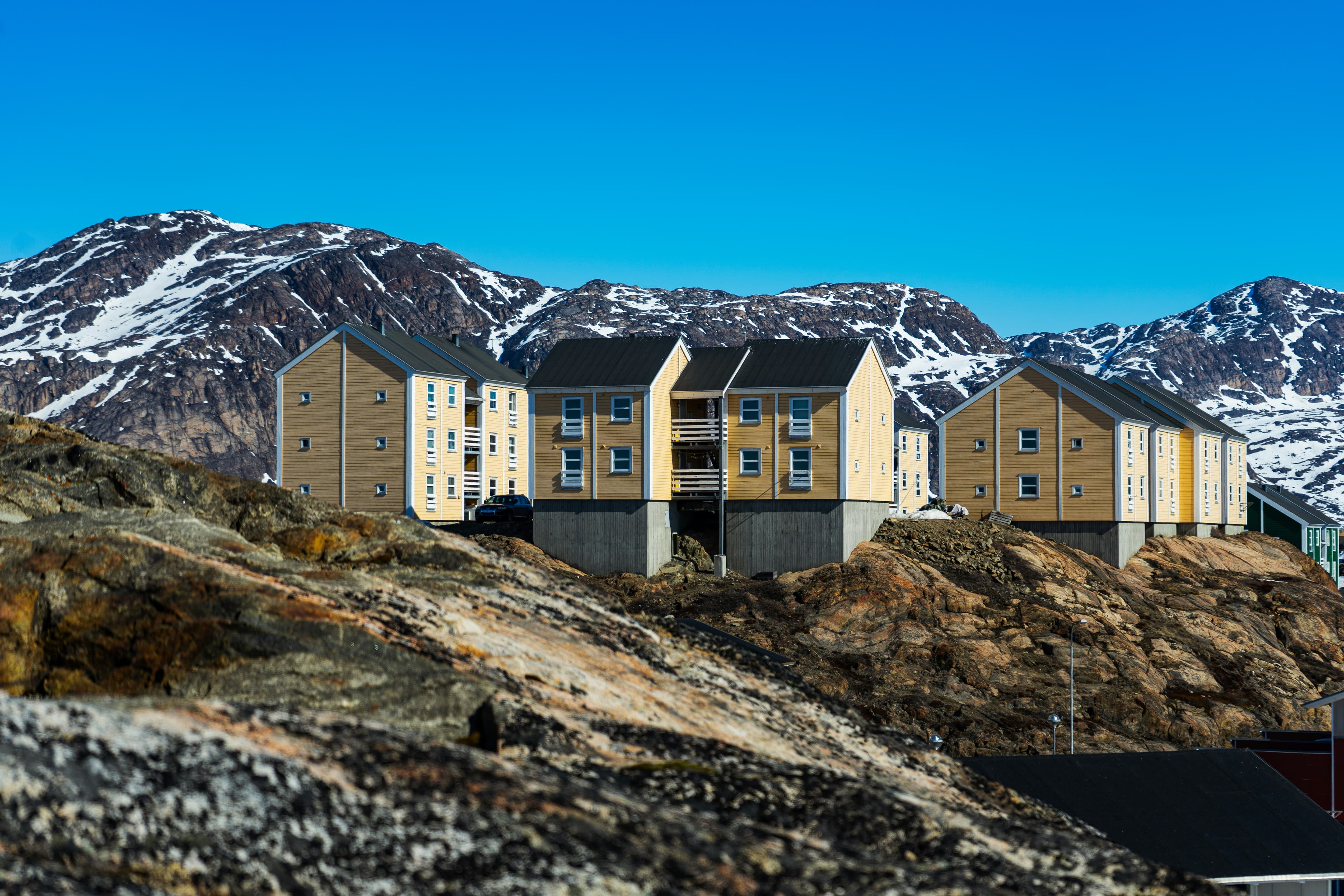
Located just north of the Arctic Circle, Sisimiut is the northernmost town in Greenland where the port remains free of ice in the winter. Yet it is also the southernmost town where there is enough snow and ice to drive a dogsled in winter and spring. In Sisimiut, travelling by sled has been the primary means of winter transportation for centuries. In fact, the area has been inhabited for approximately 4,500 years. Modern Sisimiut is the largest business center in the north of Greenland, and is one of the fastest growing Greenlandic cities. Commercial fishing is the lead economy in the town‘s thriving industrial base.
Nuuk, meaning “the cape”, was Greenland’s first town (1728). Started as a fort and later mission and trading post some 240 kilometers south of the Arctic Circle, it is the current capital. Almost 30% of Greenland’s population lives in the town. Not only does Nuuk have great natural beauty in its vicinity, but there are Inuit ruins, Hans Egede’s home, the parliament, and the Church of our Saviour as well. The Greenlandic National Museum has an outstanding collection of Greenlandic traditional dresses, as well as the famous Qilakitsoq mummies. The Katuaq Cultural Center’s building was inspired by the undulating Northern Lights and can house 10% of Nuuk’s inhabitants.
About the Ship
Name
Ocean Nova
Operator
Adventure Canada

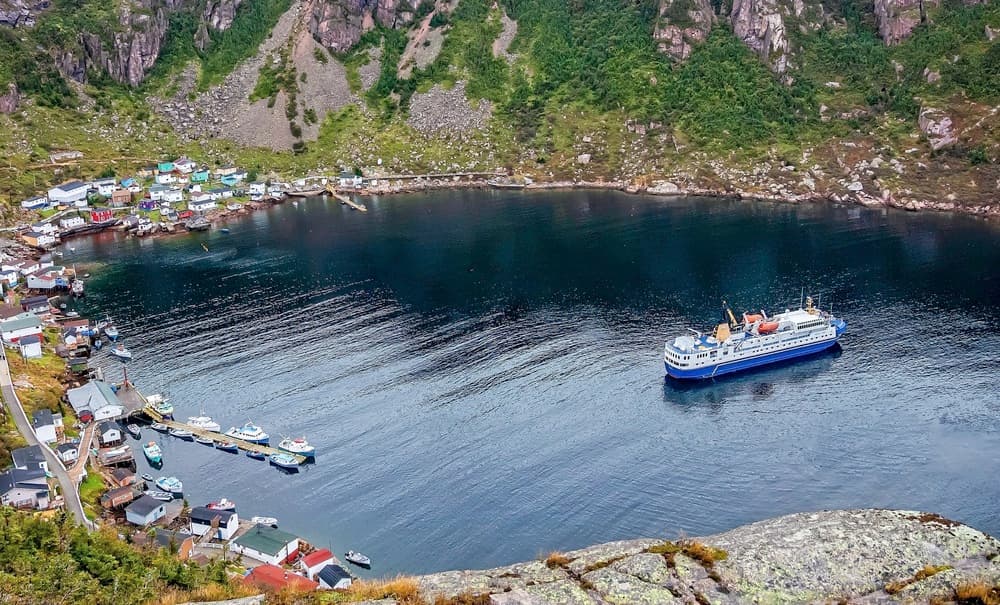
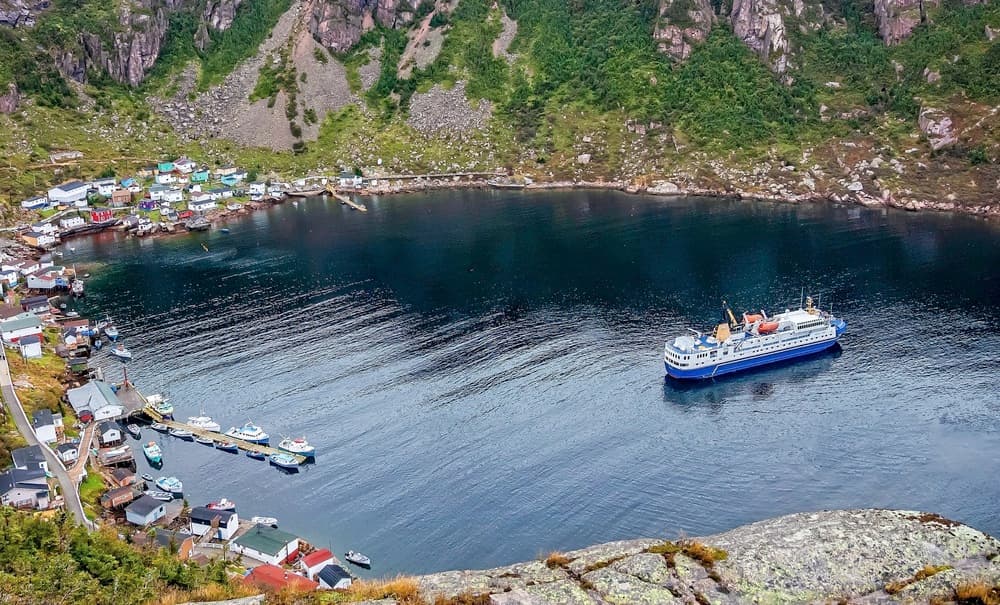
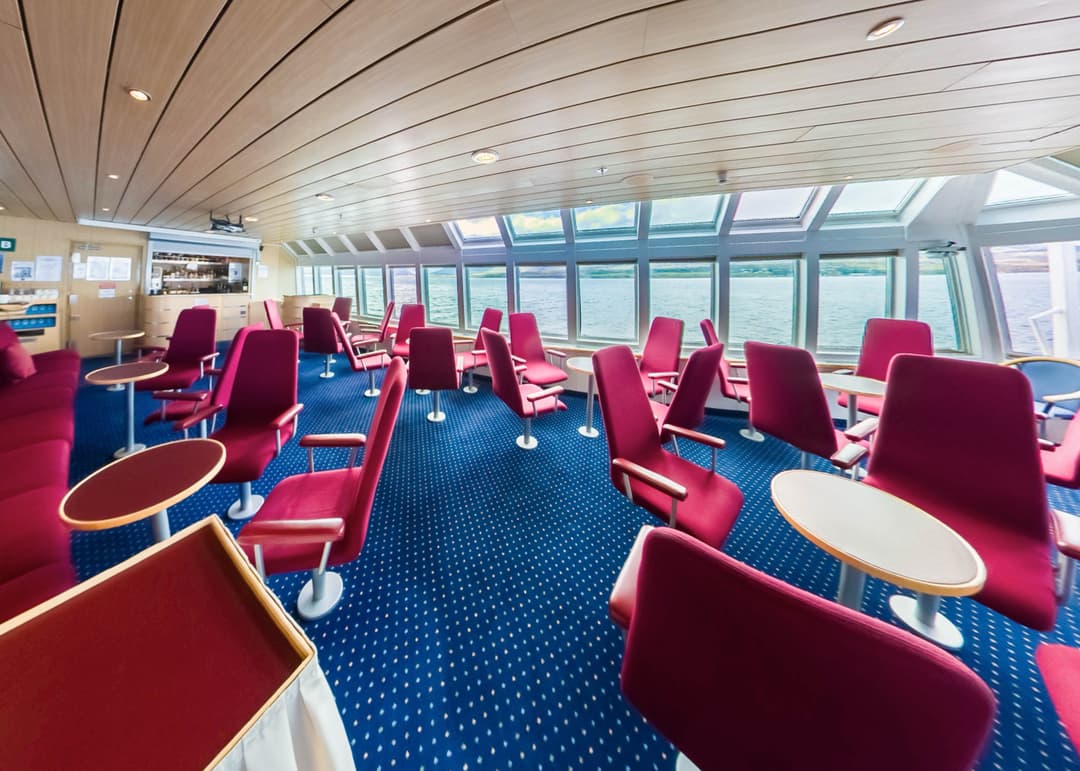
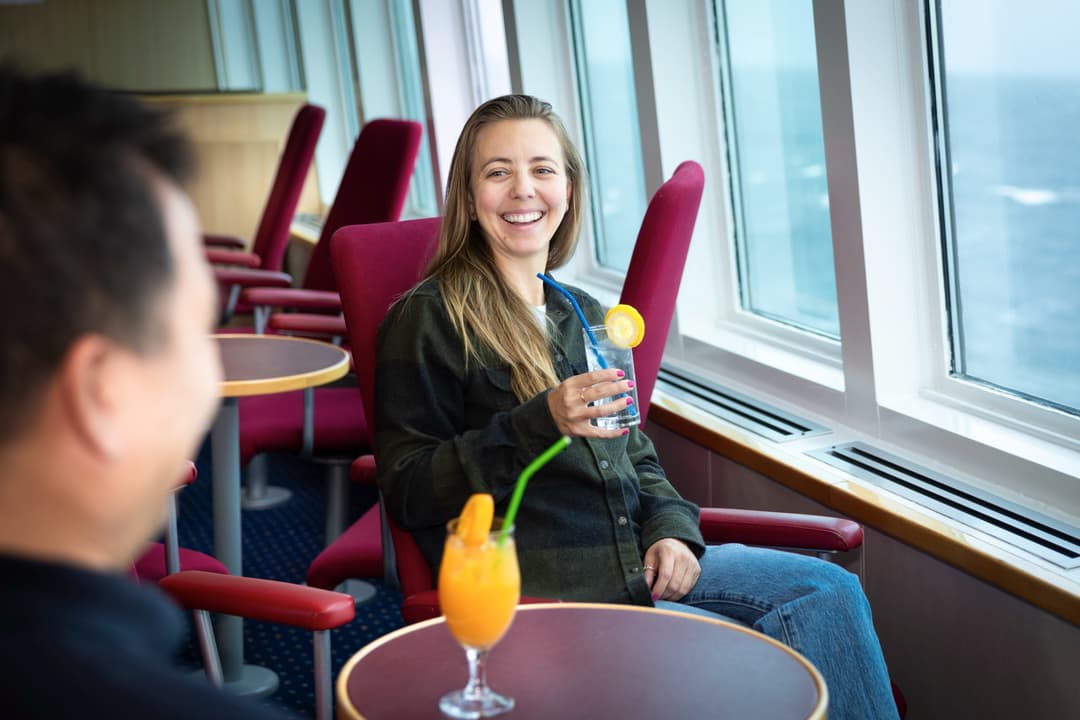
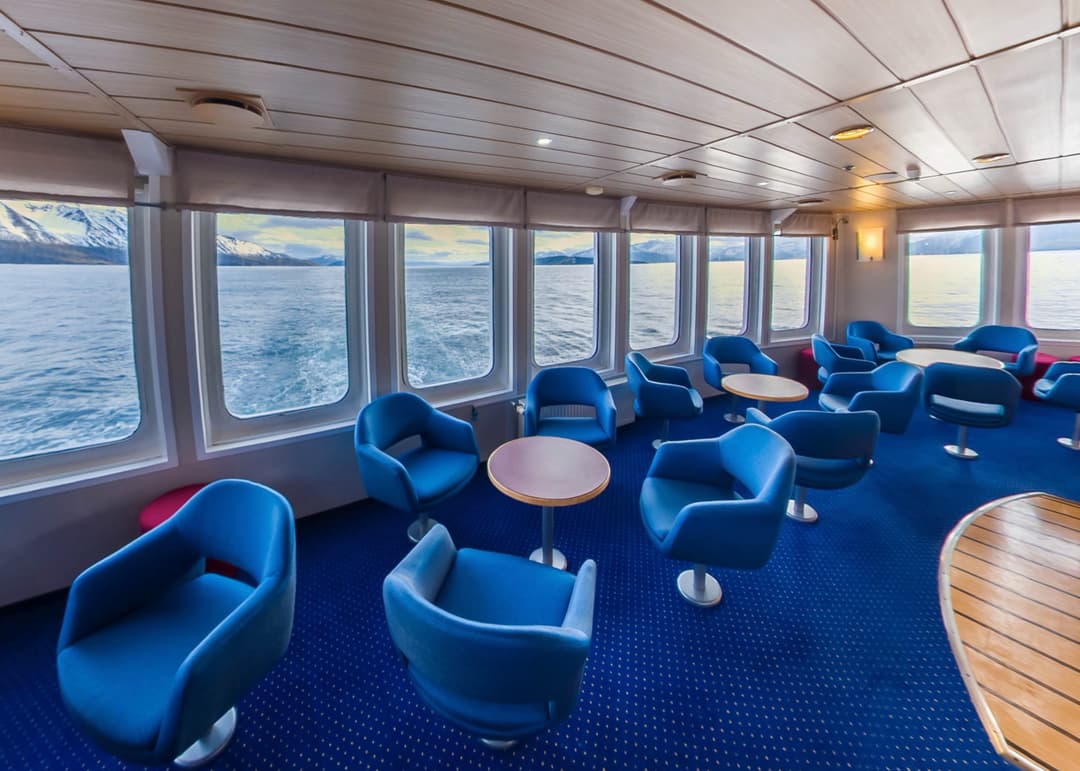
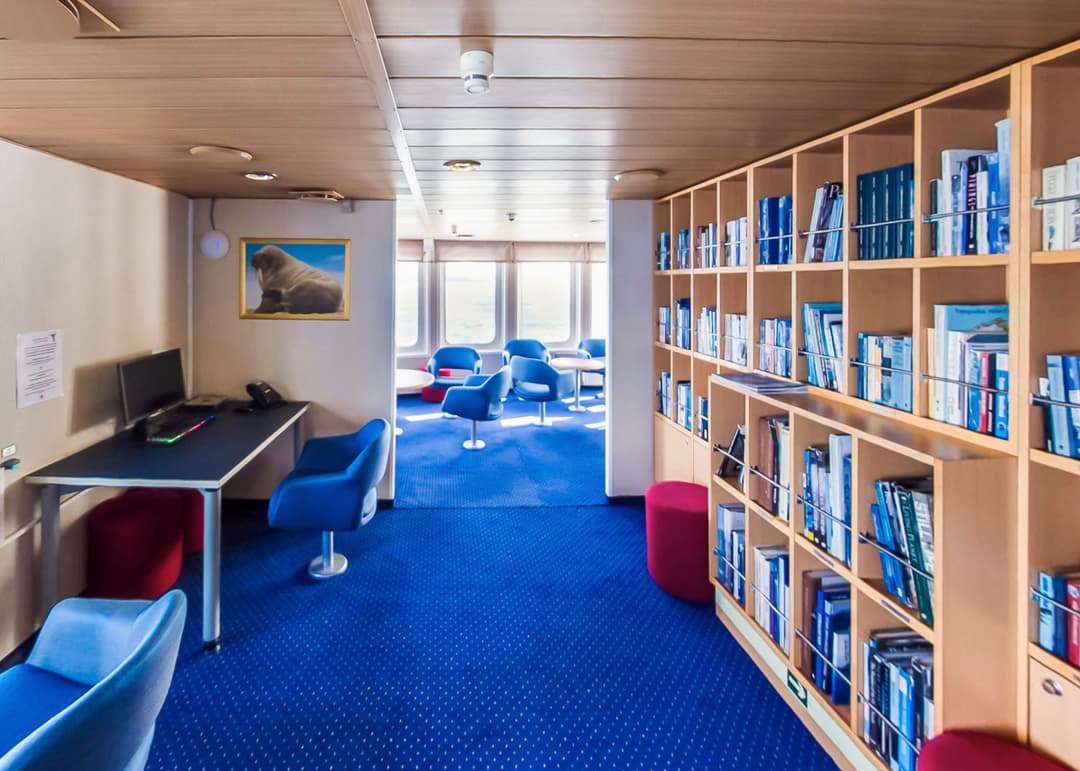
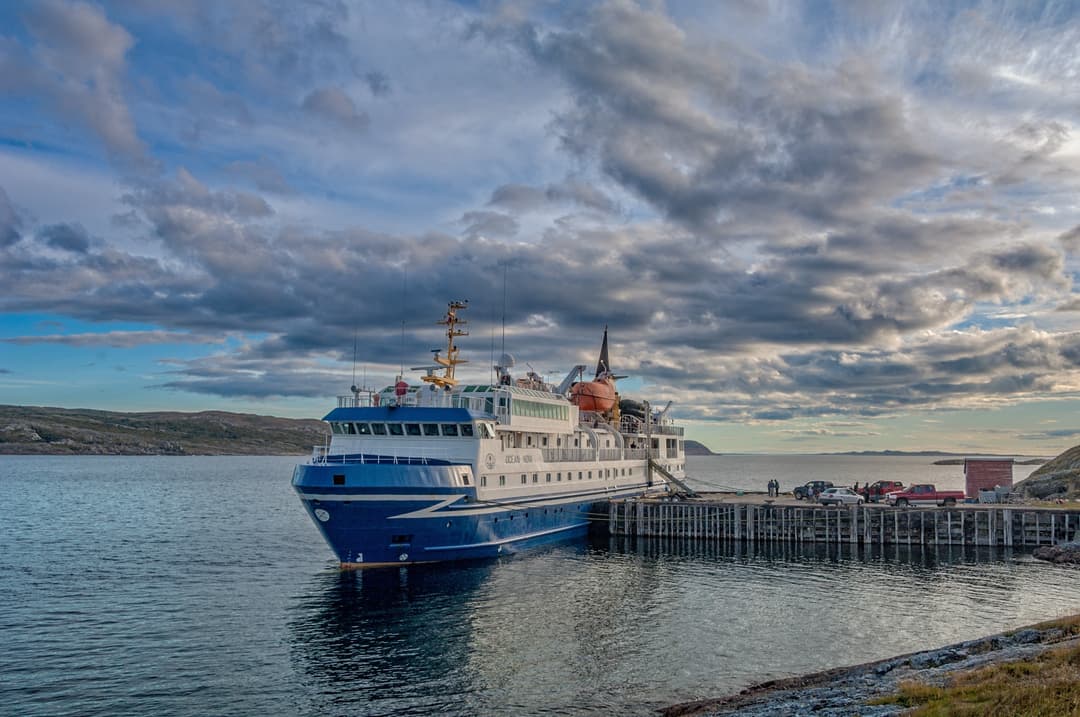
Compact, cozy, and purpose-built for polar waters, the Ocean Nova carries just 75 guests in warmth and comfort. Designed for connection—with nature, with others, and with place—it offers panoramic views, swift shore access, and an inviting, community-minded atmosphere at sea.
Loading...
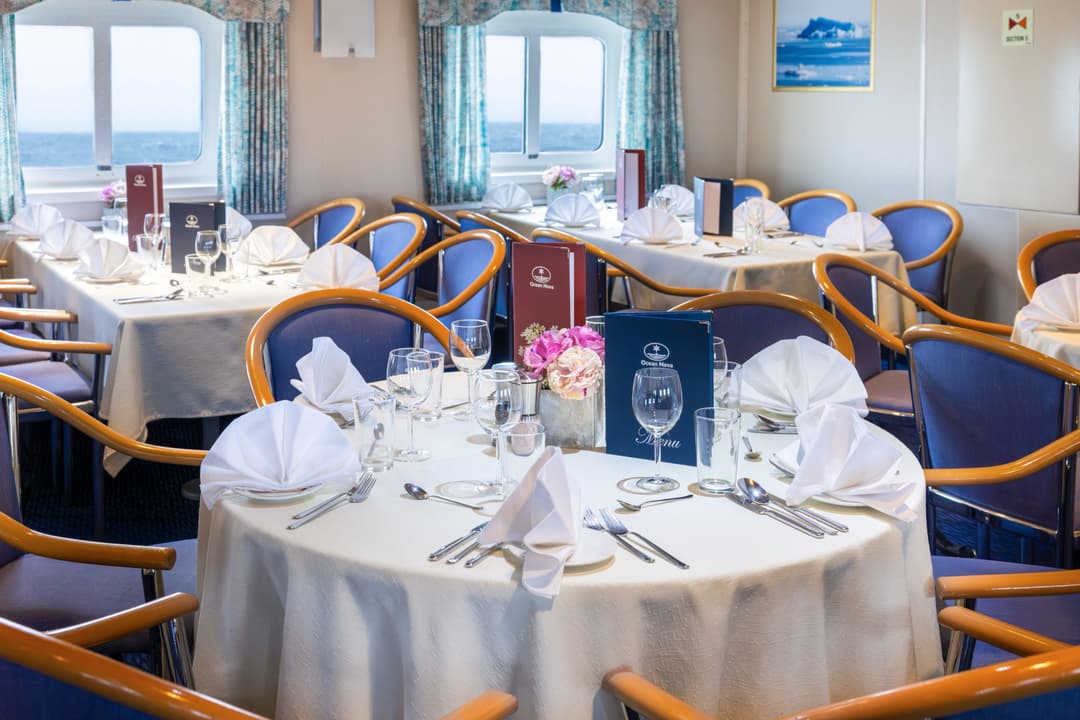
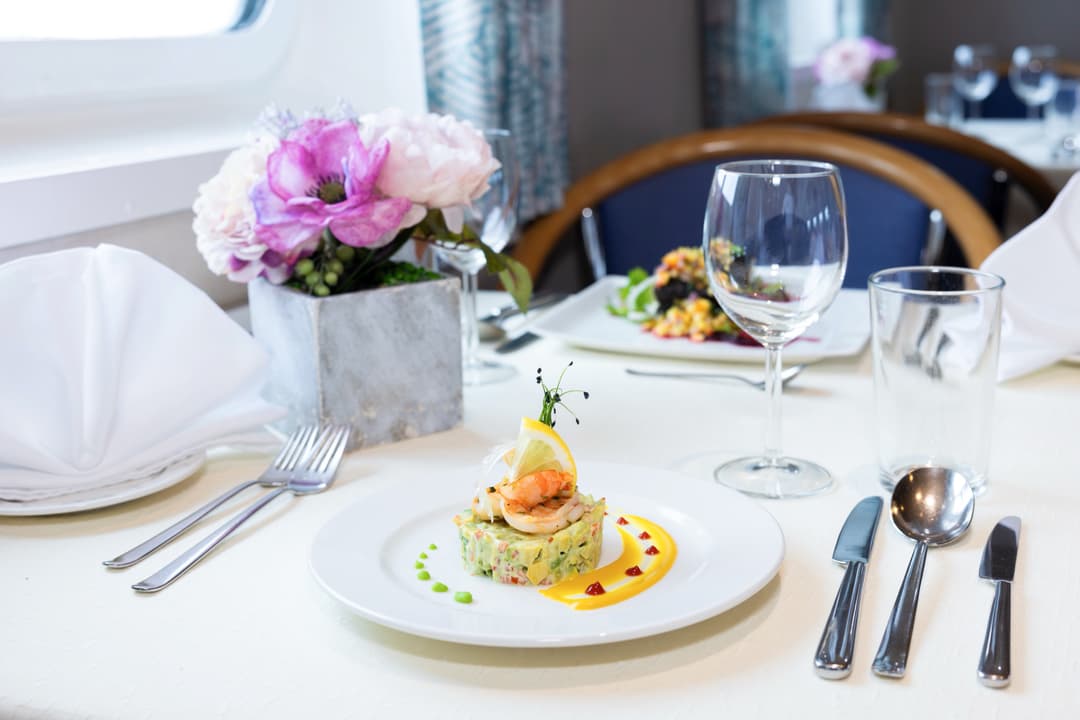
Enjoy open-seating meals in the roomy restaurant, surrounded by ocean views. Adventure Canada expedition team mingle with guests to share their expertise and swap stories over meals.
Breakfast and lunch include a wide variety of tasty and healthy choices. Globally inspired a la carte suppers offer options to suit every taste, including fish and vegetarian options. Desserts, made fresh daily, are a highlight! Food sensitivities, special d....
Thanks to the Ocean Nova’s intimate group size and our seamless operations, hopping into one of our eight Zodiacs is a breeze—rain, shine, or snow. With the ship’s shallow draft and ability to anchor close to shore, you’ll spend less time ferrying and more time exploring. Need to head back to the ship mid-excursion? No problem. Simply return to the landing site, and we’ll whisk you back in no time. More adventure, less waiting—that’s the Ocean....
Additional Facilities
- 24-hour beverage station
- Front deck
- Back deck
- Top deck
- Ocean facing gym
- Bar
- Medical clinic
- Open bridge policy
- Wi-Fi access (charges apply)
- Polar boutique
- Laundry
Technical Details
- Capacity: 78 passengers
- Crew: 32
- Registry: Bahamas
- Type of vessel: Passenger cruise sh....
In June, July, and August, the temperatures in the regions we visit are usually quite comfortable. It is common to have beautiful sunny days with temperatures reaching a high of 18°C. In the Arctic, we can also experience temperatures close to 0°C. When you are on land and walking around it usually gets quite warm and people tend to take off layers.
European and Canadian maritime destinations tend to be warmer than the Arctic in the summ....
Adventure Canada is committed to extending a high level of customer service to all travellers, including persons with disabilities. We are committed to meeting the needs of persons with disabilities in a timely manner, and will do so by preventing and removing barriers to accessibility wherever possible.
Certain mandated safety requirements in the construction and operation of the Vessel inherently restrict maneuverability in many areas.....
Adventure Canada expeditions take place far away from hospitals and other institutional medical care and are therefore intended for persons in good health. An adequate medical facility could be 72 hours away or more, and emergency evacuation and adequate medical treatment may be delayed or unavailable in certain areas. Our vessel is not equipped to handle serious medical conditions. Medical and Emergency Evacuation insurance is mandatory. If y....
Adventure Canada expeditions necessitate that passengers be in reasonably good health. Zodiac cruises and transfer times can be lengthy. You must be able to climb stairs between decks on the ship. You must also be able to climb the external gangway stairs to transfer between the ship and the Zodiacs. Our expedition team and ship crew are available to assist you in and out of the Zodiacs, both on shore and at the gangway. Adventure Canada exped....